Get Full Government Meeting Transcripts, Videos, & Alerts Forever!
Get email alerts on the State Budget topic
No spam. Unsubscribe anytime.
Governor’s executive budget proposes education, transportation and resource investments while preserving large reserves
Summary
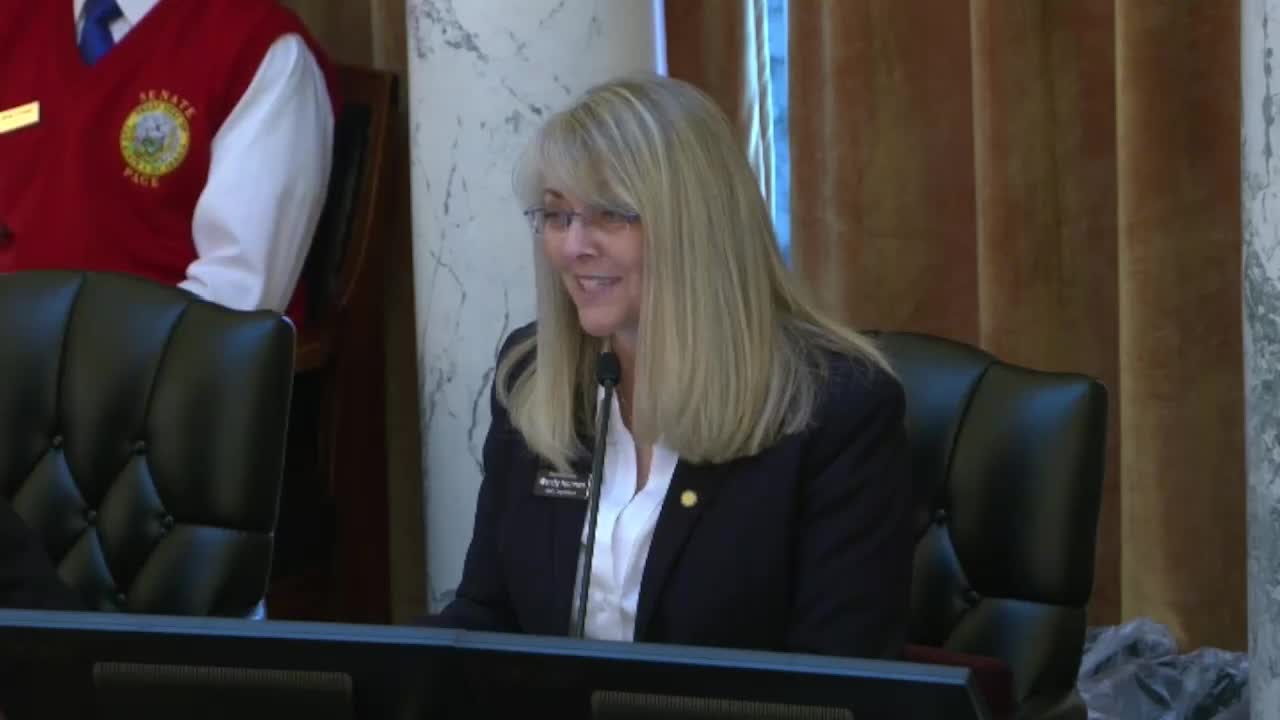
Laurie Wolf, administrator of the Division of Financial Management, presented Governor Brad Little’s executive budget to JFAC on Jan. 8, saying the plan is “his keeping promises budget” and proposing targeted investments in education, transportation, workforce training and natural‑resource management while maintaining substantial reserve balances.
Laurie Wolf, administrator of the Division of Financial Management (DFM), presented the governor’s executive budget to the Joint Finance and Appropriations Committee on Jan. 8, describing it as “his keeping promises budget” and framing the plan around education, infrastructure, water and land management, and public safety.
The budget uses a conservative revenue forecast, projects total general‑fund revenues of about $5.9 billion for FY 2025 and roughly $6.2 billion for FY 2026, and recommends $151 million in agency enhancements for FY 2026 (a mix of one‑time and ongoing items). After recommended expenditures and transfers the administration projects an ending general‑fund balance of about $383 million for FY 2025 and $227 million for FY 2026. Wolf said the plan also directs transfers to reserve accounts — including a roughly $59 million transfer to the budget stabilization fund and $50 million to a public education stabilization account — leaving an aggregate rainy‑day/reserve balance the administration described as about $1.4 billion (roughly 22 percent of the general fund).
Why it matters: the proposal balances new spending with continued tax relief and record‑level reserves. “It’s not what we do in the bad years that puts us out of business, it’s what we do in the good years that sets us up for success,” Wolf told the committee, explaining the administration’s rationale for funding both new initiatives and large reserves.
Key priorities and numbers
Education: The governor’s request includes about $150 million for public schools in FY 2026. Wolf told the committee the proposal includes approximately $83 million toward teacher pay and nearly $30 million for teacher health insurance, plus $50 million set aside for education‑choice initiatives (the administration said such initiatives would require accompanying policy legislation). Wolf said $50 million of the education funding is targeted to rural school facilities, mental‑health supports and literacy/accountability measures.
Transportation: The budget includes a $50 million request for a transportation expansion and congestion mitigation fund administered by the Idaho Transportation Department (ITD). Wolf told the committee that additional bonding capacity tied to those funds could support roughly $800 million in high‑value transportation projects once bonded. The proposal also calls for a 3 percent increase to strategic initiative funds (bringing annual strategic‑initiative funding to just under $312 million), with roughly 60 percent for state highway initiatives and 40 percent for local priority projects.
Workforce and career training: The governor proposes $25 million for workforce training: $15 million one‑time for grant funding to scale capacity (requiring a private match) and $10 million ongoing directed to Career and Technical Education (CTE) to support operations once capacity is built. Wolf described the one‑time portion as a continuation of a block‑grant approach the State Board of Education used previously with federal “GEER” dollars.
Natural resources and fire response: The administration recommends $60 million one‑time in FY 2025 as a supplemental to backfill the state’s fire suppression account for expenses from the last fire season, and $40 million ongoing in FY 2026 to stabilize the account going forward. Wolf said the state’s five‑year average fire suppression cost is about $40 million and the aim is to keep the account at a level that avoids scrambling for funds after a severe season.
Cybersecurity and IT: Wolf recommended a $10 million general‑fund investment for cybersecurity and IT infrastructure replacement to centralize prioritization and address identified critical needs flagged by the state’s IT security assessments.
Public defense: Wolf said the state consolidated public defense from counties to the state on Oct. 1. The department requested additional funding. The administration recommends a supplemental of $5.4 million for FY 2025 and an additional $16.8 million for FY 2026; the total FY 2026 request for the State Public Defense program is about $83 million. Wolf said part of the need follows a December state Supreme Court ruling that clarified statutory responsibilities and that some policy decisions will affect whether funding is continued or shifted to a different revenue source (the public‑defense fund is funded by a sales‑tax distribution and would require policy action to alter transfers into it).
Housing and other investments: The governor’s plan includes a $15 million one‑time transfer to the workforce‑housing fund to expand affordable housing and targeted rural workforce housing projects, plus $850,000 for medical residency positions (about 18 slots) and $500,000 ongoing for a rural physician incentive program.
Revenue approach and reserves
Wolf told the committee the administration took a conservative approach to FY 2026 revenue estimates despite recent strong months of collections. Actual FY 2025 revenues through November were slightly ahead of the original baseline; the administration used a more cautious estimate when preparing the executive budget. Wolf highlighted a desire to reduce reliance on big transfers by incorporating needed spending into the expenditure lines and by building larger reserves.
Committee questions and clarifications
Senator Cook asked about the line labeled “contract inflationary adjustments”; Wolf replied these are inflation adjustments within agency contracts and are included in the maintenance portion of agency budgets. Representative Price asked why the year‑over‑year spending increase appears larger than last year; Wolf and staff explained some of the apparent increase reflects fewer transfers this year and differences in population‑driven adjustments and employee‑benefit cost changes between years.
Representative Mitchell pressed on the $50 million ITD request (raising capacity questions after prior TechEm bond sales); Wolf deferred technical project‑management detail to ITD but said the administration views the request as needed to keep projects moving into the pipeline and maintain expansion capacity. Senator Carlson said he had concerns about establishing large ongoing firefighting funding; Wolf explained the supplemental backfill for FY 2025 replaces amounts already spent and the ongoing $40 million is intended to smooth the funding pattern across years.
What’s next
DFM and agencies will present detailed agency budgets in coming JFAC hearings; the administration repeatedly urged the committee to review the legislative budget book and the session record materials on the legislature’s website. Wolf said the proposal remains a starting point for legislative deliberation and that some items (notably public‑defense funding and education choice proposals) will require policy decisions from the Legislature before any permanent changes to funding or funding sources occur.
Ending note
Wolf described the overall aim as a mix of continuing education and workforce investments, strategic infrastructure funding, and conservative fiscal management to preserve balance and reserves while providing discretionary funding for the governor’s priorities.