Get Full Government Meeting Transcripts, Videos, & Alerts Forever!
Get email alerts on the Education Dual Enrollment topic
No spam. Unsubscribe anytime.
House Higher Education Committee advances 10-year extension for dual-enrollment pilot
Summary
The House Higher Education Committee voted to forward a substitute to House Bill 217 to Rules with a due-pass recommendation after hearing that the Technical College System of Georgia will continue funding and the pilot will be extended from five to ten years.
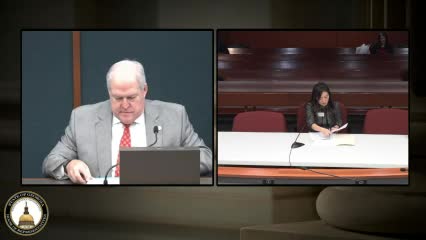
Chairman Dickey, chair of the House Higher Education Committee, opened the committee’s Friday meeting and introduced a substitute to House Bill 217, a dual-enrollment pilot that gives students who have left high school a route to a diploma and technical credentials through the Technical College System of Georgia (TCSG).
Rep. Sue Hong, the governor’s floor leader, told the committee the substitute extends the existing pilot from five years to 10 years so lawmakers can gather more data before deciding whether to make the program permanent. “But instead, we are going to extend the pilot program now to 10 years, from the 5 years before,” Rep. Hong said. She also said the bill changes the annual review date to Nov. 15 and adjusts who receives the program results.
The committee heard that TCSG originally budgeted funding for the pilot when it was enacted in February 2021 through Senate Bill 204. “TCSG will continue to fund it through their budget,” Rep. Hong said, and she told members the substitute does not request additional state funding.
Members asked how widely the program is being used. Rep. Hong and Chairman Dickey said there are students participating from 227 high schools, and the five designated pilot colleges are Albany Technical College, Atlanta Technical College, Athens Technical College, Central Georgia Technical College and Chattahoochee Technical College. Rep. Hong said about 15 additional TCSG colleges are acting as partner institutions that now offer program classes and that partner participation can continue during the extended pilot.
Several members raised concerns about student supports. Rep. Bernadotte cautioned that students who enter the program after struggling in K–12 may need wraparound services, special education or English for Speakers of Other Languages help to succeed. “You do have to have somebody that can work with those ESOL students and with those students that have learning disabilities to make sure we’re meeting their learning needs,” Bernadotte said.
Committee members also discussed virtual instruction, including that the program’s structure allows students to complete high school coursework virtually and attend the technical college closest to them for dual-enrollment classes if they prefer. Chairman Dickey and Rep. Hong said the extended pilot will clarify whether more virtual offerings are appropriate and whether degree conferral can be centralized while instruction remains local or virtual.
With no further questions, the committee considered action on the substitute (LC 610160S / House Bill 217). A member moved that the substitute be recommended do pass and forwarded to the Rules Committee with a due-pass recommendation; the motion lacked a recorded mover or seconder in the transcript. The committee voted by voice; Chairman Dickey said, “Hearing that, all in favor, say aye.” The transcript records an “Aye” and no opposition was recorded. The committee advanced the substitute to Rules.
Members asked staff to continue producing the annual reports on the pilot’s results; Rep. Hong said she will provide the current year’s report and a list of participating schools to the committee.
The meeting adjourned shortly after the vote.