Get Full Government Meeting Transcripts, Videos, & Alerts Forever!
Get email alerts on the Department Of Agriculture Budget topic
No spam. Unsubscribe anytime.
Legislature hears Idaho Agriculture budget as quagga mussel spending, investigator pay and vehicle replacements loom
Summary
The Joint Finance-Appropriations Committee reviewed the Department of Agriculture's FY2026 request, including ongoing and one-time funding tied to quagga mussel response, a deficiency warrant for pest control costs, a proposal to create a pay ladder for agricultural investigators and one-time vehicle and IT replacements.
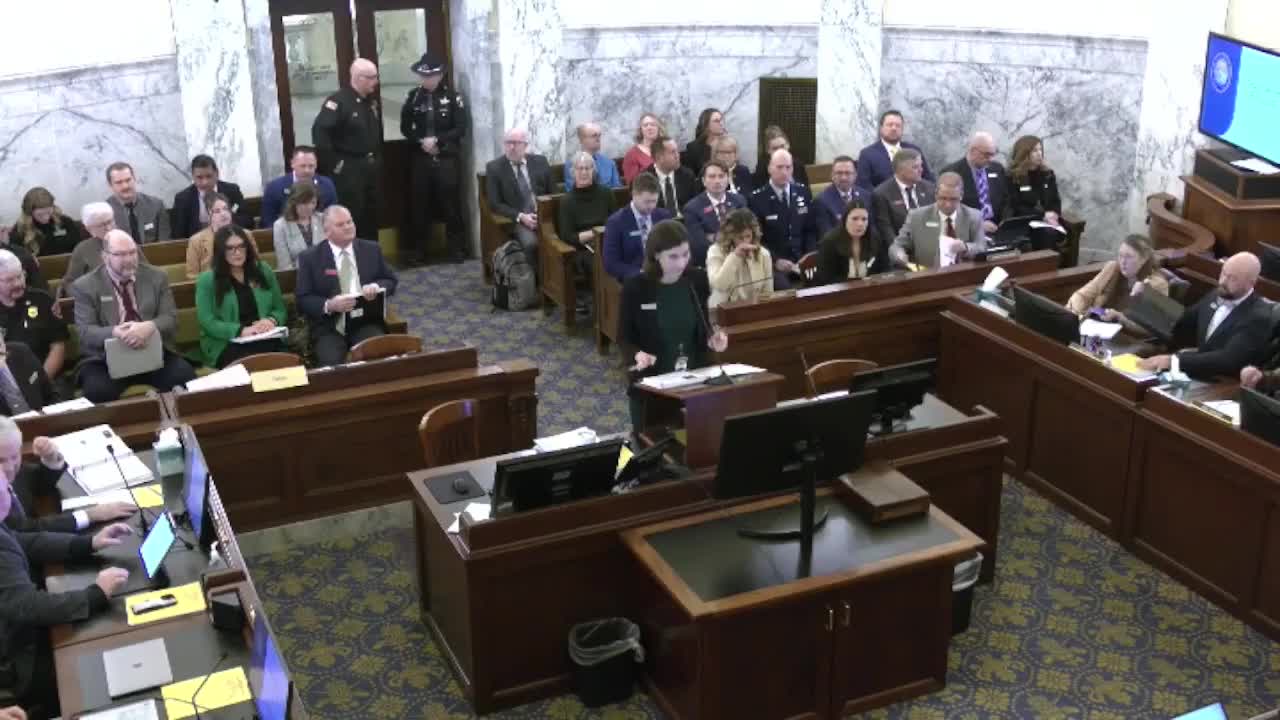
Frances Lippett, budget and policy analyst with the Legislative Services Office, opened the Department of Agriculture’s briefing to the Joint Finance-Appropriations Committee with a fiscal overview and a review of statutory responsibilities, dedicated funds and recent staffing trends.
The department’s appropriations and revenues are spread across many dedicated funds tied to specific services such as pesticide licensing, dairy and waste inspection, shipping-point inspections, and the invasive species program. Lippitt said the invasive species fund is primarily supported by a watercraft sticker fee and that the Legislature provided a $5 million general‑fund infusion in the prior session to support quagga mussel response; the department also received an ongoing $1.5 million general‑fund appropriation to support staffing and watercraft inspection stations.
The committee heard that the department is requesting several items for FY2026. The department requested an ongoing $340,400 to create a pay structure for the agency’s 53 agricultural investigators, an enhancement intended to improve retention and create a career ladder for investigators, many of whom are new to the agency. Lippitt also described a one‑time replacement request of roughly $1.11 million that includes vehicles and $214,700 for IT hardware replacement. She said the department’s FY2025 deficiency warrant request for exotic species response is $1,724,300.
Chanel Tewell, director of the Idaho State Department of Agriculture, told the committee the department doubled its statewide sampling and nearly doubled watercraft inspections after the 2023 detection on the Snake River. “We asked for funding and . . . we added three more stations,” Director Tewell said, describing increased sampling, personnel and communication last year. She said the department treated infested waters in 2024 despite hopes to avoid that step.
Senator Wintrow asked whether quagga mussel response was being funded solely by watercraft sticker fees. Lippitt clarified the Legislature provided a $1.5 million ongoing general‑fund appropriation in FY2025 to support staffing and check stations in addition to the sticker fee revenue. Committee members also questioned a fiscal presentation line that showed a Department of Treasury grant; Director Tewell said she was not aware of such a grant and offered to follow up.
Representative Mitchell asked about the vehicle replacements. Lippitt said she could provide a detailed list and recalled the department was seeking replacement for about 17 vehicles, mostly pickup trucks and a couple of SUVs. Lippitt and Tewell explained the replacement request also includes IT hardware and other one‑time items.
Lippitt walked the committee through several dedicated funds, noting the pest control fund carried a balance of roughly $1.7 million that reflected costs incurred in FY2024 (largely Mormon cricket treatment and monitoring) and would be requested for payment in FY2025. She explained that some dedicated funds are appropriated at slightly higher levels than typical revenues, which can create the appearance of large unspent appropriations when revenues do not immediately materialize.
On personnel, Lippitt said the department is authorized for 231 FTE and has maintained a roughly 91% staffing rate overall. The presentation noted 27 of 53 investigator positions have been with the department less than two years, which Director Tewell said underscores training and retention pressures: “We have 27 positions out of 53 who have been with us less than two years. That means that we provide a different kind of service to the ag community,” she said.
The presentation also reviewed other department programs—animal industries, plant industries, market development, the sheep and goat health board, animal damage control and agricultural inspections—and emphasized the invasive species and pest control costs as key drivers of recent spending patterns.
Committee members asked for follow‑up material: Lippitt agreed to provide the requested vehicle list and said the office would clarify the apparent Department of Treasury grant line. The analysts and director also noted several items had been recommended by the governor with minor alignment changes and that the department would provide further detail if the committee requested it.
The department’s presentation concluded with an analyst offer to answer additional questions and a commitment to follow up on the items committee members identified.