Get Full Government Meeting Transcripts, Videos, & Alerts Forever!
Get email alerts on the Personnel Benefits topic
No spam. Unsubscribe anytime.
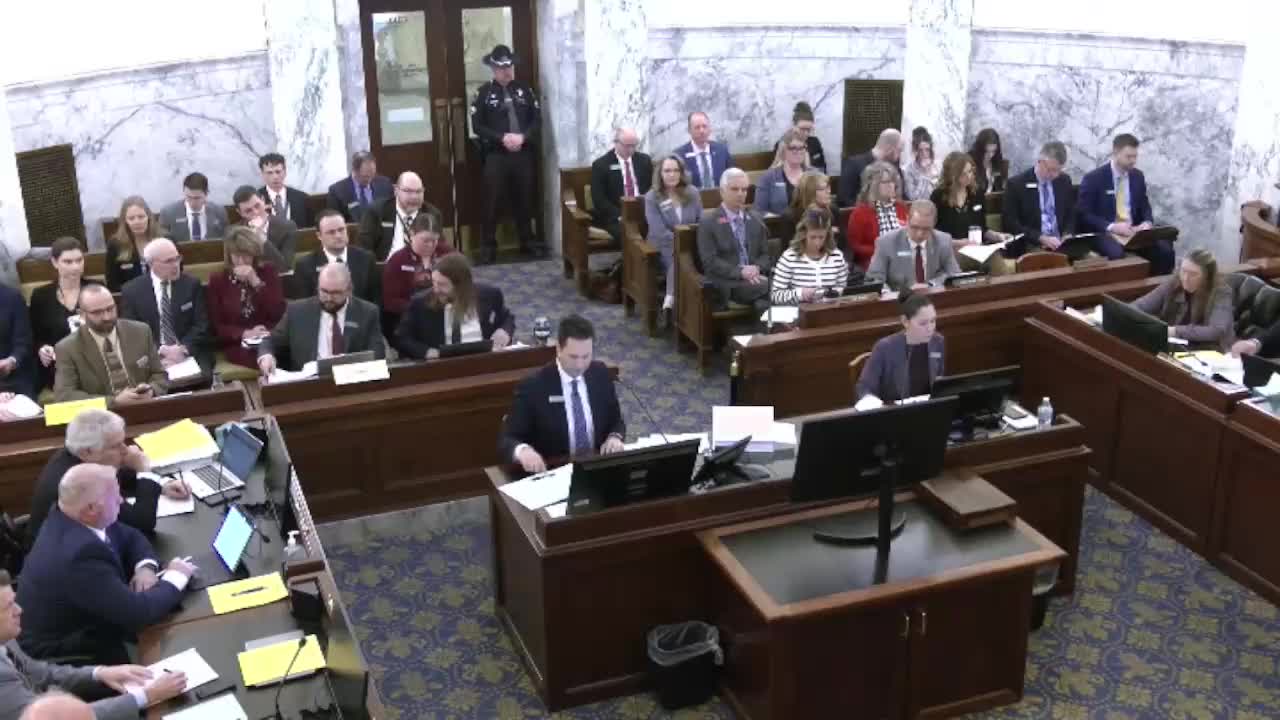
JFAC debates health-insurance base and reserve risk; neither recommendation wins approval
Summary
Committee members debated two competing personnel benefit recommendations for FY2026: the governor’s $14,300-per-eligible-FTE base and the CEC’s $13,960 figure. The committee voted on a CEC substitute and on the governor’s motion; both failed to secure the required majority of both chambers.
Committee analysts presented two competing proposals for FY2026 personnel benefit (health insurance) funding and related statutory language. The two options differed primarily in the health-insurance base amount for eligible full-time equivalent (FTE) positions and the projected effect on the insurance plan reserve.
Keith Bybee, Division Manager in the Budget Policy Analysis Division, told members the Economic Outlook and Revenue Assessment Committee had recommended setting the health insurance per eligible FTE at $13,960 (the CEC recommendation), producing a total general-fund increase of $29,996,000 and total funds of $40,261,200. The governor proposed a higher base—$14,300 per eligible FTE—bringing an estimated general-fund increase of $42,076,600 and total increase of $56,315,200.
Analysts and state administrators discussed reserve implications. "The current projections from the Milliman report suggest ... with the CEC recommendation of changing that to 13,960, it would pull the reserve balance down to, effectively, the statutory minimum of 10% of the total plan amount," Bybee said, citing Milliman actuarial estimates. He gave projected reserve balances: roughly $51.6 million under the CEC recommendation and about $61.4 million under the governor’s recommendation (a $10 million cushion above the 10% minimum), with the plan cost projected near $482 million.
Faith Knowlton, administrator for the Division of Insurance and Internal Support, explained contract implications: "If we fall below the 10% contingency reserve, then a risk charge can be assessed to the state," she said. Laurie Wolf, DFM administrator, said the 10% contingency is effectively the contractual floor and that Milliman’s percentiles mean there is a roughly 50% chance of meeting the lower contingency if the lower base is selected.
Committee members debated trade-offs. Representative Furness and others argued the lower CEC number would reduce the reserve and avoid overfunding while still keeping the reserve substantial. Members who favored the governor’s higher base argued for a larger cushion to avoid a potential risk charge and to reduce the probability of a larger increase the following year.
The committee first took up the substitute motion to adopt the CEC recommendation ($13,960). The combined tally was 9 ayes and 11 nays (Senate 6–4 in favor; House 3–7 against), so the substitute failed to achieve the committee’s required majorities. The committee then voted on the original motion to adopt the governor’s $14,300 base; the combined tally was 14 ayes and 6 nays (Senate 4–6; House 10–0), and because the Senate did not reach a majority, that motion also failed. With no majority of both chambers for either option, the committee left the health-insurance decision unresolved for the moment.
Staff noted the legal requirement (Chapter 53, Title 67 Idaho Code) that the legislature make several decisions about employee compensation and that a separate statutory language motion commonly accompanies the benefit base to direct the Office of Group Insurance on plan structure.