Get Full Government Meeting Transcripts, Videos, & Alerts Forever!
Get email alerts on the Education K12 topic
No spam. Unsubscribe anytime.
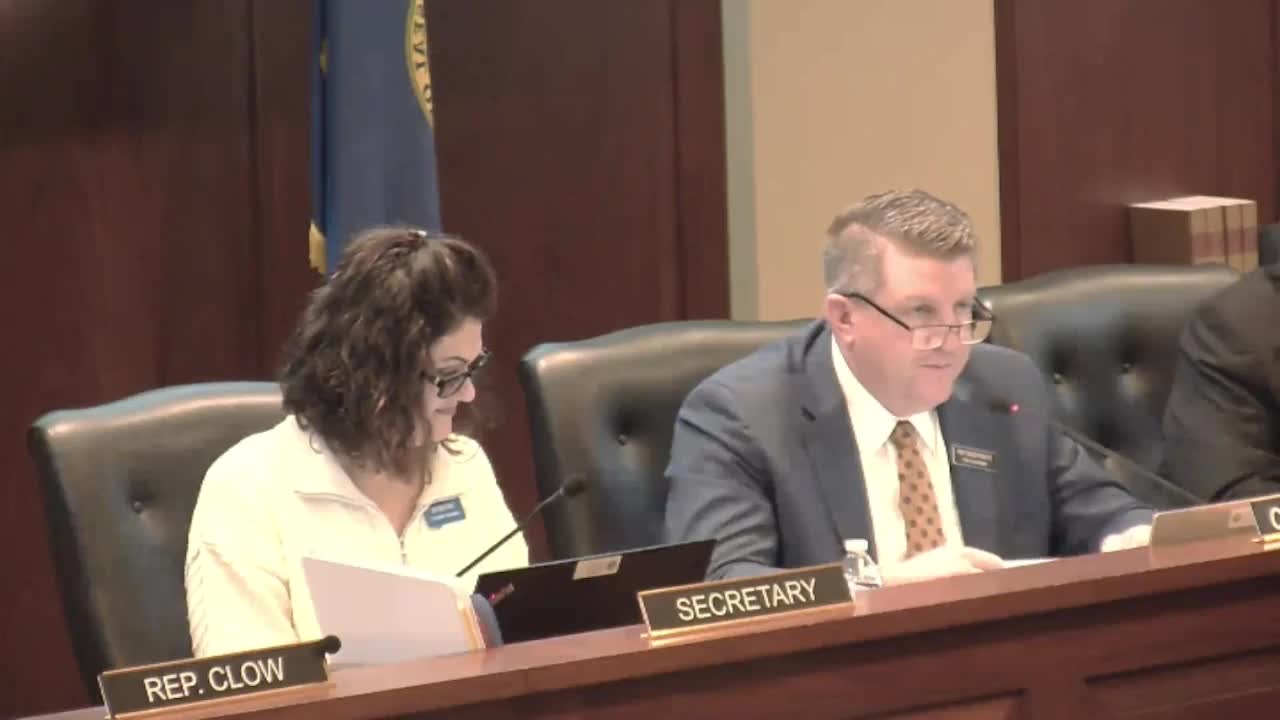
Committee introduces RS 32396 to increase staffing support for Idaho rural high schools
Summary
Lawmakers introduced RS 32396 to amend Idaho Code 33-10-21 and raise fractional staffing allocations for small rural high schools to help hire math and science instructors; committee members asked for more data on current funding and reallocation options.
The House Education Committee on Monday introduced RS 32396, a draft measure to amend Idaho Code section 33-10-21 and increase fractional staffing allocations for small, rural high schools so districts can hire additional math and science instructors, Representative Furness told the committee.
The proposal would raise the fractional funding a small school receives so districts with enrollments of roughly 100–159 students receive at least 0.5 of a full-time instructor and schools with roughly 160–319 students receive 0.75 of an instructor, Representative Furness said. Furness said the change does not alter funding for larger schools.
Committee members and witnesses said the bill is intended to address persistent teacher shortages in rural districts and limited access to advanced STEM courses. "Those rural schools really suffer to try to get people there and wage is one way to get people to come to those rural schools," Representative Furness said, adding that rural districts often operate on a "shoestring budget."
Quinn Perry, deputy director of the Idaho School Boards Association, said the proposal would not guarantee that the money becomes higher salaries at the local level but that state-distributed funds would be earmarked to the identified small schools and could be used either for salary or targeted instructional support. "It does get distributed to the district for the purposes of going to these specific schools, but it would be for salary or for additional instructional targeted support," Perry said. He said schools currently receive about $5,000 under the existing small-school support allocation.
Lawmakers questioned whether the state should increase funding or reallocate existing resources from larger, better-funded districts to rural schools. Representative Harris and others pressed for data on how much is already in the program and how funds are currently allocated. Representative Ehart asked that, if the bill is printed, the sponsor return with information about other state actions for rural schools and outcomes of prior measures.
Representative Garner moved to introduce RS 32396; the committee approved the motion by voice vote. The bill will be printed and returned to committee with requested follow-up information about current funding levels, distribution by district, and any existing programs intended to support rural teacher recruitment and retention.
The committee discussion included questions about how much of the funds would be used for salary versus coaching or other supports, how allocations would operate in multi-subject small schools where one teacher covers several subjects, and whether taking funds from urban districts for redistribution had been considered as an alternative to adding new state dollars. Committee members asked the bill sponsor to provide more detailed fiscal and implementation information when the measure returns for further consideration.