Get Full Government Meeting Transcripts, Videos, & Alerts Forever!
Get email alerts on the Emergency Management Evacuations topic
No spam. Unsubscribe anytime.
Rep. Heather Scott introduces bill saying people who refuse evacuation accept risks and may reimburse rescues
Summary
RS 32,093 would allow individuals to refuse evacuation orders but require them to accept the risks and reimburse government or nonprofit rescuers if a rescue is conducted; sponsors and members debated potential conflicts with law enforcement operations such as hostage or SWAT scenarios and asked for further review with law enforcement.
Representative Heather Scott presented RS 32,093, a short bill that would allow a person to decline a government evacuation order and require that person to accept the attendant risks and reimburse government entities or nonprofit agencies for rescue services if a rescue is later performed.
Reading from the bill, Scott told the committee: "A person who chooses not to evacuate pursuant to subsection 1 shall accept all the risks and liabilities of his decision not to evacuate and ... reimburse government entity or non profit agency cooperating with a government entity if such entity conducts a rescue on behalf of the person who previously chose not to evacuate." She said the measure is intended to prevent forced evacuation in some circumstances and to assign financial responsibility for rescues.
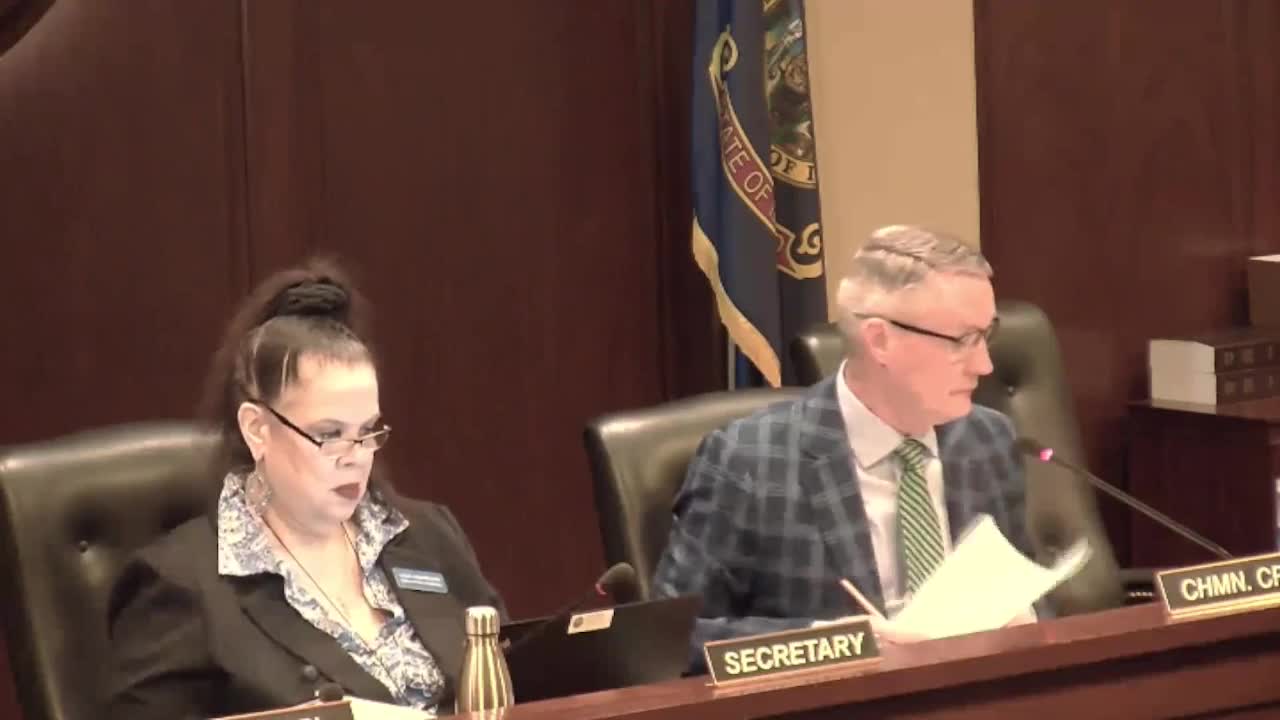
Multiple members raised operational and legal concerns. Representative Deiger and others asked how the bill would interact with exigent law enforcement situations such as hostage incidents or SWAT operations. Committee members said they were concerned that a person’s asserted right to stay might conflict with law enforcement’s duty and authority to remove people during a dangerous incident or to evacuate neighboring properties. Representative Scott acknowledged those scenarios are rare and said she had not fully thought through every law‑enforcement implication; members recommended the sponsor consult with law enforcement before the hearing.
Representative Achilles cited a regional example in which law enforcement asked neighboring residents to evacuate during an active warrant/SWAT incident; members said the bill’s consequences for surrounding households also deserve examination. The motion to introduce RS 32,093 carried; the sponsor and members agreed to coordinate with law‑enforcement stakeholders before the hearing.