Get Full Government Meeting Transcripts, Videos, & Alerts Forever!
Get email alerts on the Vocational Rehabilitation Audit topic
No spam. Unsubscribe anytime.
Forensic audit, $10M federal reallocation and $2.5M consulting contract put Idaho vocational rehab under federal scrutiny
Summary
Legislative auditors reported control weaknesses at the Idaho Division of Vocational Rehabilitation, RSA designated the division a high‑risk grantee, the governor recognized a $10 million federal reallocation requiring state match, and the agency contracted consultants in a noncompetitive process that now totals nearly $2.5 million.
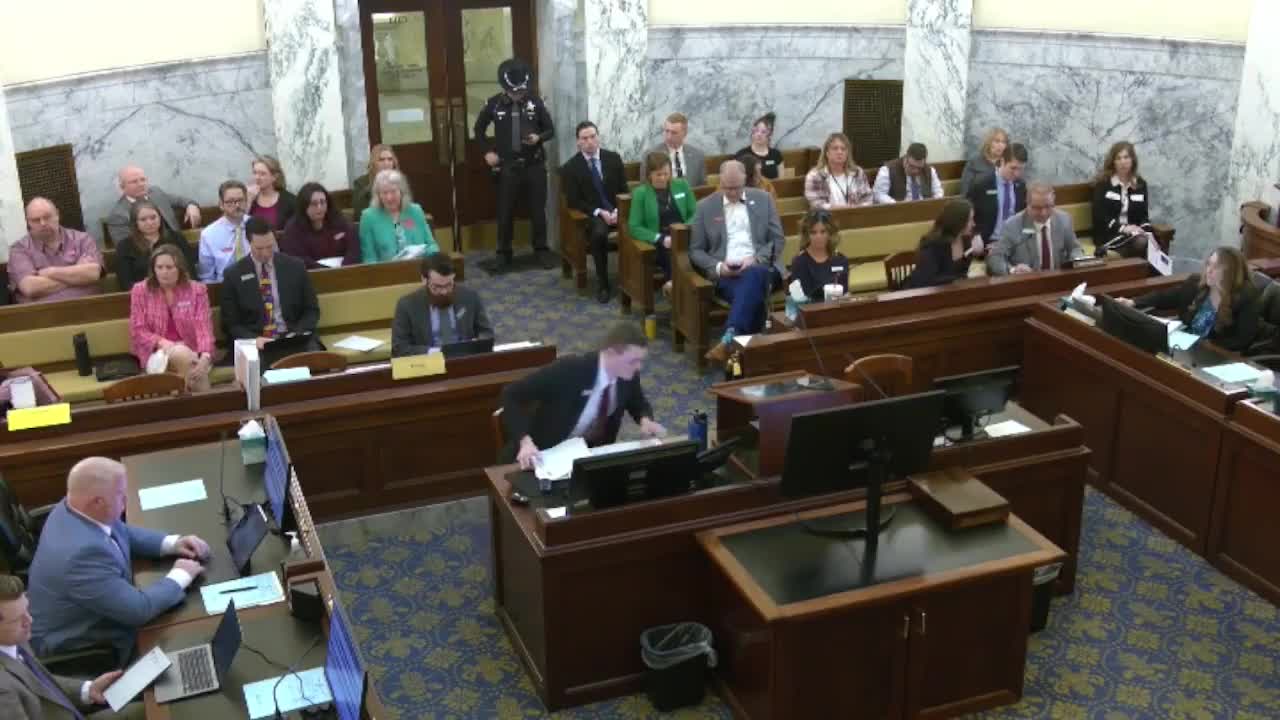
Brooke Dupree, a budget and policy analyst with the Legislative Services Office, told the Joint Finance-Appropriations Committee on Feb. 24 that the Division of Vocational Rehabilitation (IDVR) is managing a complex federal-grant situation after a late federal reallocation and internal reporting problems.
A noncognizable adjustment recognized by the governor added $10 million in federal Rehabilitation Services Administration (RSA) funds for fiscal year 2025, Dupree said; those federal funds carry a state-match requirement. The division has requested a $2.7 million one-time general-fund supplemental to provide the state match, and the governor recommended $1.7 million for services the division expects federal partners to deem ineligible.
Why it matters: The division helps Idahoans with disabilities obtain and retain competitive employment. Auditors and the federal grantor have raised concerns that IDVR did not track obligations and expenditures in a manner consistent with appropriation and grant requirements and that federal financial reporting was inaccurate or unsupported.
April Renfro of the Legislative Services Office audits division summarized the office’s accountability report, saying: “We issued one finding with this report and that was that the division did not establish procedures and control activities to ensure compliance with appropriation laws applicable to fiscal year 2024.” She told the committee the RSA designated IDVR a high-risk grantee and imposed specific conditions under 2 CFR 200.208.
Renfro said the auditors found weaknesses in financial management and in case-management reporting, including problems ensuring services were billed to the correct federal grant period and a backlog of invoices at the end of FY2024. She described a professional-services contract the division signed Aug. 12, 2024, for $499,999 and an amendment in November that expanded the contract by $1.9 million and extended the term through Dec. 2025. The amendment raised total potential consultant compensation to about $2.5 million; auditors report the division has paid nearly $900,000 so far and charged those invoices to federal funds.
Director Judy Taylor, interim director of IDVR, told the committee the division contracted outside experts because of technical problems in the agency’s case-management system and the need to reprogram reporting so services would be charged to the appropriate grant period. Taylor said that after initial work, the agency discovered additional documentation, contracting and invoicing deficiencies that required deeper consultant assistance and close coordination with RSA to avoid more severe federal actions.
Taylor said the consultant team brings “over 200 years of combined experience” and that roughly six full-time consultant staff were working on remediation. She described the situation as a risk to continuing operations: without federal funds the division could have failed to meet payroll and pay obligations in late 2024. Taylor said RSA encouraged the agency to engage the consultants and that using the reallocated federal funds to pay consultants allowed the division to pursue the technical work needed to continue operating.
Committee members pressed for specifics. Senator Cook asked whether the $1.7 million recommended supplemental represents services already rendered; Dupree replied the recommended $1.7 million is the division’s estimate of charges that federal partners have found unallowable for previously rendered services, primarily related to Pre-Employment Transition Services (Pre-ETS). Dupree and Taylor said Pre-ETS draw requests submitted in September showed a high rate of disallowance and that the $1.7 million estimate reflects anticipated unallowable charges through the fiscal year.
Audit scope and next steps: Auditors issued a fiscal monitoring review and requested a corrective action plan; RSA required an improved corrective action plan and placed the division on high risk. Renfro described potential RSA remedies if corrective actions fail, including stricter prior approvals, withholding future phases of awards, and in extreme cases financial recovery actions proportionate to harm to federal interests. The audits team added the matter to the 2024 single-audit work, which may identify question costs that will be reported to the federal grantor.
What the committee must decide: The committee must consider whether to approve state-match supplemental funding (the division requested $2.7 million; the governor recommended $1.7 million) that would allow IDVR to draw federal reallocation funds. The committee also heard that the forensic audit will review activity back to 2019 for maintenance-of-effort purposes and that a full dollar estimate of the liabilities remains unknown.
Ending note: The division remains operational but under intensified federal oversight. Auditors and the administration told the committee that additional oversight hearings are possible while remediation and the forensic audit proceed.