Get Full Government Meeting Transcripts, Videos, & Alerts Forever!
Get email alerts on the Graduation Requirements topic
No spam. Unsubscribe anytime.
State education department outlines proposed changes to high school graduation requirements
Summary
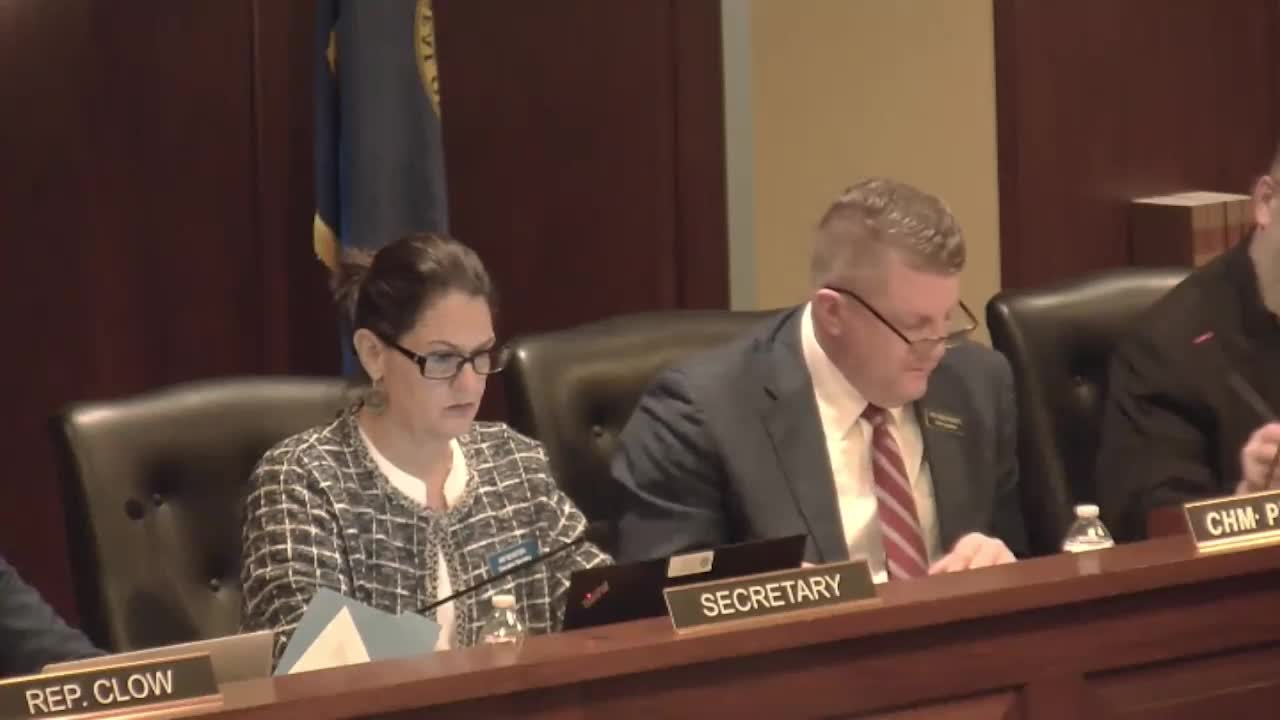
Greg Wilson, chief of staff at the State Department of Education, told the House Education Committee that the department is proposing updates to Idaho’s statewide high school graduation requirements intended to reflect current workforce needs and varied student pathways.
Greg Wilson, chief of staff at the State Department of Education, told the House Education Committee that the department is proposing updates to Idaho’s statewide high school graduation requirements intended to reflect current workforce needs and varied student pathways.
The department said the state minimum would remain 46 credits (29 core, 17 elective) but would shift how some core credits are defined: the standalone 1-credit communications requirement would be removed from the core and replaced by a required 1-credit digital literacy course; the department would support districts in awarding credit for mastery or for work-based/CTE/apprenticeship experiences; schools would be required to develop and post at least two localized pathways; and the existing senior project would be updated and rebranded as a future readiness project beginning with the class of 2028.
Wilson said, “the state requires an overall 46 credits. That's the state minimum requirement, and that's 29 core academic requirements and 17 elective requirements,” and emphasized that many local districts already exceed that minimum. He framed the package around four priorities: more flexibility for meeting core academic requirements, adding digital literacy as a core requirement, creating localized pathways, and replacing the senior project with a ‘‘future readiness’’ culminating experience.
Why it matters: the department said the digital literacy requirement would introduce foundational computer science concepts (algorithms, coding, artificial intelligence), internet safety and social-media practices, and instruction on evaluating online information. Wilson said those topics prepare students for work in sectors across Idaho — including agriculture, manufacturing, health care and the military — and stressed an implementation runway: the digital literacy credit would apply to students graduating after Jan. 1, 2028, giving districts roughly three years to prepare.
On communications: the department proposed removing the explicit 1-credit communications (speech) requirement from the statewide core because, Wilson said, there are no statewide standalone communications content standards and many districts deliver communication skills in different ways or via the Idaho Digital Learning Academy. He told the committee the change was intended to preserve local flexibility while keeping the 46-credit minimum. He also said districts that currently require a standalone speech class could retain it as a local requirement or elective.
On credit flexibility and localized pathways: the pending rule would allow districts and charter schools to apply credits earned in work-based learning, apprenticeships or CTE courses toward core academic requirements when those courses map to Idaho content standards. The rule would also require each district or charter to develop and publicly post at least two localized pathways — for example, college-ready, military readiness, apprenticeships or direct-to-career paths — that list core and elective credits, assessments and other opportunities aligned with postsecondary goals.
On the future readiness project: the department said the existing senior project will remain in effect through the class of 2027 and be replaced by a future readiness project for students graduating 2028 and later. The future readiness project would require an experiential component (work-based, service-based, research-based or a portfolio) demonstrating adopted college- and career-ready competencies. Wilson pointed to sample local practices in the record: West Bonner School District and Xavier Charter School as examples of districts requiring more than the state minimum, and cited local senior-project models in other districts (examples given by staff included Notice High School, Holmdale School District and Potlatch) to illustrate how projects can align with post-high-school goals.
Committee reaction: several legislators voiced concern that removing a standalone communications requirement could reduce students’ public-speaking and debate experience. Representative Nelson said the committee should “double down” on communication skills and warned that “kids today…can't even look you in the eye when they need to talk to you.” Representative Tanner and others told the department they had received emails and in-person concern from speech and debate teachers and community members. Representative Mathias asked how many public comments the department received; Wilson said formal public comments during negotiated rulemaking numbered roughly seven or eight and that outreach included meetings with the Idaho Speech and Drama Teachers Association.
Implementation and supports: Wilson said the department intends to provide templates, professional development and outreach to help districts implement the future readiness project and digital literacy requirement, and that districts could adopt changes earlier than 2028 if ready. He also agreed to provide the committee with records of workgroup meetings, meeting minutes and attendee lists on request.
No formal committee vote or final action on the pending rules occurred during the hearing; members asked questions and requested additional materials before the committee considers rule adoption or other legislative steps.
The committee adjourned after the information session; the department said it will coordinate with the committee when rules move toward formal action.