Get Full Government Meeting Transcripts, Videos, & Alerts Forever!
Get email alerts on the Aging Services Budget topic
No spam. Unsubscribe anytime.
Commission on Aging seeks one-time ARPA drawdowns, requests small ongoing inflation increase
Summary
The Idaho Commission on Aging told the Joint Finance-Appropriations Committee it has used American Rescue Plan Act funds for one-time modernization and service enhancements, is requesting remaining ARPA drawdowns by the Sept. 30, 2025 deadline, and seeks a modest ongoing general-fund inflation adjustment for FY2026.
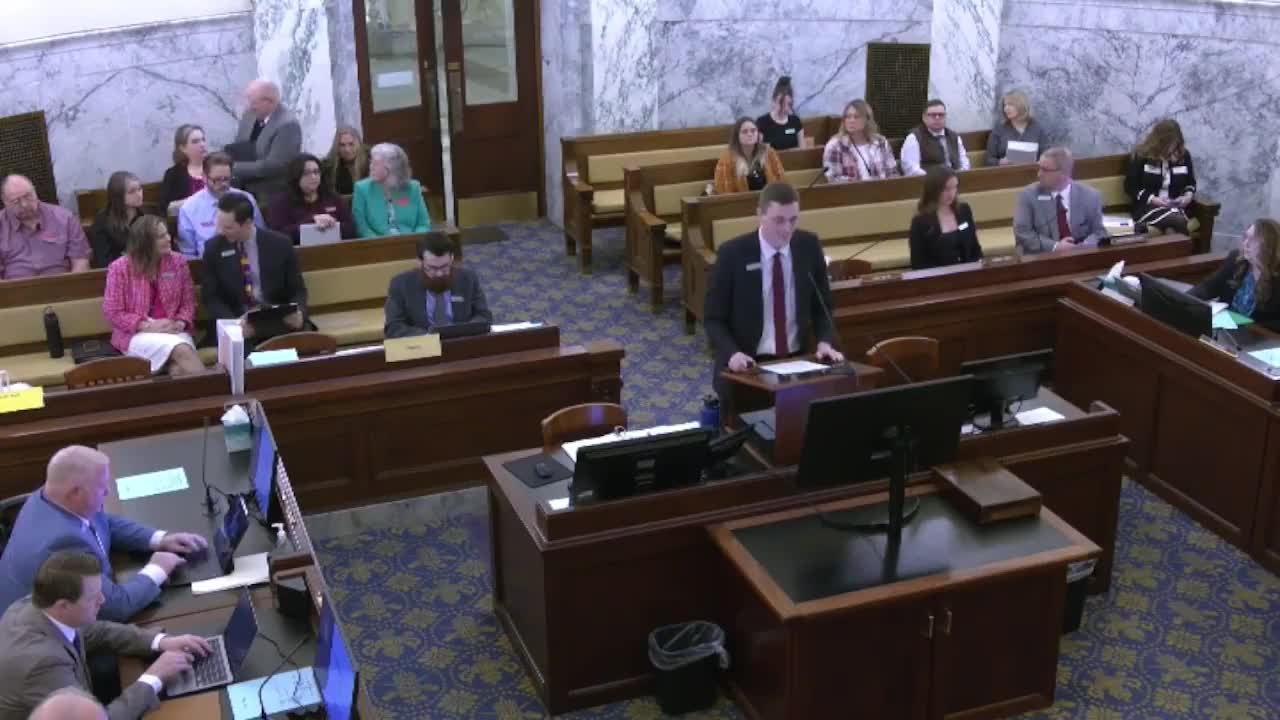
Colin McGurkin, a budget and policy analyst with the Legislative Services Office, told the Joint Finance-Appropriations Committee on Feb. 24 that the Idaho Commission on Aging has relied on federal grants — including one-time American Rescue Plan Act (ARPA) awards — to expand services and modernize meal and caregiver programs.
The commission is asking for a 3% ongoing general fund increase totaling $162,600 for FY2026, and a one-time federal draw of $500,000 to pay final invoices and draw down remaining ARPA funds before the Sept. 30, 2025 expiration, McGurkin said.
Why it matters: The commission directs federal Older Americans Act funding and state Senior Services Act resources to six local Area Agencies on Aging (AAAs) that deliver meals, transportation, caregiver support and adult protective services across Idaho. Committee members pressed agency leaders about which services are one-time ARPA-funded enhancements and which will require continued state support when ARPA funds end.
McGurkin summarized five years of funding and spending history, saying the commission expended about $16.7 million in FY2024, with roughly 88% of that amount classified as trustee and benefit payments to AAAs. He said the agency has authorized 15 full-time positions (15 FTE) with one reported vacancy and has repeatedly requested one-time federal appropriations since FY2022 to use ARPA and other federal balances for modernization projects.
Judy Taylor, director of the Idaho Commission on Aging, told the committee the agency used ARPA and other one-time funds for pilot programs and service expansions, including a pilot to support unpaid caregivers of people with dementia and funding to increase meal capacity. “We have followed [guidance] to the T,” Taylor said, adding the commission intended ARPA for one-time enhancements rather than ongoing programs.
Taylor described two caregiver programs the commission runs: a federal Older Americans Act–funded caregiver program serving people 60 and older and a state-funded high-risk caregiver pilot (often called the GrAMA pilot) targeted to caregivers for people with memory impairment. She said community health workers embedded with AAAs performed in-home assessment and planning for high-risk caregivers.
Committee members asked several operational questions. Senator Cook asked whether the commission could specify how much funding went to Alzheimer’s- or dementia-related services; McGurkin said he did not have a specific Alzheimer’s-only dollar figure available and would follow up. Representative Mitchell pressed on a $25,000 line item to cover staff time spent processing ARPA invoices and contracts; Vicki Janzick, project manager for the commission, explained that staff hours are direct-billed to federal grants so the $25,000 pays administrative costs that can be charged against the appropriate federal awards rather than being funded from other federal sources.
Taylor said ARPA-supported items that will end when federal balances expire include memberships and some enhanced training for adult protective services staff; the commission intends to preserve salaries first where possible and scale back service hours (for example, respite hours) if necessary. She credited recent state funding for raising meal rates by $0.25 per meal and said the commission had eliminated the home-delivered meals waitlist.
The commission’s FY2026 request aligns with the governor’s recommendation and includes the ongoing $162,600 for inflationary adjustments (about $155,000 of that for a 3% increase in trustee and benefit payments to AAAs), a small 2% operating increase for the commission itself, and one-time requests to complete ARPA drawdowns.
Taylor closed by saying the commission aims to “improve systems for efficiency and quality” and to use appropriated funds “invested wisely, with outcomes monitored and reported transparently.”
What remains unresolved: Committee members asked for a follow-up on Alzheimer’s-specific spending and additional detail on what in the base budget supports Meals on Wheels and home-delivered meals; Taylor said she would provide that information to the committee by email.
Ending note: The presentation left the committee with a clear delineation of which items are one-time ARPA-funded enhancements and which the commission has asked the legislature to consider for ongoing support. The committee did not take a vote on the commission’s request during the hearing.