Get Full Government Meeting Transcripts, Videos, & Alerts Forever!
Get email alerts on the Initiative Process Distribution topic
No spam. Unsubscribe anytime.
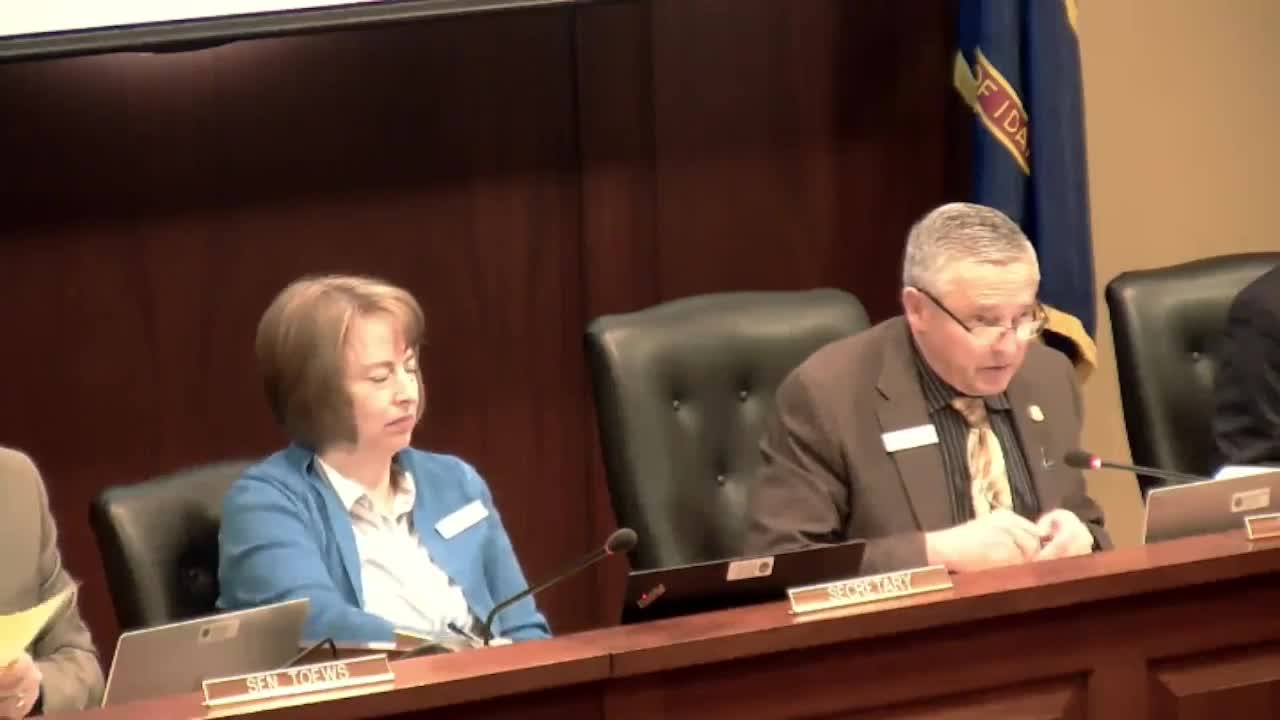
Senate committee advances constitutional amendment changing initiative signature distribution after hours of testimony
Summary
The Senate State Affairs Committee voted 5-3 to send SJR 101 — a proposed constitutional amendment that would require petitioners to gather 6% of registered voters in each of Idaho's 35 legislative districts — to the Senate floor after a lengthy hearing featuring widespread public opposition and sponsor defense.
The Senate State Affairs Committee on Friday voted 5-3 to send Senate Joint Resolution 101 to the Senate floor with a “due pass” recommendation after a multi-hour hearing that drew dozens of public comments and sustained debate among senators.
SJR 101 would keep the existing statewide total number of signatures required to place an initiative or referendum on the ballot (approximately 6% of legal voters statewide) but change how those signatures are gathered: rather than allowing petitioners to collect most signatures from a subset of districts, the proposal would require petitioners to collect 6% of registered voters in each of Idaho’s 35 legislative districts. Sponsor Senator Doug O'Connellitz (R., Legislative District 3) told the committee the measure is intended to ensure initiatives reflect statewide participation and to limit what he described as outside “big money special interests” focusing signature drives in limited areas.
“We're simply putting the question on the ballot so that the people can decide if this is the way they'd like to address these big money special interests,” O'Connellitz said during his remarks.
Supporters of the resolution argued it would promote broader geographic engagement and limit the ability of out‑of‑state donors to “buy” ballot access by concentrating resources in a few population centers. Dean Hagerman, a Boise voter who testified in support of the amendment, said it would give Idaho voters the opportunity to decide whether the current rules ought to change.
Opponents said the change would effectively nullify the initiative process for most grassroots campaigns and hand veto power to a single district. Dozens of Idaho residents, nonpartisan groups and conservation and civic organizations urged the committee not to advance the measure. Ryan McGoldrick, representing Conservation Voters for Idaho, said Idaho already has a high signature threshold and that raising distribution requirements would favor paid signature gatherers and outside money.
“Idaho is not California,” McGoldrick said. “Ballot initiatives in Idaho are currently extremely difficult to pass.”
The League of Women Voters of Idaho and the Idaho Conservation League testified in opposition, saying the initiative and referendum processes are a long‑standing part of Idaho law and that the proposed change would suppress rural and grassroots voices. Dr. Jean Henscheid, co‑president of the League of Women Voters of Idaho, told the committee that the league views the proposal as an infringement on citizens’ rights.
Testimony included examples from recent initiatives: witnesses who worked on the Medicaid expansion campaign described weeks of unpaid volunteer signature gathering across the state and said SJR 101 would have prevented that issue from reaching the ballot. Testifiers also noted that the Idaho Supreme Court struck down a related 2021 statutory change and described that decision as a warning that the proposed language could render the initiative process unusable.
Committee discussion reflected the split in public testimony. Some senators said they supported moving the resolution to the floor to give voters the final say; others said the proposal would amount to asking voters to vote away a fundamental right without being fully candid about the effect. Senator Ruptey (R.) warned that the very language being proposed had been deemed unworkable by the Idaho Supreme Court and could create a “tyranny of the minority” by allowing a single district to block statewide initiatives.
After debate the committee considered a motion by Senator Dan Hartog, seconded by Senator Toews, to send SJR 101 to the floor with a due pass recommendation. The recorded tally in committee was 5 in favor and 3 opposed; the committee used a roll call to confirm the result (final roll call names were noted in committee minutes; the transcript records a 5-3 outcome). The sponsor said advancing the resolution would merely give voters the opportunity to decide whether to adopt the change.
What happens next: If SJR 101 receives the required two‑thirds votes in both legislative chambers, it would go on the November ballot for voters to decide. Committee members and many public testifiers noted that even if the constitutional change passes, there remain other policy tools — including disclosure and campaign‑finance measures — that lawmakers could pursue to address concerns about out‑of‑state money.
The committee hearing included more than 50 members of the public who testified or sought to testify by phone or video, and several statewide civic groups opposed the measure. The committee chair thanked participants for braving winter weather to attend the hearing in person and by remote testimony.