Get Full Government Meeting Transcripts, Videos, & Alerts Forever!
Get email alerts on the Constitutional Defense Fund topic
No spam. Unsubscribe anytime.
Committee advances bill letting constitutional defense council consider state help for citizens in federal grazing and water cases
Summary
House Bill 148, which would authorize Idaho’s constitutional defense council to consider requests from citizens involved in federal lawsuits concerning grazing and water rights, was advanced out of the Resource and Conservation Committee to the full House with a due-pass recommendation following testimony and extended questioning.
House Bill 148, which would authorize Idaho’s constitutional defense council to consider requests from citizens involved in federal lawsuits concerning grazing and water rights, was advanced out of the Resource and Conservation Committee to the full House with a due-pass recommendation following testimony and extended questioning.
The bill’s sponsor, Representative Bruce, told the committee: “This bill specifies the criteria, the procedures for the constitutional defense council to consider such request and provide details on types of assistance offered.” He said the measure is meant to create a predictable process so Idahoans who face federal suits affecting grazing or water rights can petition the council for state assistance going forward.
Supporters including Russ Hendricks of the Idaho Farm Bureau and a representative of an Idaho agricultural association urged the committee to approve the measure. Hendricks said the bill “is the intent of this bill is to go from this point forward, not to reach back into the past,” and described it as providing “common sense and reasonable sideboards” for when the state might reimburse private legal costs. The Idaho Conservation League’s government-relations director, Jonathan Oppenheimer, testified in opposition and raised statutory and constitutional concerns, telling the panel he believes the bill “is backward looking as well” because of language that refers to citizens “who is or was in a legal proceeding.” Oppenheimer also cited a 2009 attorney-general letter and a long-standing Idaho Supreme Court principle limiting appropriations to public purposes as obstacles to reimbursing private legal fees.
Members pressed the sponsor and legal staff on timing and scope. Representative Bruce said the bill narrows petitions to lawsuits “brought by the federal government concerning grazing or water rights” and explained petition timing is flexible: petitioners may apply while a case is pending or after a case concludes, and he noted a 30‑day action window in the bill for the council to deliver a decision. Bruce also said the statute would not compel the council to spend money: “this does not compel them to spend any money,” he told the committee.
Committee members repeatedly queried fiscal exposure. Representative Bruce provided past council expenditures as context, saying some fiscal years had payments (he cited $151,000 in 2017 and $487,000 in 2019) and noting there were no payments in 2023, but said he was unable to obtain a full accounting from the attorney general’s office. Several members, including Representative Mickelson, warned that private litigation against the federal government can exceed a million dollars and that taking on such cases could expose taxpayers to large attorney-fee bills if the council elects to intervene.
The Idaho Conservation League urged the committee to hold the bill, arguing the council’s existing statutory authority focuses on litigation “on the part of the state” rather than reimbursing private legal costs. Supporters countered that adding clearer statutory authority would allow the council to intervene earlier on cases that affect a broad segment of Idaho citizens rather than leaving individuals to litigate on their own.
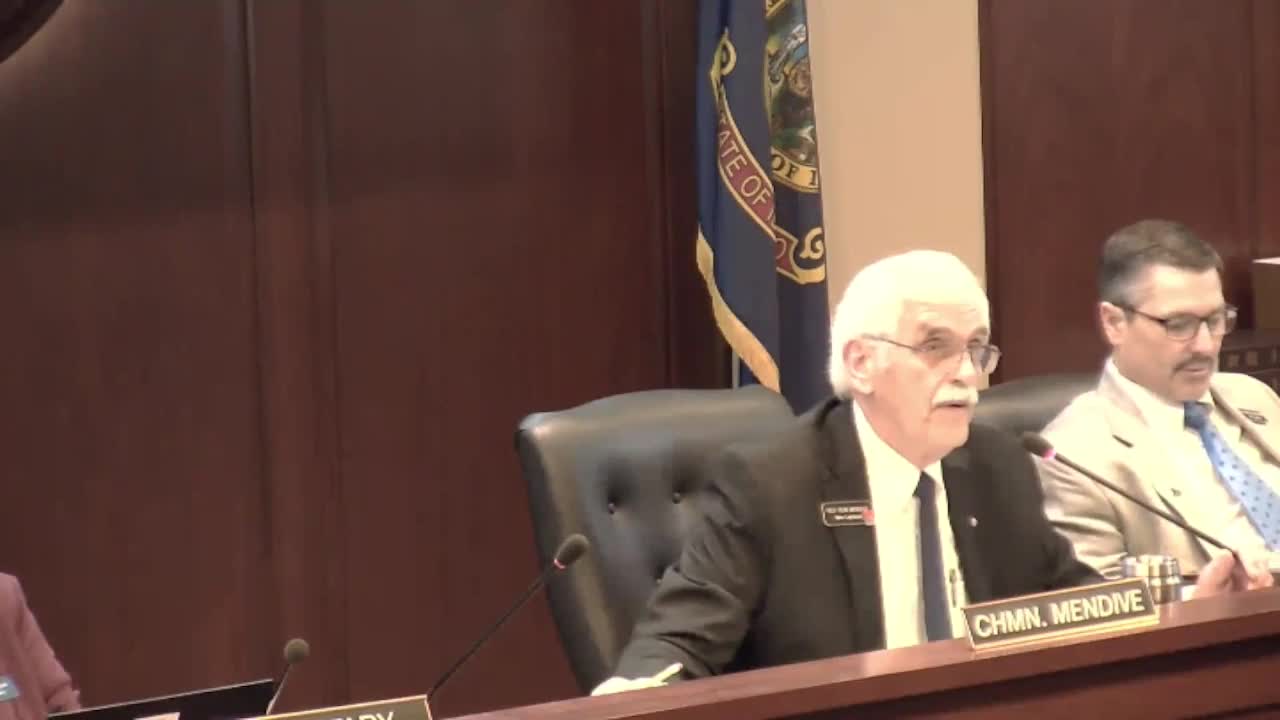
After public testimony and floor discussion, the committee recorded a voice vote. The chair announced the ayes had it and House Bill 148 will go to the House floor with a due-pass recommendation.
The committee did not adopt language clarifying retroactivity during the hearing; multiple members asked whether the phrase “is or was” in the petitioner definition would permit claims arising before the bill’s effective date. The sponsor said the council is expected to decline petitions for cases predating enactment, but members asked staff to consider clearer drafting if the committee advances the bill on the floor.
Votes at a glance: The committee approved a motion to send House Bill 148 to the floor with a due-pass recommendation by voice vote; no roll-call tally was taken in committee.
Next steps: The bill will appear on the House floor for further consideration and possible amendment.