Get Full Government Meeting Transcripts, Videos, & Alerts Forever!
Get email alerts on the School Admissions topic
No spam. Unsubscribe anytime.
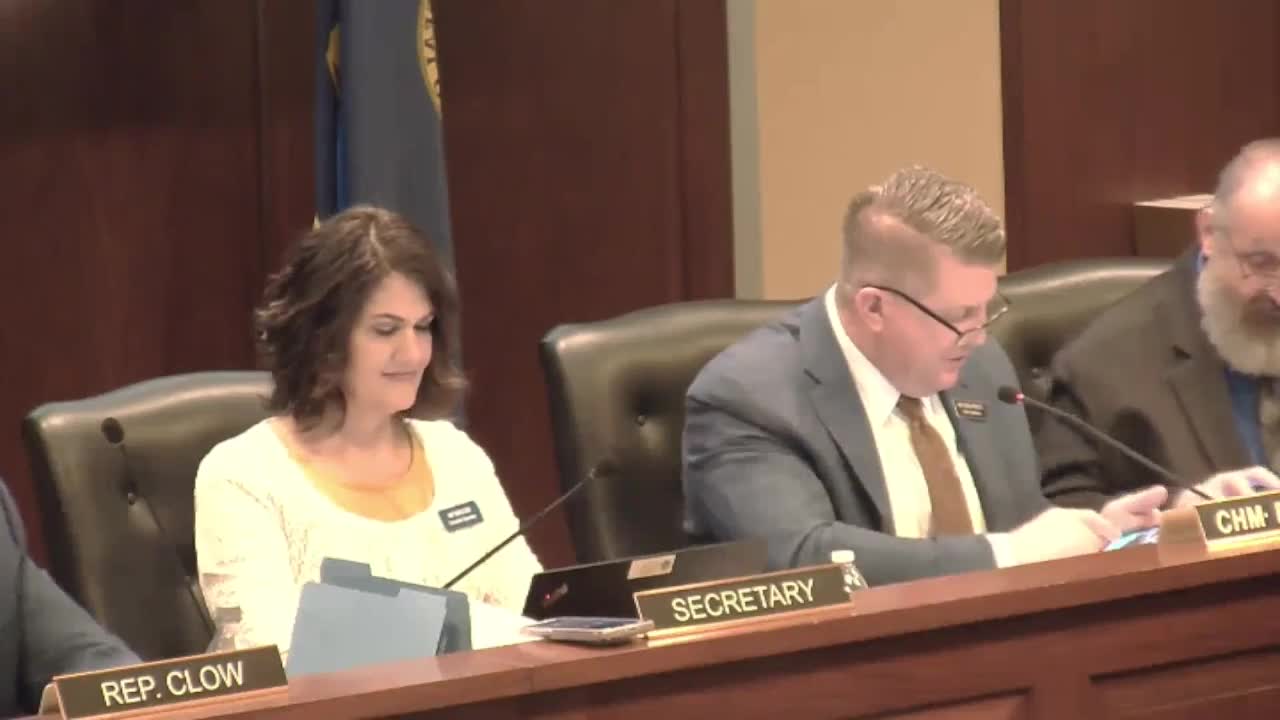
House committee approves bill to give charter-school admission preference to military families
Summary
The House Committee on Education voted 12-2 to send House Bill 163 to the floor with a due-pass recommendation. The bill would add children of active-duty service members and certain activated National Guard and Reserve personnel to charter-school admission preference lists.
Boise — The Idaho House Committee on Education voted 12 to 2 to send House Bill 163 to the full House with a due-pass recommendation after roughly an hour of testimony and debate.
The bill, sponsored by Representative David Levitt, would add “families with at least 1 parent or legal guardian on active duty or active guard and reserve duty as defined in Title 10 U.S. Code subsection 101” to the existing charter-school admissions preference list. Levitt told the committee the change is intended "to support military families by giving their children priority access to charter schools."
Supporters — including military spouses, charter-school administrators and veterans — told the committee that frequent relocations and deployments create academic disruption for military children. Steve Lambert, a charter-school leader and 24-year Air Force veteran, said the average military move every two to three years makes it difficult for families to secure a consistent, high-quality education. "Granting a charter school enrollment preference to dependent children of active duty military families is beneficial for several reasons," Lambert said in testimony.
Representative Levitt said the bill would not alter the underlying lottery system; rather it inserts military families into the existing priority sequence. Levitt outlined the proposed priority order to the committee: founders' children first, then military families under the bill, then siblings of enrolled students, then transfer students and then residents in a school's primary attendance area before the general lottery.
Committee members and witnesses clarified how that priority would operate in practice. Emily McClure of the Idaho Charter School Network told the committee that charter schools maintain an ongoing wait list after a lottery is held and that, under current practice, a qualifying student would be placed at the top of that wait list. Terry Ryan, chief executive officer of Bloom and board chair of the Idaho Charter School Network, addressed the same practical effect: "They would get access to the school. They would jump first in line," he said.
Critics on the panel expressed concern that priority for military families could displace local residents or siblings of current students on wait lists. Representative Harris said she supports the military but worried the bill would allow nonresident service families who stay for a few years to move ahead of long-term local families and even siblings of students already attending a school. Representative Wisniewski (spelled in transcript as both "Wisniewski" and "Vishniewski" in places) also voiced concern about capacity at single-site schools near large bases such as Mountain Home Air Force Base.
Committee discussion included data and scope. Representative Levitt cited an estimated 4,200 active-duty service members in Idaho and approximately 2,900 children who could qualify under the bill statewide. Witnesses and advocates emphasized those numbers are distributed across the state and represent a range of ages; not every eligible child will seek charter admission.
The sponsor and several committee members said the bill requires no new state funding and would leave charter schools' operational autonomy intact. After debate, Representative Cloud moved to send the bill to the floor with a due-pass recommendation. The committee recorded a roll-call vote and the motion carried 12 to 2.
Looking ahead, the measure will be scheduled for floor action where members who supported sending the bill out of committee said they will take a fresh look at technical details and possible adjustments during the legislative process.
Votes at a glance: House Bill 163 — Send to floor with due-pass recommendation. Motion carried 12–2.