Get Full Government Meeting Transcripts, Videos, & Alerts Forever!
Get email alerts on the Insurance Budget Wildfire Pbm topic
No spam. Unsubscribe anytime.
Department of Insurance outlines budget, discusses PBM oversight and wildfire insurance pressures
Summary
The Department of Insurance presented its FY2026 requests, described implementation of pharmacy benefit manager reporting from last year’s PBM reform, and warned of wildfire‑driven pressure on property insurance markets while proposing mitigation and reinsurance ideas.
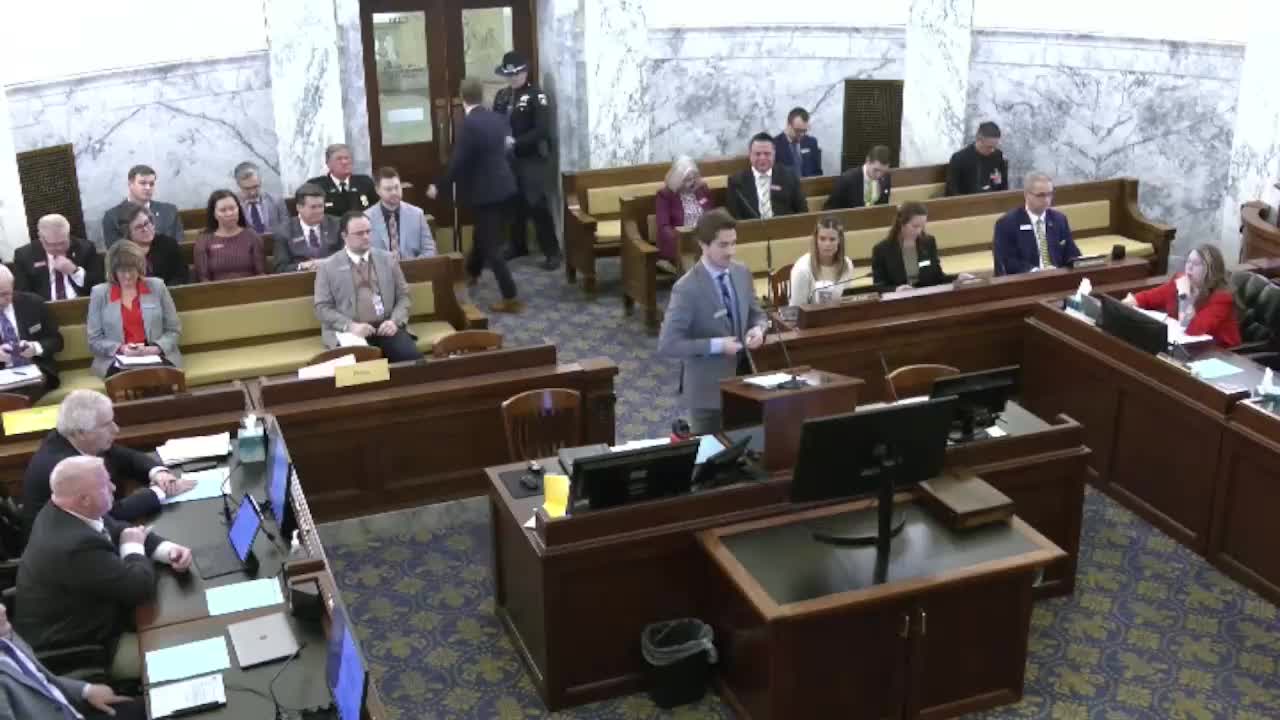
The Joint Finance Appropriations Committee on Jan. 21 heard the Department of Insurance’s budget overview and enhancement requests for fiscal year 2026, and discussed the department’s work on pharmacy benefit manager oversight, the high‑risk reinsurance pool and wildfire‑related insurance market stress.
Noah Peterson, legislative budget analyst, summarized the Department of Insurance’s two programs—Insurance Regulation and the State Fire Marshal—and noted the department has 75.5 approved full‑time positions (63.5 in insurance regulation; 12 in the fire marshal division). He said premium tax revenues are distributed across several statutory buckets, including an Arson, Fire and Fraud Prevention Fund and an Insurance Administrative Fund used for licensing and investigations.
Director Dean Cameron told the committee the department is implementing reforms from last year’s PBM legislation and has added staff to handle complaints and data collection. “She’s receiving numerous complaints,” Cameron said of the new analyst the department recently added, and the department is collecting required data submissions from PBMs; most have complied, he said. The department is working to reconcile non‑compliant filers and to use the data to determine dispensing fees as required by statute.
Cameron also described the state’s work on health‑insurance affordability, saying the state obtained a Section 1332 waiver to secure federal matching funds that helped lower rates and increase carrier participation on the exchange. “We instituted that 3 years ago…we have doubled the number of carriers participating on the health insurance exchange,” Cameron said.
Committee members pressed on wildfire impacts to property insurance markets. Cameron said catastrophic losses, inflation and reinsurance cost increases have tightened the property market and prompted some carriers to reduce writing in higher‑risk parts of Idaho. “We burned a million acres, just under a million acres,” Cameron said of recent wildfire activity; he described cases where insurers non‑renewed policies citing wildfire exposure even in regions that saw little local fire activity.
Cameron described a proposal the department plans to pursue this session that would create a pool with two functions: help homeowners harden properties against wildfire (for example, clearing embers and vegetation), and provide a mechanism to help carriers remain in the market by spreading risk. He said the department has also observed a shift into the surplus lines (non‑admitted) market for homeowners, where consumer protections are fewer.
The department requested a staff actuary and other technical positions for FY2026 (one request cited $201,900 from the insurance administrative fund, including roughly $198,900 ongoing for personnel); it also requested compensation increases for fire marshal staff and $162,200 in one‑time capital outlay for equipment and vehicle replacements. Peterson told the committee the governor’s recommendation mirrors the agency’s package as presented.
Representative Furness and other lawmakers asked for a brief explanation of the high‑risk pool and its role in holding down individual rates; Cameron said the pool functions like reinsurance that pays shares of large claims and helps carriers spread costlier risks.
No formal votes were taken. Committee members asked the Department of Insurance for periodic updates on PBM data, complaint volumes, and the department’s wildfire‑mitigation/reinsurance proposal as the legislative session advances.