Get Full Government Meeting Transcripts, Videos, & Alerts Forever!
Get email alerts on the Abandoned Mine Lands Fund topic
No spam. Unsubscribe anytime.
Committee advances bill to direct more mine license tax toward abandoned mine cleanup
Summary
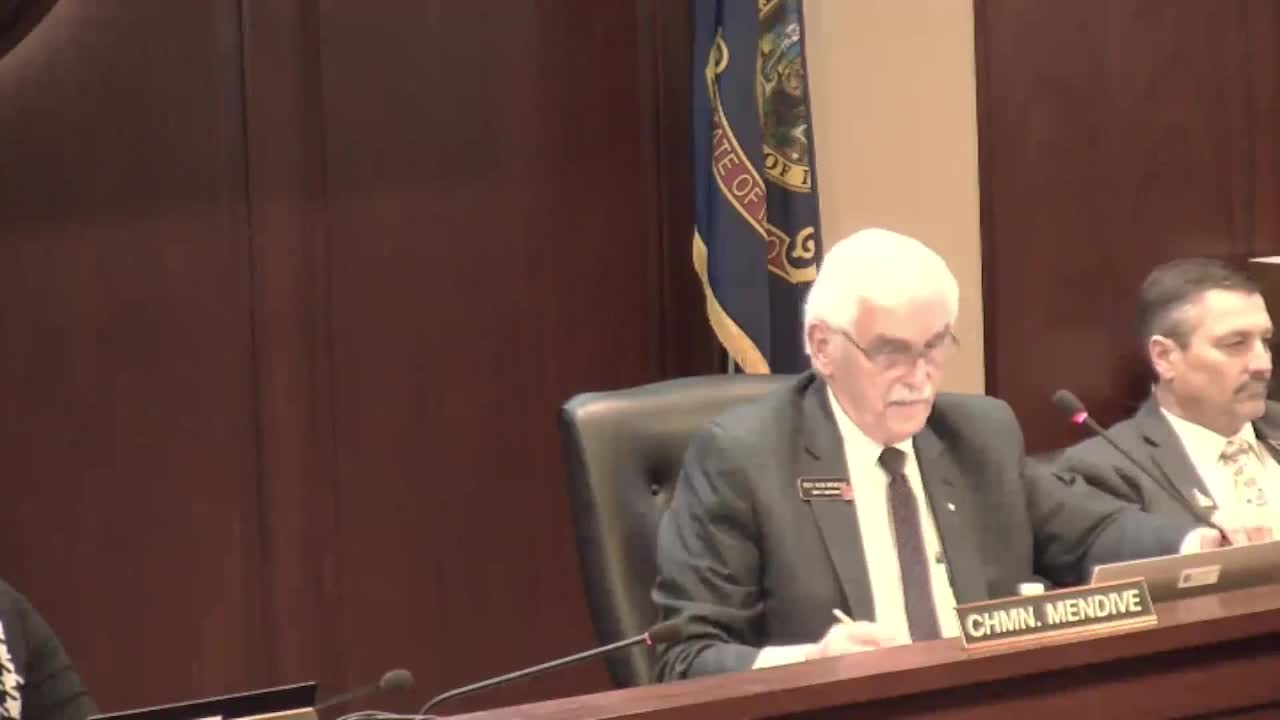
The Idaho House Resources and Conservation Committee voted to send House Bill H226 to the floor after sponsors said it would stabilize the Abandoned Mine Lands Fund by redirecting a larger share of the mine license tax, limiting administrative draws, and creating a public advisory committee.
The Idaho House Resources and Conservation Committee voted to send House Bill H226 to the House floor with a “do pass” recommendation after sponsors and industry representatives described the measure as a way to stabilize the Abandoned Mine Lands Fund and prioritize on-the-ground reclamation.
State Representative Dustin Manwaring of Pocatello, who presented the bill, said its purpose is “to stabilize this fund so that in down cycles we don't see the same pattern of ongoing expenditures depleting the fund.” He outlined four main provisions: redirecting a higher percentage of the mine license tax to the Abandoned Mine Lands Fund; allowing voluntary contributions to be directed to future mitigation; requiring a majority of fund expenditures to go toward eligible abandoned-mines projects rather than management or personnel costs; and creating a public advisory committee with representatives from counties, state agencies, conservation groups and mining companies.
Benjamin Davenport, executive vice president of the Idaho Mining Association, told the committee the Abandoned Mine Lands Fund “was created to assist in clean up of Idaho mine lands that were abandoned by mining generations from the past.” He described the fund as a variable, production-based resource, saying the mine license tax is “1% of production” and that “one third of that goes into the Abandoned Mine Lands Fund. We're asking to put 50% of that rather than 1 third.”
Davenport and Manwaring told the committee the fund has fluctuated widely: Davenport said the fund received more than $700,000 in a single year around 2001, and recounted recent annual receipts of about $62,000, $119,000, $100,000 and $161,000 in successive years. Manwaring and committee staff said the fund’s average over the last five years was roughly $70,000. Committee discussion noted that ongoing personnel and management costs have been a substantial part of past expenditures from the fund.
Committee members questioned specifics of the bill. Vice Chairman Shepherd asked who would fill a slot described in the draft as a representative of “conservation interests”; Davenport said the slot could be filled by a representative of a non‑governmental group such as Trout Unlimited, the Idaho Conservation League or Idaho Conservation Voters. Representative Boyle asked why the Office of Energy and Mineral Resources is listed on the advisory committee rather than the Department of Lands; Davenport replied the intention was to include an executive-branch seat in addition to the Department of Lands, which would manage the fund and the advisory committee.
Representative Vanderwouda asked whether advisory committee members would be compensated; Davenport answered no, calling it a voluntary, advisory body with no authority to make legal policy decisions. Representatives also asked about the fund’s recent uses; Manwaring said legislative staff analysis showed main expenditures in the past decade were for gross salary and wages, employee benefits, professional services and, in earlier years, maintenance and repairs.
With no public testimony, Representative Mikkelsen moved to send House Bill H226 to the House floor with a do-pass recommendation. The committee approved the motion by voice vote; the chair declared “ayes have it.”
If advanced on the House floor and enacted, the bill would change the share of the mine license tax directed to the Abandoned Mine Lands Fund, set limits on administrative spending from that fund, allow voluntary contributions, and create an advisory committee to help set priorities for reclamation work.