Get Full Government Meeting Transcripts, Videos, & Alerts Forever!
Get email alerts on the Election Law topic
No spam. Unsubscribe anytime.
Lawmakers introduce bill to narrow absentee ballot eligibility, add age-based allowance
Summary
Representative Joe Alfieri introduced RS 32,124 to restrict reasons voters may request absentee ballots while explicitly allowing any voter age 65 or older to apply; the committee voted to introduce the proposal for printing.
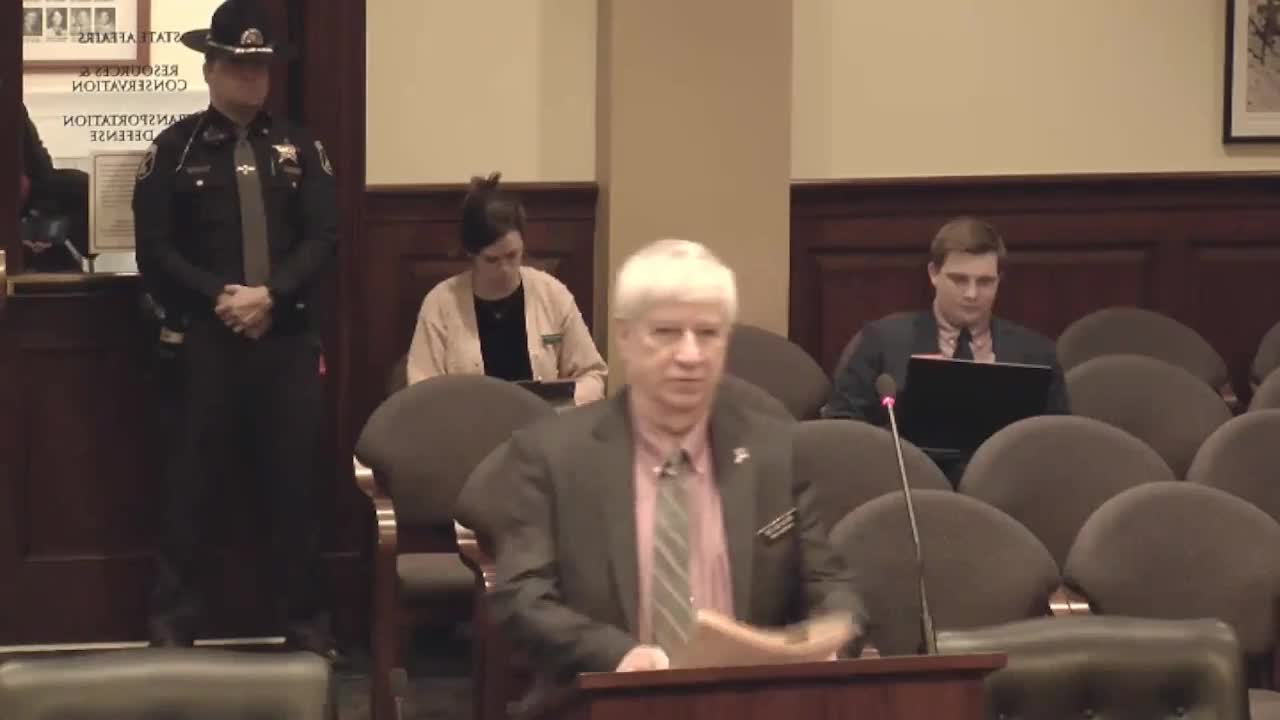
Representative Joe Alfieri introduced RS 32,124 on behalf of voters in District 4 in Coeur d'Alene, proposing changes to how absentee ballots are distributed and who qualifies to request one. "There is 1 change to what we've done this year and that is to put in an age qualification as well and that is that anyone over 65 can also apply for an absentee ballot with no issue," Alfieri said. He told the committee the bill is intended to narrow qualifying reasons for absentee ballots and to limit what he described as a potential avenue for fraud when ballots are mailed.
The proposal lists specific qualifying reasons, Alfieri said, including military service, diplomatic missions, being out of state for school, infirmity and living in a district that uses only absentee ballots. Alfieri also said clerks would not be expected to follow up to confirm each applicant's claimed reason: "We're not going to be asking the clerks to follow-up and to determine that person actually has a reason for it." He added that the measure is aimed at reducing opportunities for mishandling ballots sent through the mail.
Committee members asked for clarifications. Representative Barbieri asked whether a section that appears to criminalize representing another person's eligibility was intended to target third-party communications; Alfieri said that was not the intent and the bill's focus is on electors' own truthful statements. Representative Dygaard, representing a rural area where many residents are engaged in agriculture, asked whether workers who must be away rounding up cattle during elections would still qualify; Alfieri pointed to early voting options and said work-related inability to vote could qualify a voter for an absentee ballot. Representative Mickelson raised concerns that the bill appeared to favor older voters and questioned whether young parents with many small children would be disadvantaged; Alfieri responded that early voting and other options can address those circumstances and said he would provide data during the formal hearing.
Representative Scott moved to introduce RS 32,124 for print. The committee approved the motion by voice vote; the clerk recorded the motion as carried. The transcript does not record a roll-call tally.
The text of RS 32,124, as discussed, keeps an age-based exemption for voters 65 and older and narrows eligible reasons to a set listed in the draft. Alfieri noted the measure previously passed the House in an earlier session but failed to pass the Senate. The committee will schedule the proposal for a formal hearing where Alfieri said he can provide supporting data about absentee-ballot use and fraud risks.
Questions about administrative implementation — including whether county clerks would be responsible for verifying claimed reasons and how the bill would interact with counties' early voting windows — were not resolved in committee and were left for the hearing stage.