Get Full Government Meeting Transcripts, Videos, & Alerts Forever!
Get email alerts on the Recreation District Dissolution topic
No spam. Unsubscribe anytime.
Bill would create alternate path to dissolve recreation districts; committee holds bill for further study
Summary
Representative Jeff Ehlers presented House Bill 102 to allow a recreation district board majority to petition for dissolution as an alternative to a 20% voter-signature requirement; the committee voted to hold the bill at the chair's discretion for further study.
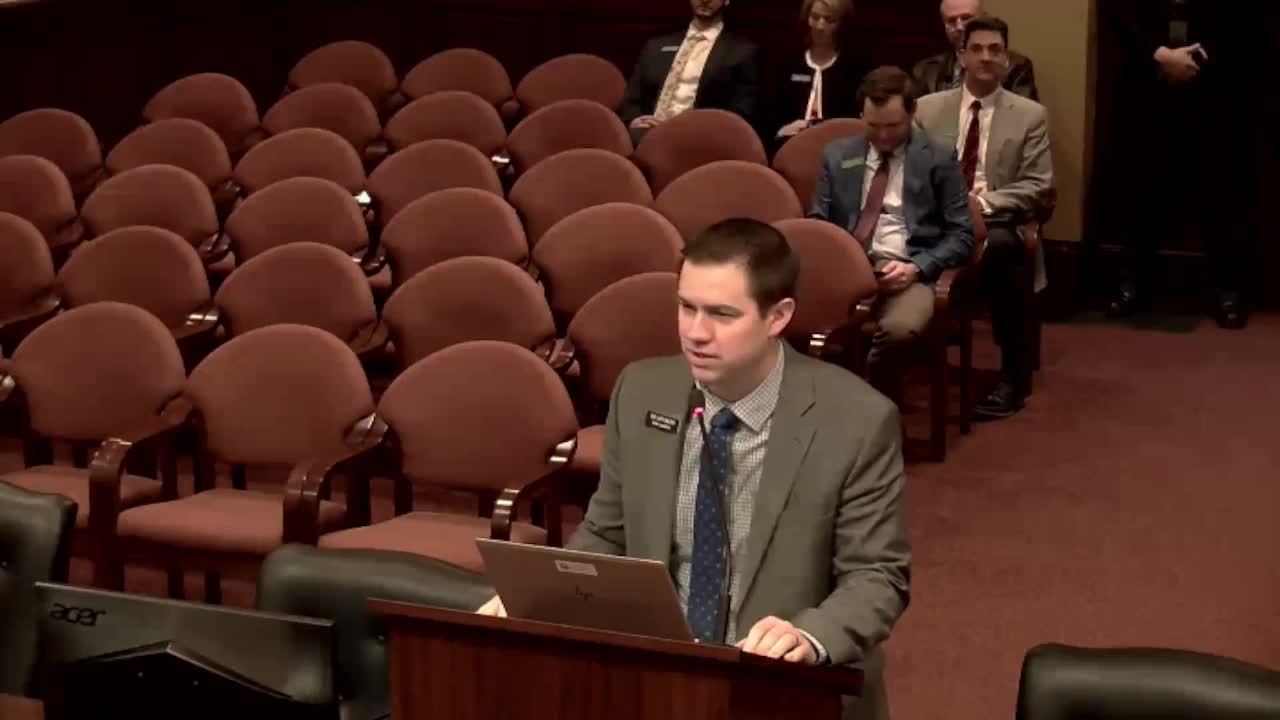
Representative Jeff Ehlers (District 21, Meridian) told the Senate State Affairs Committee that House Bill 102 would create an alternative pathway to dissolve recreation districts.
Ehlers described the local context in Meridian’s West Ada Recreation District, which historically required a petition signed by 20% of voters in the district to initiate dissolution. He said population growth has made that threshold difficult to meet, estimating the 20% threshold in his district would now require roughly 19,000 signatures. ‘‘This bill proposes an alternative path,’’ Ehlers said: instead of only the 20% petition (step 1a), a board majority could petition county commissioners to place dissolution on a public ballot (step 1b). The bill would still require step 2: a vote of the people to approve dissolution.
Senators asked whether other recreation districts around the state face similar issues. Ehlers said 32 other recreation districts exist and that some counties experiencing growth could find the alternative pathway useful; he emphasized the proposal is optional and district boards could still use the 20% petition route.
After discussion the committee considered a motion to hold House Bill 102 at the chair’s discretion to allow additional study. Senator Anthony moved to hold the bill; Senator Harris seconded. The voice vote carried and the bill was held subject to the call of the chair.
The committee did not adopt policy changes at the hearing. Lawmakers said the hold will allow caucus discussions and additional review of concerns raised by members.