Get Full Government Meeting Transcripts, Videos, & Alerts Forever!
Get email alerts on the University Budget Partnerships topic
No spam. Unsubscribe anytime.
University of Idaho reports stronger finances after cuts, outlines research and partnership priorities; president updates committee on Phoenix deal and DEI re‑s
Summary
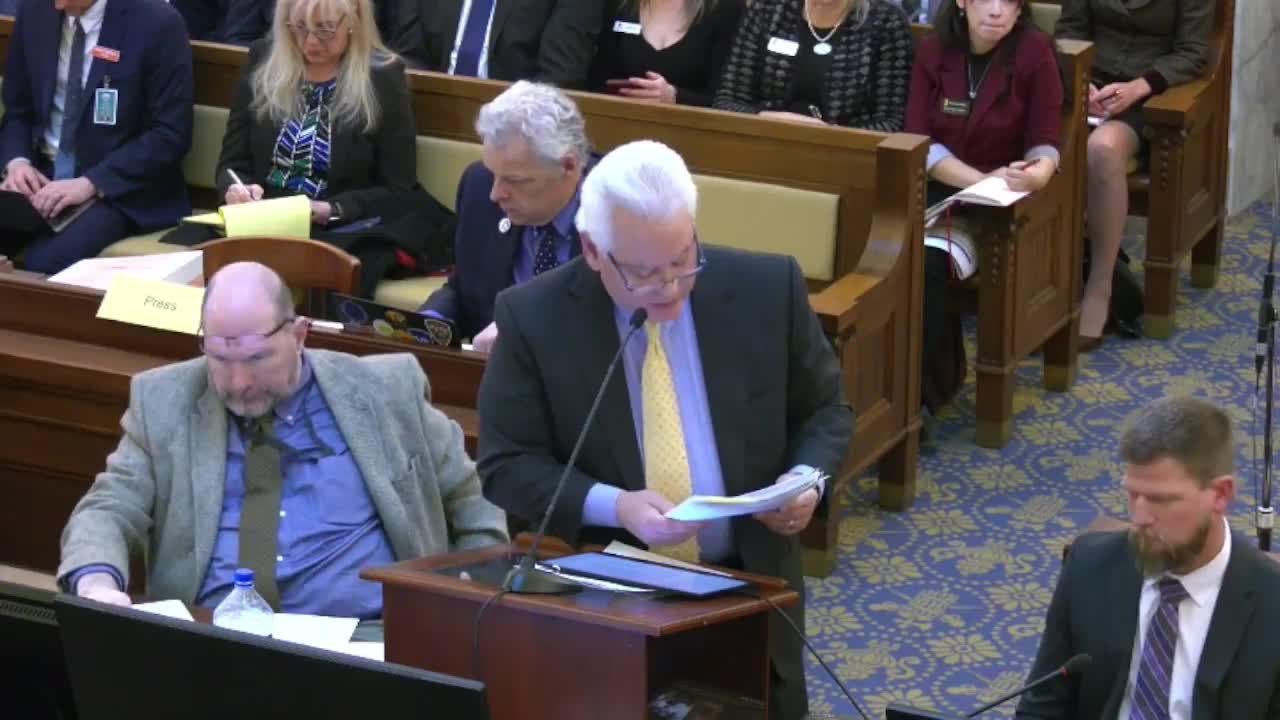
At a Jan. 27 Joint Finance‑Appropriations Committee hearing, University of Idaho President C. Scott Green told legislators the university’s finances have strengthened after a multiyear restructuring that included a roughly $26 million base reduction, but the school remains short of a 5% unrestricted reserve benchmark because of accounting treatment of retiree medical obligations.
At a Jan. 27 Joint Finance‑Appropriations Committee hearing, University of Idaho President C. Scott Green told legislators the university’s finances have strengthened after a multiyear restructuring that included a roughly $26 million base reduction, but the school remains short of a 5% unrestricted reserve benchmark because of accounting treatment of retiree medical obligations.
Green said the university took aggressive actions after inheriting a weak cash position and “we were about 18 months from running out of cash” before stabilizing the institution. He said the university now maintains sufficient cash to meet short‑ and long‑term obligations and has improved its unrestricted net position when combined with restricted reserves, but must continue work to meet the State Board reserve target.
Why it matters: The University of Idaho is the state’s land‑grant research university, and the committee’s scrutiny focused on financial stability, federal grants and external partnerships that could affect state priorities and system capacity for medical and energy workforce training.
Financial posture and budget requests - Base reductions and recovery: Kevin Campbell, the Legislative Services Office analyst, recounted the university’s recent base reductions and described FY2024–FY2026 changes in appropriations, enhancements and tuition reappropriation. Green said the university has reduced employee head count from 2019 levels even as enrollment has risen. - Reserve and net position issues: Green and the university’s finance staff explained that an accounting change tied to other post‑employment benefits (OPEB) — retiree medical obligations — reduced unrestricted reserves on the balance sheet. Green said the university now shows the related assets and funds in restricted accounts, which contributes to a positive total net position but keeps unrestricted reserve ratios below board targets. - Requested enhancements: The university sought operational capacity enhancement funding targeted to contract, inflation and compensation needs. Campbell said University of Idaho requested roughly $996,300 in OCE for FY2026, and the institution requested $900,000 in endowment adjustments in that request package.
Phoenix affiliation update and financial safeguards President Green described an agreement with the sellers of the University of Phoenix that extends the exclusive negotiation window through June 10 and allows non‑exclusive discussions; he said the arrangement included an initial $5 million payment to the University of Idaho at signing to offset expenses. Green said the agreement contains a breakup provision that could provide up to $20 million to the university to offset transaction expenses should the sellers decide to pursue other buyers or public markets.
Green emphasized that any path forward with a Phoenix affiliation would require legislative review and State Board consideration before proceeding.
DEI offices and student support reorganization Green told the committee that, following the State Board of Education resolution on a statewide DEI policy, the university closed or reorganized offices previously focused on diversity and equity at the end of 2024. He listed the offices affected — the Office of Equity and Diversity, the Office of Multicultural Affairs, the Black/African American Cultural Center, the LGBTQA office and the Women’s Center — and said staff positions were reassigned to other units, primarily under the Dean of Students. He said the chief diversity officer role was refocused as executive director for tribal relations and that several services were consolidated into programs such as Vandal Success and a new first‑generation student support unit that are open to all students.
Medical education, WWAMI and potential partnerships Committee members pressed about the state’s MD pipeline. Jeff Siegmiller (WWAMI) and Green described continued enrollment in the WWAMI program and exploratory talks about an affiliation or expanded partnership with the University of Utah School of Medicine; Green said any change would require State Board approval and possible legislation. Green said the University of Idaho remains committed to training physicians and emphasized that WWAMI and related partnerships serve rural and statewide needs.
Research, INL partnership and water resources Green highlighted ongoing collaboration with Idaho National Laboratory (INL) and said the university will formalize a “super agreement” reinforcing joint work on nuclear materials and integrated energy systems, power engineering and secure cyber‑physical systems. He described examples ranging from 3‑D printing reactor parts to cyber‑resilience work on power systems. The university also described water research and the Idaho Water Resources Research Institute as coordinating statewide water science and applied research.
Federal grants and pass‑throughs Legislators asked for more detail on large federal awards and subrecipient pass‑throughs the university reports in audited financials. Green said the university is a large research institution that distributes federal funding to partners and other universities when it is the prime recipient; he agreed to provide additional detail and documentation on subrecipients upon committee request.
Discussion versus action The hearing recorded a mix of presentation, committee questioning and requests for follow‑up. There were no formal votes or committee actions reported on the University of Idaho budget or the Phoenix matter during the session.
What’s next Committee members asked for further financial detail, a list of federal subrecipients, and job descriptions for staff reassigned after the DEI reorganization. Green and university staff agreed to provide follow‑up materials and to return at a later session to complete outstanding questions.