Get Full Government Meeting Transcripts, Videos, & Alerts Forever!
Get email alerts on the Court Technology topic
No spam. Unsubscribe anytime.
Judicial Branch says court technology upgrade is underway; ARPA funds largely obligated
Summary
Court leaders told the Joint Finance-Appropriations Committee the multi-year court technology modernization — funded in part by ARPA State Fiscal Recovery Fund — is focused on cybersecurity, a statewide court network, Office 365 rollout and county transition options; most ARPA obligations are contracted and work continues through 2026.
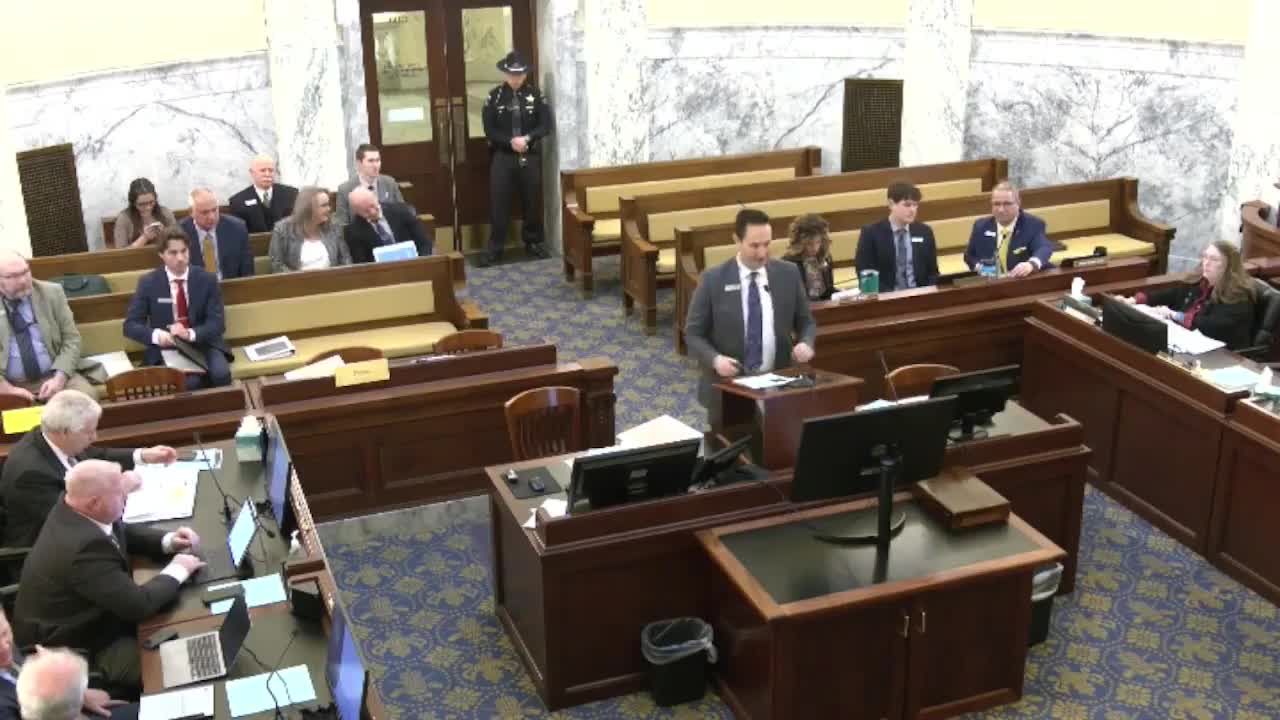
The Joint Finance-Appropriations Committee on Jan. 23 heard an update on the Judicial Branch’s multi-year effort to modernize court technology, improve cybersecurity and centralize certain services for the state’s unified court system.
Keith Bybee, division manager of budget policy analysis, told the committee the Judicial Branch received a one-time allotment of roughly $19.9 million from ARPA State Fiscal Recovery Fund to bolster court technology and associated infrastructure. Administrative Director Sarah Omanson said that money has been obligated in contracts and the branch is in the process of rolling out protections and services funded by those awards.
Why it matters: the judiciary holds sensitive personal and case information for the state and counties. Omanson said the modernization work aims to reduce cybersecurity risk and provide counties and clerks with secure pathways to perform court business.
Key points and timeline
Omanson said the technology effort began in early 2020 after courts around the country experienced cyberattacks. “We started really focusing on cybersecurity,” she told the committee, and described steps now being implemented: multi‑factor authentication, a state-managed court network in each courthouse, and a staged Office 365 rollout for court business.
Omanson said about 80% of the Office 365 rollout is complete and that two‑factor authentication deployment is imminent. She said every dollar provided under the ARPA award has been contracted or obligated, and the branch does not expect to finish all work until late 2026.
Counties’ options and operational approach
Omanson described options for counties that want to keep county-managed desktops: county staff could continue to use local county machines but access court systems through a state-hosted virtual desktop ("desktop in the cloud") so court work remains protected by court-managed security. She said the court can also provide state-managed computers for counties that prefer that approach.
“You get to a point where we actually manage things like the virus protection software on the computers that they're using,” Omanson said. She acknowledged the change is “not easy” and that some counties are resistant, but added the branch has sought options to reduce disruption.
ARPA funds and contracting
Bybee told the committee most of the 2023–24 funds were for development and infrastructure and that a $16 million re‑appropriation request appears in maintenance materials to carry work into the next fiscal year. Omanson said the branch has obligated the ARPA funding under federal standards and that much of upcoming work is field installation and wiring for courthouse networks.
Vendor landscape and case management
The judiciary currently uses Tyler for its statewide case management system; Omanson said Tyler was selected after a 2013 procurement process and that Idaho’s deployment went to the cloud in 2014. She said the court will issue an RFI in the coming months to assess current marketplace options and determine whether future changes or alternative vendors would better meet Idaho’s needs. “We are in year 2, the very beginning of a 5 year contract,” Omanson said of the current vendor arrangement.
Staffing and hiring challenges
Committee members asked about hiring for newly funded positions in courts’ administrative and IT teams. Omanson said the branch has filled some finance roles and reduced payment backlogs but continues to struggle to recruit IT staff with cloud architecture and data skills at the budgeted salary levels. She said three of five IT positions remained unfilled at the time of the hearing and that some data analysts left for higher-paying jobs.
What’s next
Committee members asked for estimates on salary adjustments needed to fill remaining positions; Omanson agreed to provide cost estimates. The committee also asked for continued updates on RFI results and the ARPA-funded rollout schedule.
Ending note
Omanson said the modernization work aims to protect sensitive court data and improve statewide service delivery. She asked for continued committee support to finish installations and secure the system.