Get Full Government Meeting Transcripts, Videos, & Alerts Forever!
Get email alerts on the Electric Vehicles topic
No spam. Unsubscribe anytime.
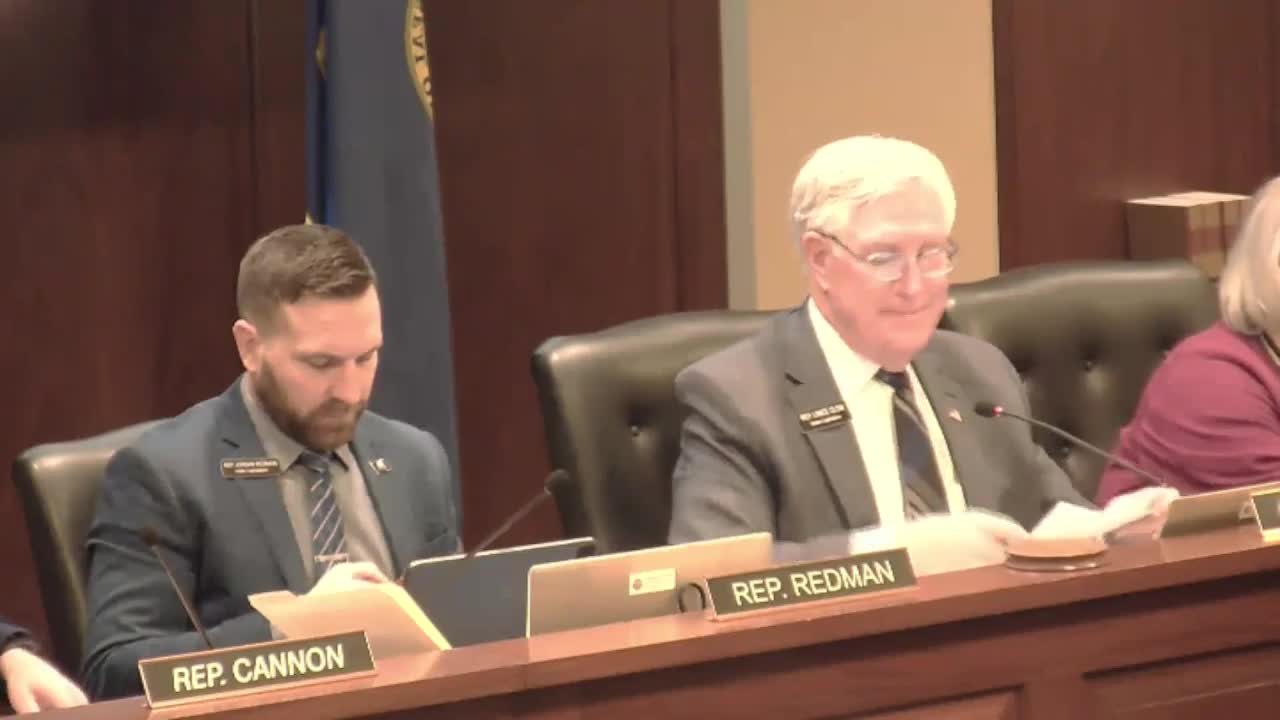
House panel approves bill preempting local EV charger mandates, 15–2
Summary
House Bill 86, which would bar cities and counties from requiring developers to install electric‑vehicle charging infrastructure or conduit, passed the House Business Committee 15–2 amid testimony for and against the measure.
The House Business Committee voted 15–2 Feb. 13 to send House Bill 86 to the House floor with a “do pass” recommendation. The bill would preempt local governments from requiring developers or property owners to install electric‑vehicle (EV) charging stations or conduit during building construction.
Sponsor Representative Joe Palmer, R‑Meridian, said HB 86 preserves property‑owner choice and prevents local governments from imposing costs on private businesses and taxpayers. “We're not stopping anybody from being able to do it. We're just not forcing them anymore,” Palmer said during his closing remarks.
Supporters of the bill argued that mandatory requirements would put costs on builders and taxpayers. Ada County Commissioner Tom Daley told the committee that during a county jail remodeling the City of Boise initially sought 133 charging sites in a restricted parking area and later reduced that request to 31; Daley said such requirements illustrate why local officials and county governments should not be compelled to adopt charger mandates for secured or nonpublic facilities.
Opponents urged the committee to preserve local planning flexibility and to allow a “dig once” approach when sites are under construction. Lisa Heck, a retired electrical and computer engineer from Boise who owns an EV, testified that local governments can plan more precisely for charger infrastructure and that installing conduit at construction typically costs a few hundred dollars versus several thousand dollars for retrofits; in her testimony she urged the committee to vote no on the bill to keep planning at the local level. Lance Sayers, representing the Association of Idaho Cities, said the association and its 97 cities oppose the bill because it would limit cities’ ability to plan infrastructure as EV adoption grows.
Environmental and conservation groups also testified against the bill. Jonathan Oppenheimer of the Idaho Conservation League and Ryan McGoldrick of Conservation Voters of Idaho described the proposal as short‑sighted for state economic and air‑quality goals; Oppenheimer highlighted testimony figures that Idaho sends roughly $3.0 billion annually out of state for transportation fuels and argued that Idaho‑generated electricity could keep more economic activity inside the state.
Committee debate touched on cost uncertainties, where conduit should terminate, the possibility of overbuilding infrastructure that later proves unnecessary, and who would pay electricity costs for public charging (witnesses said taxpayers would bear those costs for public buildings unless a separate user‑fee structure is adopted). Representative Harris moved the committee to send HB 86 to the floor with a do‑pass recommendation; the committee approved the motion by roll call, 15 in favor and 2 opposed.
The bill now proceeds to the full House for further consideration.