Get Full Government Meeting Transcripts, Videos, & Alerts Forever!
Get email alerts on the Public Defense Appellate topic
No spam. Unsubscribe anytime.
State Appellate Public Defender asks for deputy attorney to curb contract overflow
Summary
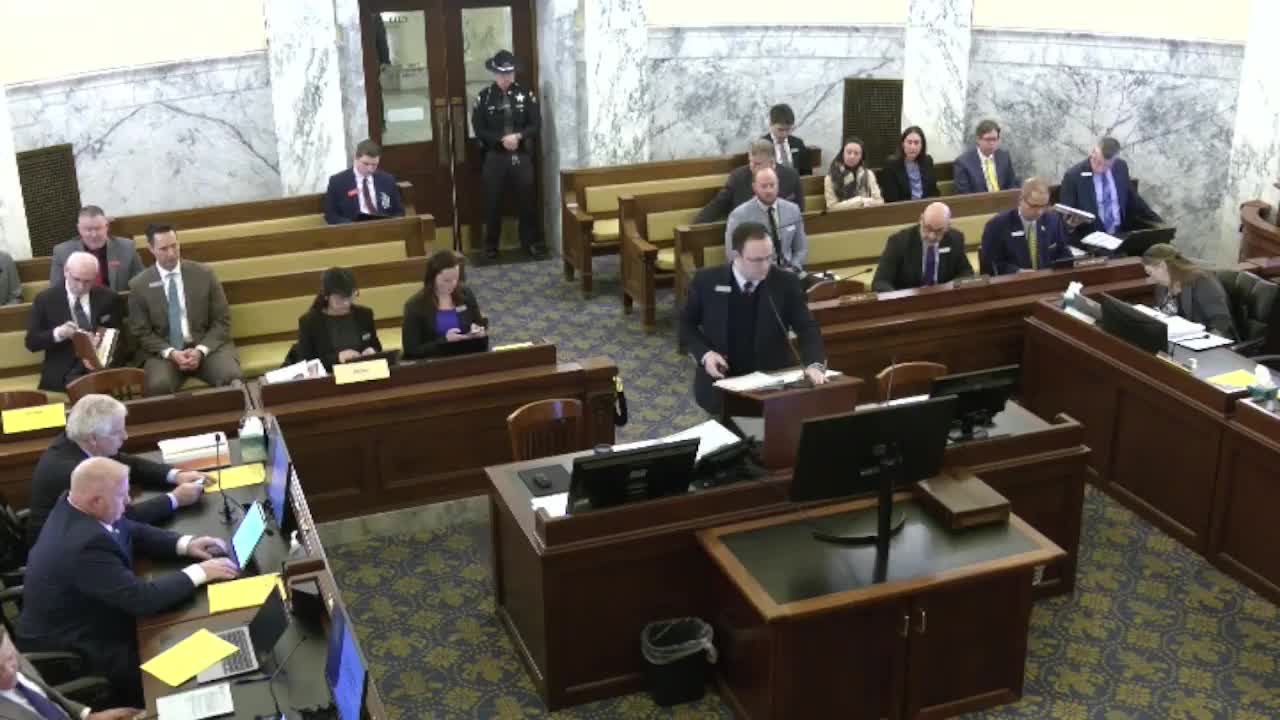
The Idaho State Appellate Public Defender told the Joint Finance-Appropriations Committee it is fully staffed for now but seeks one additional deputy appellate public defender and reappropriation authority to reduce expensive contracted overflow work.
Christopher Lahoset, a budget and policy analyst with the Legislative Services Office, told the Joint Finance-Appropriations Committee the Office of the State Appellate Public Defender has 26 authorized full‑time positions and reported no vacancies as of December 15. He said personnel costs account for the majority of the office’s expenditures and noted the Legislature approved a one‑time supplemental in 2023 to address an influx of cases.
Eric Leighton, director of the State Appellate Public Defender, described the office’s caseload and staffing pressures. “It has been a challenging year. It’s been a challenging couple of years because first of all, we have had a significant increase in our caseload over the last 3 years,” Leighton said. He also explained the office experienced turnover after the creation of the State Public Defender and the departure of senior attorneys, but that “for the moment, [we’re] fully staffed.”
The office requested funding and authorization for one additional full‑time deputy appellate public defender to take “all non capital felony, misdemeanor, and juvenile district and post conviction appeals.” Lahoset said the agency estimated contracting overflow cases costs roughly $254,000 per year, while hiring a state attorney at an estimated $140,000 salary would yield savings.
Committee members asked about current contracting and how hiring would affect workloads. Leighton said the office contracts in two situations: conflict appointments that must be handled outside the office, and overflow cases when internal capacity is exceeded. He told the committee that contracting is “more expensive to contract cases out than to handle them in house,” and that roughly 14 cases were contracted out over the past 18 months.
Lahoset also requested reappropriation authority for remaining one‑time funds from the 2023 supplemental (about $1,259,000 as of the hearing) to continue paying for overflow cases, noting that amount could decline as cases are resolved. The analyst closed by summarizing the office’s historical appropriations, personnel utilization, and the agency’s enhancement requests.
The hearing did not include a formal committee vote on the request. Leighton concluded by thanking committee members and said he was hopeful the committee would support the governor’s request.