Get Full Government Meeting Transcripts, Videos, & Alerts Forever!
Get email alerts on the Agriculture topic
No spam. Unsubscribe anytime.
Idaho Department of Agriculture outlines quagga mussel response, funding and staff retention plans
Summary
Department officials told the Joint Finance-Appropriations Committee the state boosted sampling, inspections and staffing for quagga mussel response, described a mix of general‑fund and dedicated‑fund support and requested pay and equipment enhancements to retain agricultural investigators and replace vehicles.
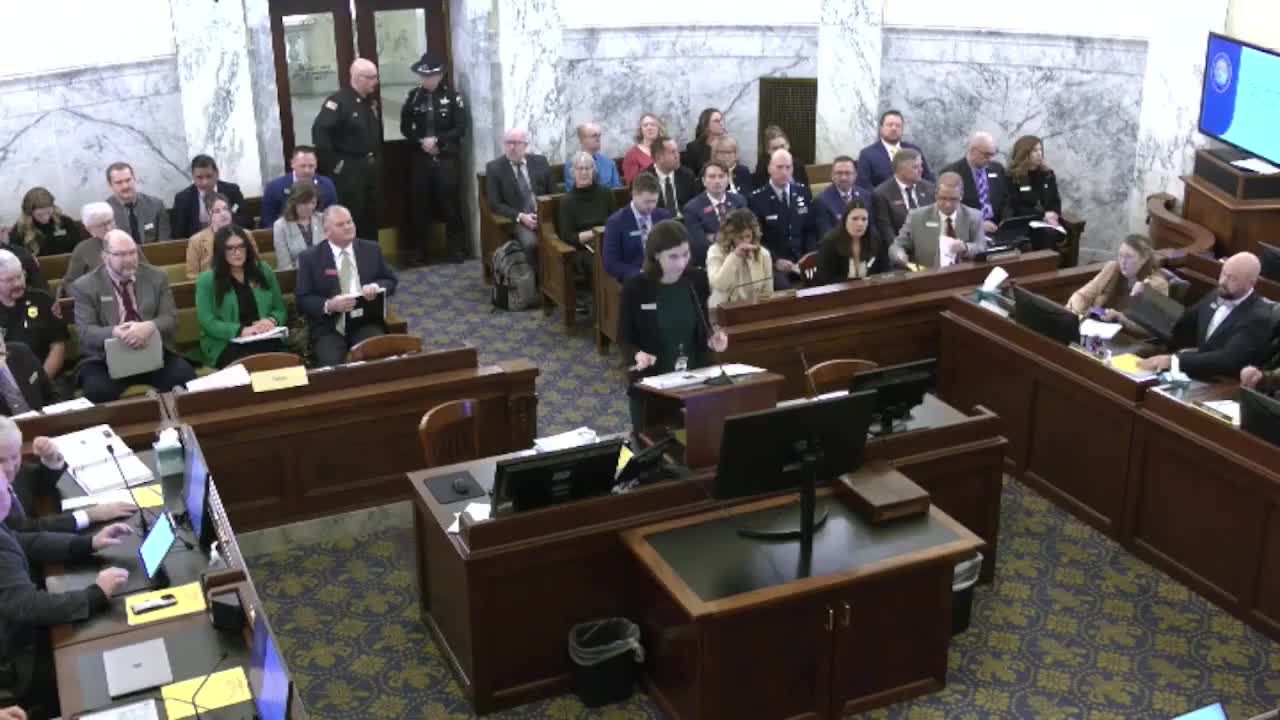
Frances Lippitt, a budget and policy analyst with the Legislative Services Office, and Chanel Tewell, director of the Idaho State Department of Agriculture, told the Joint Finance‑Appropriations Committee on Friday that the state expanded its quagga mussel prevention and response program last year and is seeking ongoing and one‑time funding to sustain work and retain staff.
Lippitt told the committee the department’s statutory responsibilities are described in multiple parts of Idaho code and that the agency is organized into eight budgeted programs including plant industries, animal industries and agricultural inspections. She said the invasive species fund is primarily funded by a watercraft sticker fee collected by the Department of Parks and Recreation and that the Legislature provided a $5 million general‑fund infusion last session and an ongoing $1.5 million general‑fund appropriation for quagga mussel response. “This projected decline that you see in the fund balance reflects the extent of that effort rather than any decline in sticker fee revenue,” Lippitt said.
The department’s director, Chanel Tewell, described operational changes since the 2023 discovery on the Snake River: “So we stood here last year after a precedent setting event on the Snake River, and we promised this group and this committee…we would double sampling in the state, and we would increase by every measure what the invasive species program does. And I’m happy to say that we did that last year.” She said the department doubled statewide water sampling, added inspections and expanded staffing and stations, and that the state conducted a treatment on the Snake River in 2024.
Why it matters: committee members were shown that the department combined a mix of fee revenue and recent general‑fund appropriations to expand inspections and decontamination stations statewide. Lippitt and Tewell said the $5 million cash transfer from the general fund required matching appropriations to the receiving dedicated fund for accounting purposes; the department also received an ongoing $1.5 million general‑fund appropriation for staffing and check stations.
Key budget and personnel items discussed
- Quagga mussel funding: Lippitt described a $5 million general‑fund infusion approved by the Legislature in the previous session and an ongoing $1.5 million general‑fund appropriation for staffing and check stations. She explained the accounting mechanics that require appropriations in both the transferring and receiving funds when a cash transfer occurs.
- Pest control fund and deficiency warrants: Lippitt said the pest control fund carryover includes a balance related to Mormon cricket treatment and monitoring costs. She noted a fiscal‑year 2025 deficiency warrant request related to exotic species response of $1,724,300 (described by the analyst as the department’s FY‑25 deficiency warrant request for exotic species response). The committee did not vote on that request during this presentation.
- Staffing and retention: the department seeks $340,400 ongoing to create a pay structure for 53 agricultural investigator senior positions; Lippett said 23 of those positions have been with the agency less than two years and only nine have 10 or more years. Tewell emphasized investigators’ travel burdens and training needs and said the proposal is intended to create a career ladder to improve retention.
- Replacement items and vehicles: the department requested $1,110,000 one‑time for replacement items, including $891,000 for vehicles (Lippett told Representative Mitchell the department would provide a list and that the planned vehicle replacements are about 17 pickups and a few SUVs). Committee members asked for and were promised supplemental detail on vehicle counts and a vehicle replacement list.
What the committee asked for and next steps
Committee members asked for follow‑up on: the list and count of vehicles to be replaced, clarification of grant and revenue line items that appeared in a budget submission, and additional detail on the investigator pay structure. Lippitt and Director Tewell said they would provide the vehicle list and follow up where budget pages appeared to reference grants not familiar to the department.
No formal votes were taken in the hearing segment. The department’s requests—including pay‑structure funding for investigators, replacement vehicles and the deficiency warrant for exotic species response—were entered into the record for JFAC consideration and for staff follow‑up.
Ending
Analysts and the agency pledged to provide supplemental materials on vehicle counts, the investigator pay plan and any grant or transfer items flagged by committee members. The department’s expanded invasive species sampling and inspection activity in 2024 was presented as the operational justification for recent general‑fund support and the proposed ongoing and one‑time enhancements.