Get Full Government Meeting Transcripts, Videos, & Alerts Forever!
Get email alerts on the Vaccine Exemption topic
No spam. Unsubscribe anytime.
North Dakota House rejects measure creating new vaccine exemption after heated debate
Summary
The North Dakota House declined to adopt a bill that would enact a new exemption to required vaccines after members debated public‑health standards, employer exemptions and individual stories. Lawmakers first successfully moved to reconsider the failed bill, then after floor debate the measure again failed on final passage.
The North Dakota House considered House Bill 14‑57, a proposal to add a new exemption from required vaccines, but the measure failed on final passage after extended debate.
House Bill 14‑57, introduced by Representative Henderson and other sponsors, would have added a new section to chapter 23‑12 of the North Dakota Century Code creating an additional avenue for exemption from required vaccinations. Representative Hendricks described the bill as an “insurance policy” for people who object to vaccines they believe lacked the same testing standards as other FDA‑approved drugs and urged members to “vote green.” Representative Henderson and others said the proposal would not compel anyone to take or refuse vaccines but would provide another formal exemption route.
Opponents called that framing inaccurate and raised scientific and public‑health concerns. Representative Murphy urged members to consult FDA trial material and said vaccines undergo rigorous clinical testing, citing HPV vaccine trials as an example. Representative Hoverson pressed points about trial design and placebo use. Representative Johnston and others recounted constituent anecdotes of alleged adverse events and said the bill would provide “common sense protections” for individuals; Johnston described a constituent who declined employment because of a workplace vaccine requirement and later had a health event he associated with vaccination.
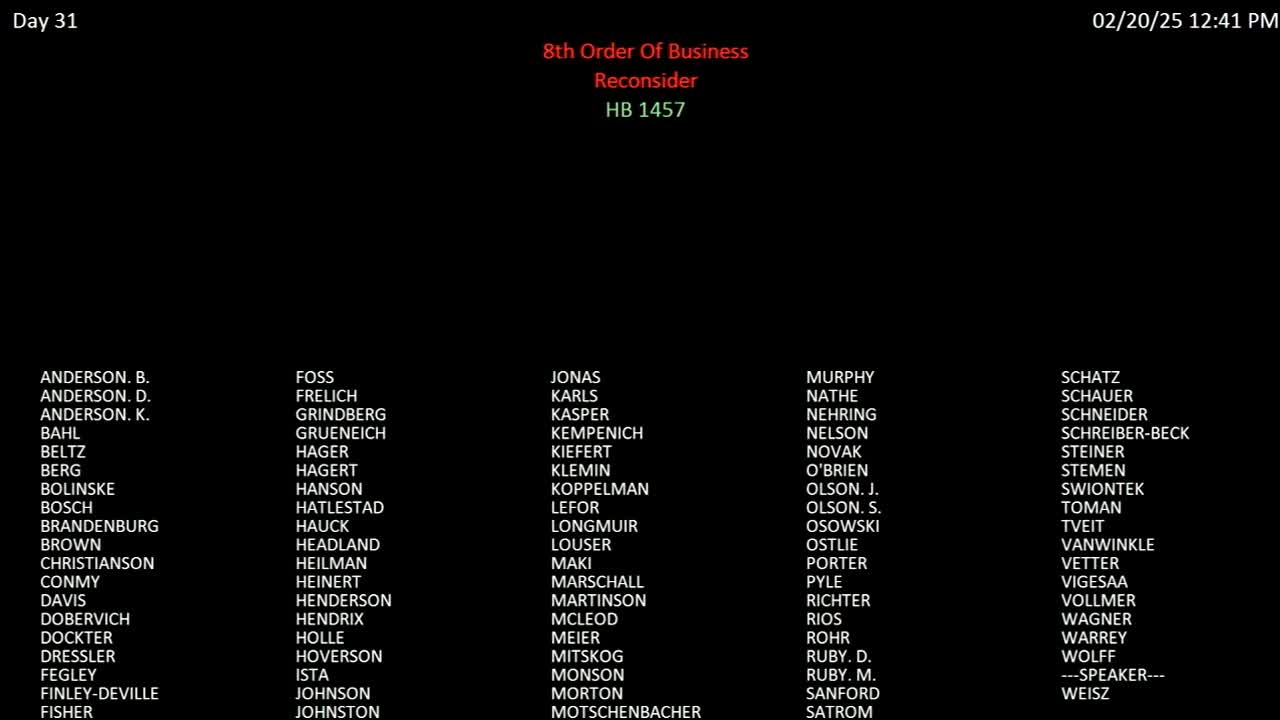
The House first agreed to reconsider its prior action on HB 14‑57 after Representative Twite moved to recall the bill to the floor because he said he had been absent for the earlier vote and wanted to cast a vote. That reconsideration passed on a roll call of 46 yea, 40 nay, returning the bill to the eleventh order.
On final consideration, the clerk opened the roll for HB 14‑57. After floor debate, the final tally was 45 yea, 42 nay; the speaker declared the bill failed. The transcript shows members divided along lines of public‑health assurances, constituent anecdotes of adverse events, and differing views about employer‑imposed vaccine mandates.
Why this matters: HB 14‑57 sought to change statutory exemptions to required vaccinations, a policy area that affects schools, workplaces and public‑health operations. The debate highlighted tensions between claims of individual medical harms, trust in the FDA’s clinical review process, and the limits of state authority to regulate employment‑related health mandates.
What happened next: With the bill defeated, existing statutory exemptions and employer authorities remain unchanged. No committee referral or additional tasking for staff was recorded during the floor consideration.
Quotes from the record: "All this does is it allows another avenue for exemption," Representative Hendricks said. Representative Murphy said, "If you go to the FDA website and you look at the rigor of clinical trials for vaccinations, they are equal to any other pharmaceutical." Representative Twite said he sought reconsideration because he "did not get a chance to vote" previously and regarded the bill as important to families.
Context and next steps: The House did not adopt HB 14‑57; the transcript records no subsequent motion to reintroduce the same language or a direction to staff for revised draft language on the House floor. Any further action would require a new bill or reintroduction in a future session or committee.
Ending note: The vote underscores continuing debate in state legislatures about vaccination policy, balancing parental and employee concerns against public‑health standards and regulatory practices.