Get Full Government Meeting Transcripts, Videos, & Alerts Forever!
Get email alerts on the University Budget And Affiliations topic
No spam. Unsubscribe anytime.
University of Idaho reports improved finances, waits on Phoenix deal; SB0E DEI ruling reshapes campus offices
Summary
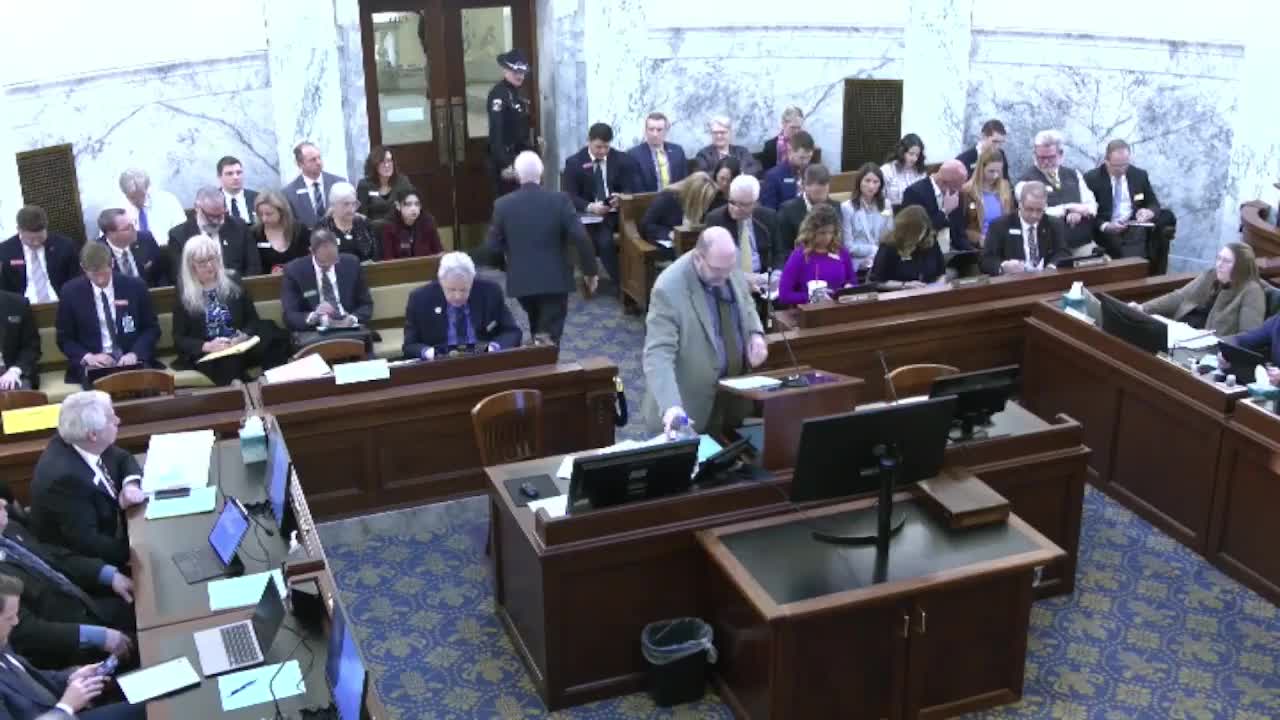
University of Idaho President C. Scott Green and Legislative Services Office analyst Kevin Campbell told the Joint Finance‑Appropriations Committee on Jan. 27 that the university’s finances have stabilized after large reductions, that a potential affiliation related to the University of Phoenix remains under negotiation, and that a State Board decision prompted reorganization of campus diversity offices.
University of Idaho President C. Scott Green and Legislative Services Office analyst Kevin Campbell briefed Idaho’s Joint Finance‑Appropriations Committee on Jan. 27 on the university’s budget, enrollment and program changes, and described a pending potential affiliation with the University of Phoenix sellers that remains under negotiation.
Campbell opened the University of Idaho segment by noting the university’s enrollment of about 12,286 students and a FY2025 base appropriation figure presented to the committee of roughly $196.3 million. Campbell described the University of Idaho as a land‑grant research university with several endowed funds tied to timber and mineral revenues and reminded members that tuition and fee reappropriation is treated separately from general fund appropriations in the budget presentations.
President Green said the university’s financial position ‘‘has greatly improved’’ since he arrived, but he acknowledged accounting liabilities related to retiree medical benefits (OPEB) remain on the balance sheet. Green told the committee the university took a large base reduction in recent years and has stabilized, but that an historical accounting change — the cost of retiree medical benefits — required reclassifying funds and reduced unrestricted net position. Green cited a positive total net position when combining restricted and unrestricted reserves.
Pending University of Phoenix transaction
Green told the committee the university has a non‑exclusive agreement with the sellers of the University of Phoenix that extends to June 10 and allows the sellers to negotiate with other buyers. The agreement includes a breakup fee of up to $20 million to reimburse expenses if the transaction does not proceed. Green said the university received $5 million on signing, which covered some transaction costs, and added that any breakup fee proceeds would first reimburse incurred expenses; any remainder could be deployed to academic priorities such as high‑demand programs if the sellers pay the full fee.
Why it matters: a potential affiliation or strategic transaction with the University of Phoenix would be a major structural decision for higher education in Idaho and would require legislative and State Board of Education review and approvals before any statutory or funding changes.
Key issues and developments
- Financial position and OPEB: Green said the university improved operating stability after a roughly $26 million base reduction and other actions, but that an historical obligation for retiree medical benefits required a $33 million adjustment that reduced unrestricted reserves. University staff told the committee the university still maintains sufficient cash to meet obligations but is working to meet State Board reserve targets.
- Enrollment and LAUNCH: Green said the university’s freshman class was the largest in its history and that LAUNCH tuition assistance likely contributed to an 8% increase in the incoming freshman cohort. Campbell confirmed enrollment and headcount figures presented in the budget materials.
- State Board directive on DEI offices: After a recent State Board of Education resolution that restricted diversity/equity/inclusion offices, University of Idaho officials told the committee they dismantled several named offices (Office of Equity and Diversity, Office of Multicultural Affairs, Black/African‑American Cultural Center, LGBTQA office and Women’s Center) and reassigned affected staff to roles within the Dean of Students office. President Green said the university eliminated the Chief Diversity Officer role and created an Executive Director of Tribal Relations role; some services have been reorganized under programs such as Vandal Success and new first‑generation student supports.
- WWAMI/medical education and other partnerships: Green said the University of Idaho continues to operate its WWAMI partnership and that the university is in conversations about a possible additional or alternative partnership with the University of Utah School of Medicine; any such shift would require State Board approval and appropriate legislative review. Green said the university would continue to support physician training in Idaho during any transition.
- INL and energy research: Green emphasized ongoing and strengthened partnerships with Idaho National Laboratory (INL) across nuclear materials, integrated energy systems and power engineering; he described current collaborations including reactor parts research, hydrogen supply chain work, and cyber‑physical defenses for power infrastructure.
Questions from lawmakers
Committee members asked about the university’s unrestricted reserves, the scale and recipients of federal pass‑through research funds, the status of DEI offices and staff reassignments, and how potential Phoenix transaction proceeds would be used. University officials said federal research grants involve subcontracting to other universities and outside organizations and agreed to provide additional details on subrecipients. Officials also said that positions shifted into the Dean of Students office now perform revised duties intended to serve the broader student population, and that some eliminated positions have not been refilled.
What the record shows (numbers provided on the record)
- Enrollment: about 12,286 students (as presented by Kevin Campbell). - FY2025 base budget cited in presentation: approximately $196.3 million. - OPEB/accounting note: Green said the university recorded a roughly $33 million adjustment related to retiree medical benefit accounting earlier in the period and that unrestricted net position was negative in recent reporting while total net position is positive when restricted assets are included. - University‑Phoenix agreement: $5 million received at signing; breakup fee up to $20 million if sellers proceed with another buyer.
Ending
Green closed by reiterating the university’s statewide research and economic contributions, including an economic impact estimate presented by the university and ongoing work on energy, water and medical research. He said the university is continuing conversations on the Phoenix opportunity and on WWAMI/medical partnerships and will provide follow‑up detail to the committee on subrecipients and staffing changes.