Get Full Government Meeting Transcripts, Videos, & Alerts Forever!
Get email alerts on the Property Tax Assessment Cap topic
No spam. Unsubscribe anytime.
Missouri committee hears bill letting homeowners cap assessments at purchase price
Summary
Representative Darren Chapel introduced House Bill 7 80, a voluntary program that would limit a home's assessed value to its last purchase price for owners who opt in; county officials and lobbyists testified concerns about long-term effects and potential burdens on new buyers.
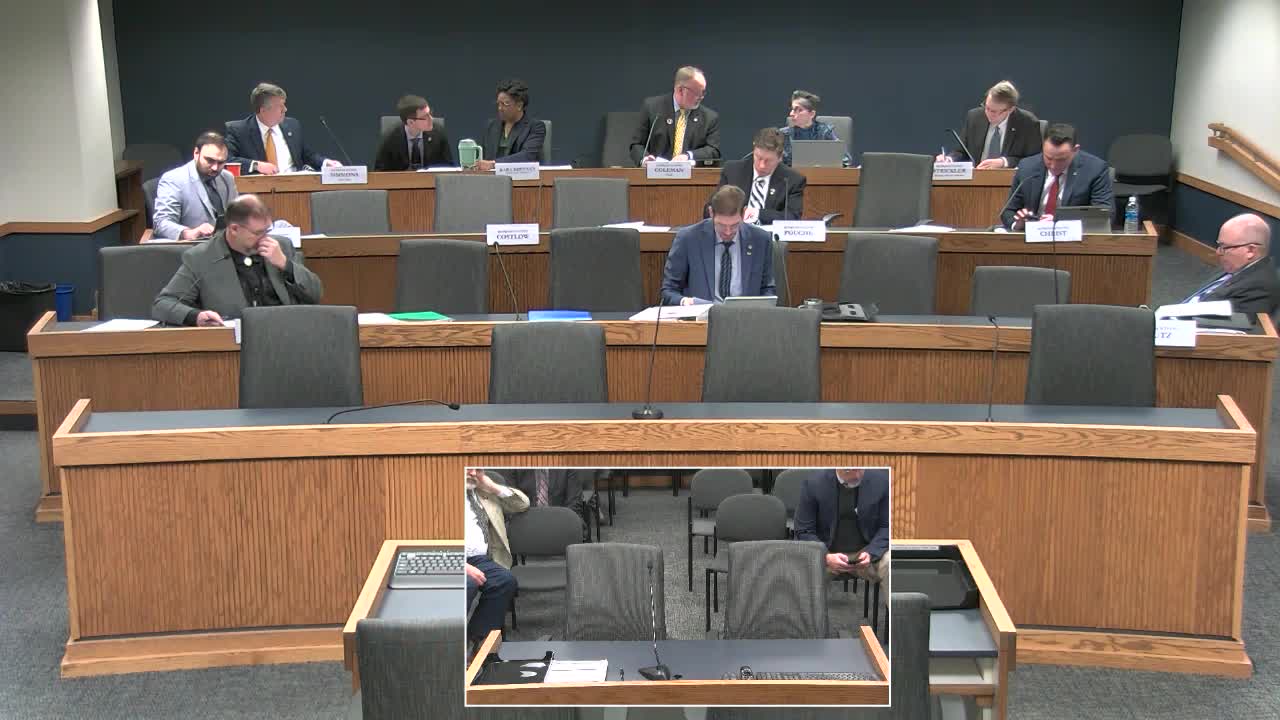
At a public hearing of the Special Committee on Tax Reform, Representative Darren Chapel introduced House Bill 7 80, a voluntary program that would let homeowners limit the assessed value of a property to its most recent purchase price if they opt into the program.
Chapel, a Republican who identified himself as the representative of the 137th District in Greene County, said the measure is aimed at preventing residents — including seniors, veterans and long-time homeowners in gentrifying neighborhoods — from being taxed on unrealized gains. "Property rights in the United States are sacrosanct," Chapel said, arguing that taxing homes on speculative increases can force some families from their homes.
The bill would allow an assessor to rebut an opt-in sale that appears to be less than arm's length by petitioning the board of equalization with evidence that the sale understates market value. It also includes a provision allowing assessors to reassess when a homeowner increases a property's value by more than 50 percent. Chapel repeatedly told the committee the legislation was drafted to avoid changing assessors' statutory duties: "we are not touching that, we're not dealing with that," he said, and emphasized the measure is voluntary for property owners.
Why it matters: Chapel and other supporters said the bill offers a tool to reduce tax-driven displacement by capping the assessment base for participating homeowners. Opponents said the proposal raises systemic questions about fairness, local revenue and long-term consequences.
During the hearing, Steve Hobbs, executive director of the Missouri Association of Counties, testified in opposition and warned the committee that the bill resembles California's 1978 Proposition 13, a long-running example of capped assessments that Hobbs said produced litigation and other problems. "It's called Proposition 13," Hobbs said, and he urged a more holistic review of Missouri's tax system rather than a piecemeal experiment.
Registered lobbyist Ron Barry, testifying on behalf of Property Assessment Review (PAR), also opposed the bill and raised practical concerns, including what he described as the "Hancock issue" and the risk that caps would shift a disproportionate burden onto new homeowners. Barry told the committee PAR had suggested alternatives to increase assessor accountability and to mitigate unintended distributional effects.
Committee members questioned technical details. Representative Poushey asked whether the bill would change board of equalization procedures or the frequency of assessments; Chapel answered that such changes would require a constitutional amendment and that the bill was written specifically not to alter assessors' duties. Representative Strickler and others pressed Chapel on why he chose an ordinary House bill rather than a House Joint Resolution; Chapel said the voluntary design and careful wording make it possible to proceed by statute rather than amending the state constitution.
Other clarifications offered during the hearing: the opt-in program would use the last purchase price (or last accurate assessment when no recent sale exists) as the cap; if an owner sells at a non–arm’s-length price, the assessor may seek adjustment through the board of equalization; remodeling and permitting rules remain unchanged; and the draft includes a reassessment trigger for value increases above 50 percent.
Committee action and next steps: the hearing closed without a committee vote on House Bill 7 80. The committee concluded the public hearing and indicated it would reconvene next week; no committee recommendation on the bill was recorded at the end of the session.
Votes at a glance (executive session that preceded the hearing): - House Bill 988 — voted do pass (tally: 5 ayes, 3 nos). No further committee action recorded in transcript. - House Committee substitute for House Bill 1176 — voted do pass (tally: 6 ayes, 2 nos). - House Bill 743 — voted do pass (tally: 9 ayes, 0 nos). - House Bill 641 — motion withdrawn and item held over until next Tuesday (no vote).
The hearing included supporters' testimony, multiple committee questions, and organized opposition from county association representatives and property-assessment interests. The committee closed the public hearing and scheduled further consideration at a later meeting.