Get Full Government Meeting Transcripts, Videos, & Alerts Forever!
Get email alerts on the Higher Education Budget topic
No spam. Unsubscribe anytime.
Lewis‑Clark State College outlines budget pressures, enrollment strategy and LAUNCH impacts
Summary
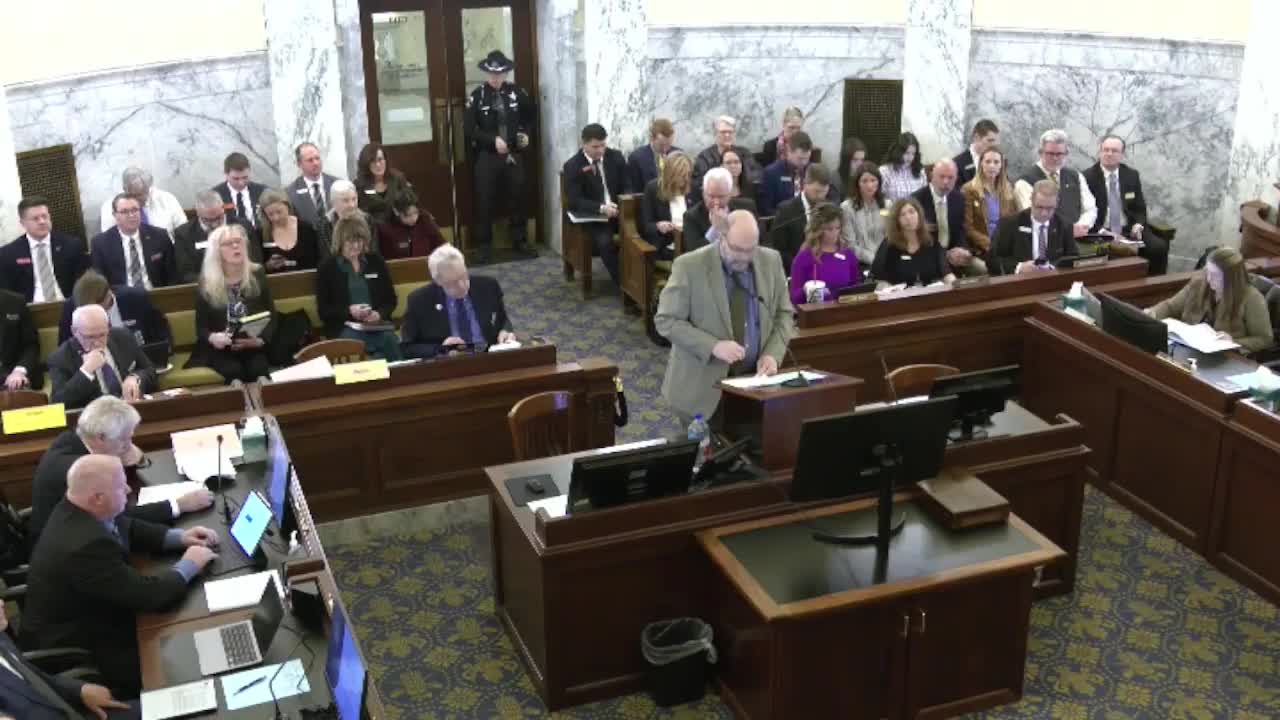
Lewis‑Clark State College President Dr. Cynthia Pemberton and Legislative Services Office analyst Kevin Campbell told Idaho’s Joint Finance‑Appropriations Committee on Jan. 27 that the small public college is contending with a salary‑pay gap, modest formula cuts in the coming year and steady gains tied to the state’s LAUNCH student aid program.
Lewis‑Clark State College President Dr. Cynthia Pemberton and Legislative Services Office analyst Kevin Campbell told Idaho’s Joint Finance‑Appropriations Committee on Jan. 27 that the small public college is contending with a salary‑pay gap, modest formula cuts in the coming year and steady gains tied to the state’s LAUNCH student aid program.
Pemberton said Lewis‑Clark (LC) enrolls about 3,881 students and has a FY2025 base appropriation of about $41.7 million. Kevin Campbell, the Legislative Services Office budget analyst who presented the college overview, noted that tuition and fee revenue is reappropriated across fiscal years and cited $23.7 million in tuition and fee receipts for FY2024 that were reappropriated into FY2025.
The discussion centered on three fiscal pressures: the enrollment workload adjustment (EWA), competitive employee compensation (CEC), and operational needs for new facilities. Campbell told the committee that the EWA is a three‑year weighted credit‑hour formula administered through the State Board of Education and said Lewis‑Clark will see a reduction of $102,500 for FY2026 under that formula. Pemberton and Campbell also described how portions of CEC and other enhancements in recent years were partly funded by shifts from tuition and fee authority in some years.
Why it matters: LC is Idaho’s smallest public four‑year college and serves a high share of Pell‑eligible and first‑generation students. The college’s ability to recruit and retain faculty and to sustain CTE and nursing pipelines depends on state funding choices for salary adjustments and operational capacity.
Most important details
- Enrollment and budget: LC reported an enrollment of about 3,881 students and a FY2025 base general fund appropriation of approximately $41.7 million. Campbell explained that tuition and fee receipts are included in the institutions’ overall resource picture through reappropriation authority; LC reported roughly $23.7 million in tuition and fees reappropriated from FY2024 into FY2025.
- EWA: The enrollment workload adjustment is a three‑year, weighted credit hour formula used by the State Board of Education to allocate changes in funding. Campbell and Pemberton described the EWA as ‘‘net zero’’ at the system level in most explanations but clarified that individual institutions can gain or lose funding under the formula. LC expects a $102,500 reduction from EWA in FY2026.
- Compensation gap: Pemberton told the committee LC is behind peer institutions on faculty pay and cited comparisons with K‑12 salaries. She said LC instructors earn about $9,000 less than the K‑12 average and assistant professors about $3,777 less, based on the most recent internal data she cited. The college requested additional operational capacity enhancement funding to address compensation and said it needs roughly $1.2 million to markedly close salary gaps toward median benchmarks.
- Operational capacity enhancements and capital: Pemberton said prior operational capacity enhancements were used to cover occupancy and custodial costs for the Schweitzer Career and Technical Engineering Building, to strengthen IT and cybersecurity, and to expand marketing and student recruitment. She described the enhancements as crucial to keeping new facilities open and staffed.
- LAUNCH and program outcomes: Pemberton credited the state’s LAUNCH program with immediate enrollment and completion impacts at LC. She said about 240 students received LAUNCH funds in the fall; CTE enrollments were up 19% in the fall and up another 10% for spring, with 10 of 11 industrial programs served by LAUNCH recipients. She also said LAUNCH supported workforce apprenticeship completion (36 of 54 fourth‑year electrical apprentices completed their program with LAUNCH support).
- Prison education expansion: Pemberton said LC completed the federal/state accreditation steps to transition from an experimental Pell‑eligible prison program to a full prison education program and is now serving nearly 200 incarcerated students across sites in Orofino, Pocatello and Boise.
What lawmakers asked and what the college said
Legislators pressed the college on EWA mechanics, enrollment trends, and the size and use of operational enhancements. Representative Petzke and others noted LC’s four‑year headcount trend in the legislative budget book and asked about fall 2024 and spring 2025 enrollment. Pemberton said LC is recovering from a decade‑long decline exacerbated by the pandemic and reported a 2.4% fall 2024 enrollment increase and a 9% increase this spring. She emphasized LC’s niche as Idaho’s only small public four‑year campus and said it will pursue modest growth toward the mid 4,000s rather than becoming a large institution.
Several members asked for salary comparables; Campbell said he was preparing a cross‑institution salary compilation and Pemberton said she would provide LC‑specific data by email to committee members.
Context and limits
Campbell cautioned that reappropriated tuition authority does not mean unspent funds and that endowment distributions and fund uses are governed by statute and the Endowment Fund Investment Board. Pemberton described LC’s normal school endowment distributions and the operational needs of a small campus. She repeatedly framed LC as mission‑driven and dependent on legislative support to maintain affordability and workforce pipelines.
Ending
Pemberton asked the committee for continued support and said incremental operational capacity enhancement funding would be applied toward salary compression and other priorities. She declined to seek a rapid large expansion of enrollment, describing LC’s target as a strategic, modest increase that preserves the college’s ‘‘small school’’ mission.