Get Full Government Meeting Transcripts, Videos, & Alerts Forever!
Get email alerts on the State Budget topic
No spam. Unsubscribe anytime.
Legislative analysts outline $700 million structural surplus and governor’s FY2026 budget choices
Summary
Legislative Services Office staff presented the governor’s FY2025–26 revenue forecast, a roughly $700 million projected structural balance for the short term, and proposed transfers and enhancements that would use part of one-time and ongoing revenue to fund education, transportation and tax relief.
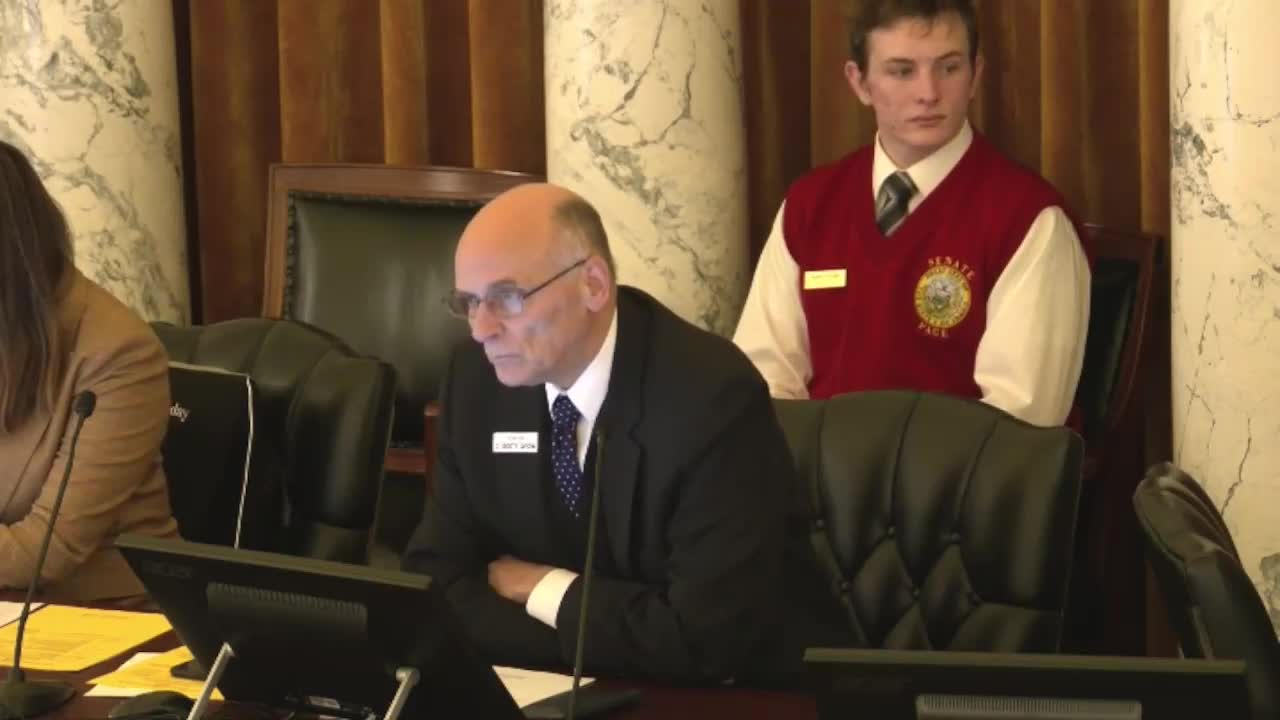
Keith Bybee, division manager of Budget Policy Analysis for the Legislative Services Office, told the Joint Finance-Appropriations Committee the governor’s recommended baseline places Idaho on a substantially larger revenue platform than before the COVID period and shows a structural balance of roughly $700 million in the near term.
The governor’s recommendation, as presented by Bybee, uses a $5.9 billion ongoing revenue baseline for FY2026 and projects total expenditures near $6.26 billion in the projection period, producing the cited delta. Bybee said the current forecast reflects population growth and lingering economic effects from federal pandemic aid but does not revert to pre-2020 trends.
Why it matters: the structural surplus is the core policy choice the legislature will confront. Bybee framed the issue as a trade-off between one-time spending, transfers to savings accounts and ongoing commitments such as employee compensation, education funding, and tax relief.
Details: Bybee walked members through the legislative budget book cash reconciliation tables. He showed FY2025 estimated total revenues and available cash, explained re‑appropriation and executive carry‑forward mechanics, and described governor-proposed transfers including $60 million for fire suppression and a proposed transfer to the budget stabilization fund. He also explained that the governor’s recommendation relies on about $160 million of one-time cash for FY2026 while proposing larger ongoing increases in program maintenance and enhancements.
On revenue forecasting, Bybee said the governor’s baseline (the number the executive put in the recommended budget) is higher than the fall revenue estimate. He tied recent revenue growth to population in‑migration and federal pandemic-era supports, and he emphasized the legislature must choose whether to lock additional recurring spending or prioritize tax relief or savings.
Committee context: representatives and senators asked clarifying questions about the bond levy equalization closeout, the governor’s emergency fund, and where interest earnings on large cash balances are recorded. Bybee deferred some technical questions to colleagues who followed in the hearing schedule.
Outlook: Bybee closed by reminding the committee that adoption of program maintenance, enhancements and transfers remains the legislature’s decision and that the budget’s structural margin gives the legislature many options but also raises the stakes on ongoing commitments.