Get Full Government Meeting Transcripts, Videos, & Alerts Forever!
Get email alerts on the Agricultural Research Extension topic
No spam. Unsubscribe anytime.
University of Idaho Ag Research and Extension seeks faculty and facility funds; dean announces June retirement
Summary
The Joint Finance-Appropriations Committee heard the University of Idaho College of Agricultural and Life Sciences (CALS) budget request and was told the college is requesting targeted faculty and maintenance funding while Dean Michael Perella announced his planned retirement in June.
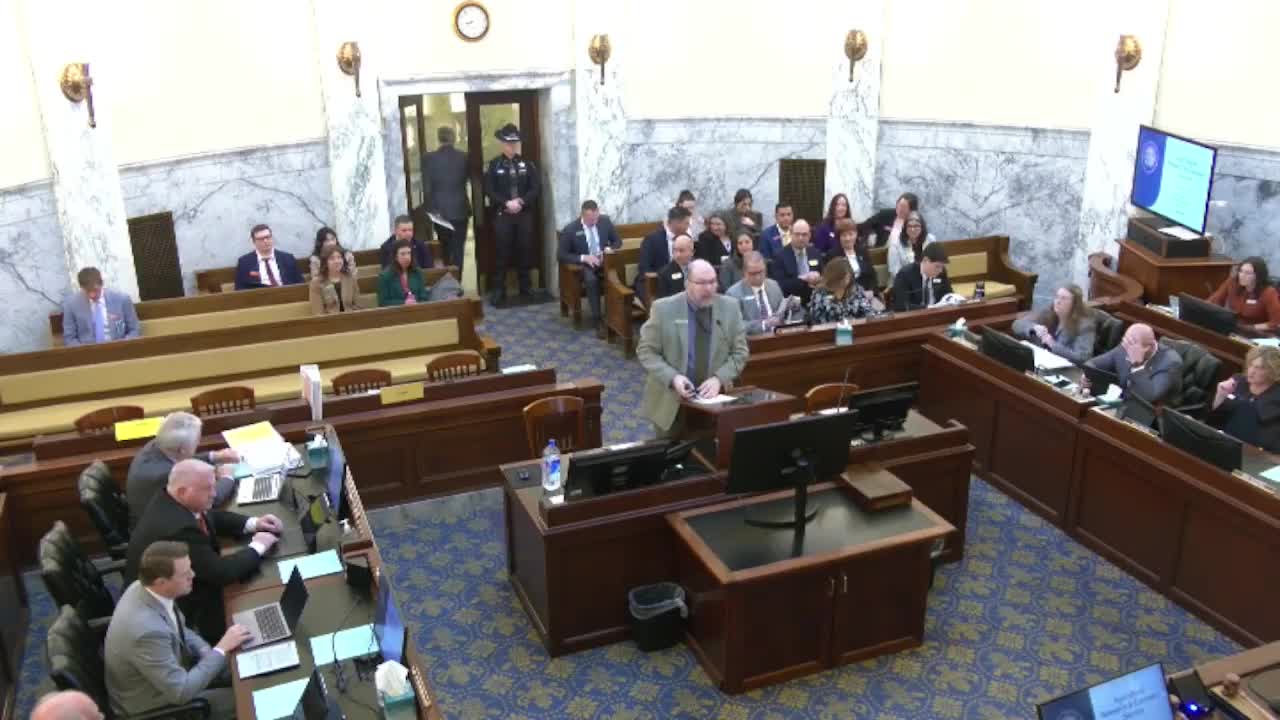
The Joint Finance-Appropriations Committee reviewed the University of Idaho's Agricultural Research and Extension Service (CALS) base budget and FY2026 requests on Monday, February 10. Dean Michael Perella, who said he will retire in June, and CALS staff described faculty, facility and program needs that support research, extension and statewide outreach.
Why it matters: CALS supports research, extension and education across Idaho and reported that agricultural activity accounts for nearly 20% of the state's economic output. The college operates a physical presence in 42 of Idaho's 44 counties and manages over 14,000 acres of research land. Committee members pressed for outcomes, the rationale for continuation of programs started with federal funds, and clarification about a recent ARPA-funded adult digital-literacy effort.
Key requests and programs: Kevin Campbell, the Legislative Services Office analyst, summarized FY2026 requests including a $157,900 ongoing general fund request for a viticulture and small-fruits research faculty position and $250,100 requested for a portion of building maintenance costs at the Idaho Center for Agriculture, Food and the Environment in Parma. Campbell also noted prior appropriations: $394,000 in FY2024 for new faculty positions in animal and plant sciences and agricultural engineering; $232,000 in FY2025 for maintenance of the Parma research laboratory; and $322,200 in FY2025 for new faculty positions in irrigation and forestry.
Dean Michael Perella emphasized the college's statewide reach and recent investments in facilities and faculty. "Funding from all these sources allows us to invest in strategic infrastructure needs for our college and hire the excellent faculty and staff conducting research and extension statewide," Perella said, thanking the legislature and governor for support during his nine-year tenure as dean.
Extension and community programs: CALS staff told the committee that extension's work extends beyond production agriculture to families, youth (4‑H) and community development. Staff reported more than 450,000 face-to-face contacts with Idahoans last year and engagement of about 75,000 youth in 4‑H programming. An ARPA-funded project provided about $142,000 for digital-literacy work linked to commerce and rural broadband efforts; the college's team has also applied for an FCC competition that would bring larger federal funding for similar work if awarded.
Research infrastructure and outcomes: CALS described investments in new facilities — for example, the Idaho Center for Plant and Soil Health in Parma — and a strong breeding and storage research program for Idaho crops such as potatoes. Perella said the college is hiring early-career faculty skilled in areas such as AI applications in agriculture, water-use efficiency and soil health, and highlighted that several high-value cultivars used in national supply chains were developed with Idaho research partners.
Questions and follow-ups: Committee members asked for additional outcome data on extension activities (for example, economic impact and participant follow-up), clarification about why adult computer-literacy work appears in the CALS budget (staff explained extension's role in community development and said the ARPA-funded work was intended to address the rural digital divide), and more detail on how permanent state support would or would not replace temporary federal funds. Dean Perella said extension documents program outcomes and provided a high-level example of an estimated $47 million in reported savings tied to extension activities in the last year; he offered to provide detailed breakdowns on request.
Closing: Perella thanked the legislature for prior investments and highlighted the college's national ranking and continued efforts to recruit and retain faculty. He said the college will continue to leverage state support to attract external grants and private funding. The committee did not take an immediate action on CALS budget items and moved on to other agenda items.