Get Full Government Meeting Transcripts, Videos, & Alerts Forever!
Get email alerts on the Avian Influenza topic
No spam. Unsubscribe anytime.
State veterinarian: avian influenza persists in backyard flocks; Idaho dairy outbreaks largely contained
Summary
State Veterinarian Scott Lively told the committee that avian influenza continues to infect backyard flocks in Idaho and that the dairy outbreaks have largely subsided, with one dairy remaining on quarantine.
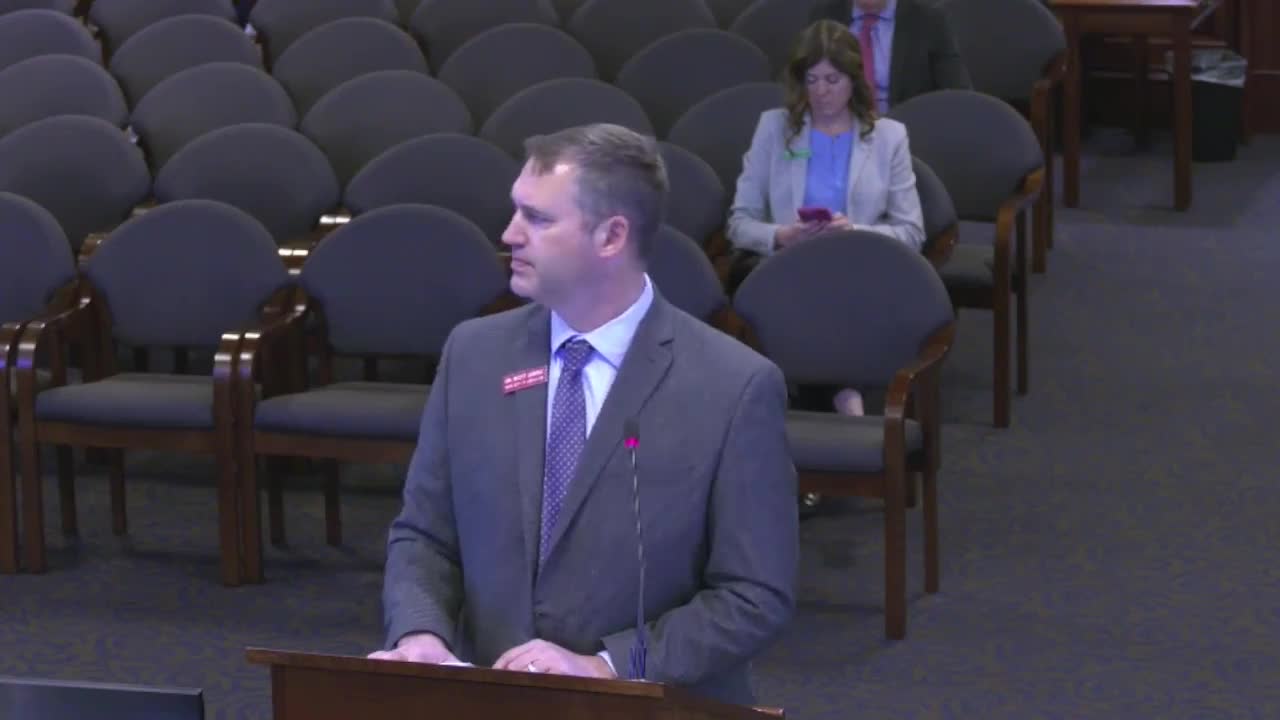
State Veterinarian Scott Lively briefed the House Agriculture Affairs Committee on the status of avian influenza and dairy infections in Idaho, saying the virus remains in circulation among migratory birds and has continued to infect backyard flocks but Idaho's dairy sector has so far recovered from a mid-2023–2024 wave of cases.
“We're not doing very good as far as birds are concerned; as far as dairy we're doing pretty well,” Lively told the committee, noting recent backyard positives and ongoing risk from migratory geese and ducks. He said several backyard facilities had tested positive in recent weeks and urged backyard owners to practice biosecurity: wash hands and scrub boots before leaving and re-entering facilities.
Dairy status and testing Lively said Idaho had about 35 dairies infected over the past 10 months and that one remaining dairy remained under quarantine but was close to release. He said Idaho's dairy response had been proactive and credited industry cooperation with limiting broader disruption. He also told the committee the department is developing an electronic submission form for Coggins (EIA) tests for horses to reduce paperwork and enable labs and veterinarians to submit tests electronically.
Interstate movement and NPIP Committee members asked about poultry movement and the National Poultry Improvement Plan (NPIP), which the department described as a voluntary federal program that, if a producer participates and meets surveillance standards, allows movement of birds across state lines without a health certificate. Lively said if a flock is not an NPIP participant, import requirements for entering Idaho still require a health certificate and tests for salmonellosis and avian influenza.
Why it matters Avian influenza continues to circulate nationally, with large commercial outbreaks elsewhere (Lively cited a recent detection in North Carolina affecting 2.5 million birds). Backyard flocks and mixed-use operations remain at risk; the department emphasized biosecurity measures and the role of veterinary oversight and testing for interstate movement.
Next steps The department will continue surveillance, encourage biosecurity practices for backyard owners, implement the forthcoming electronic Coggins submission system and coordinate with USDA and other states on movement standards.