Get Full Government Meeting Transcripts, Videos, & Alerts Forever!
Get email alerts on the Workforce Ctevocational Education topic
No spam. Unsubscribe anytime.
Legislators press CTE on wait lists, oversight for proposed $10M workforce-capacity grant
Summary
The Joint Finance-Appropriations Committee reviewed the Division of Career Technical Education budget and a governor-backed $10 million ongoing workforce-capacity proposal. Legislators pressed CTE staff for details on program wait lists, fund balances, and how grants would be distributed and overseen.
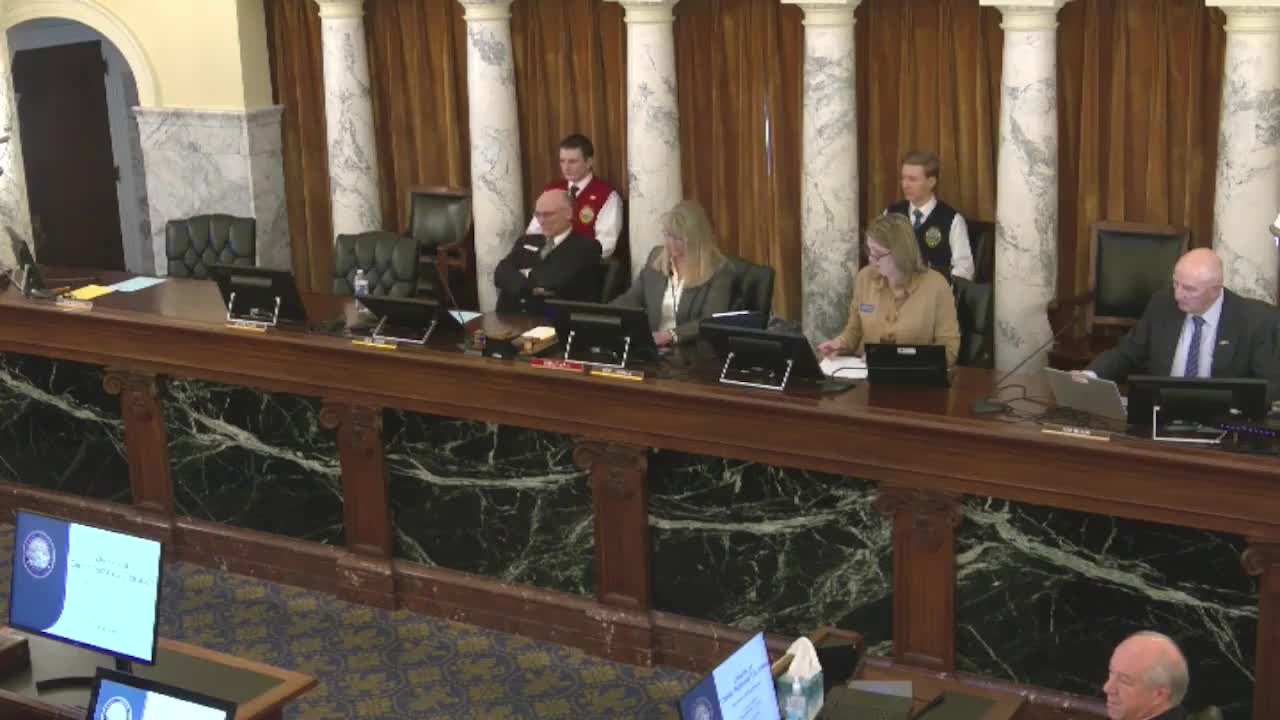
The Joint Finance-Appropriations Committee heard an overview of Idaho's Division of Career Technical Education (CTE) budget and FY2026 requests on Monday, February 10, including a governor-recommended $10 million ongoing proposal intended to expand capacity in high-demand technical programs.
CTE is a statewide system that supports secondary (grades 7–12), postsecondary programs at Idaho's six technical colleges, adult education and workforce training centers, instructor certification and related programs, the committee heard. Kevin Campbell, a budget and policy analyst with the Legislative Services Office, told the committee that CTE spends most of its appropriations in personnel and that the division relies on a mix of dedicated state funds and federal grants. "The Displaced Homemaker Fund receives revenue from a $20 fee assessed on all divorces in Idaho," Campbell said during his presentation.
Why it matters: Committee members repeatedly said the state faces a significant and growing gap between employer demand and available seats in programs such as welding, nursing and mechatronics. Lawmakers sought specifics about program wait lists, the allocation and oversight of any large new appropriation, and the condition of several dedicated funds that finance parts of CTE's work.
CTE leaders told the committee the system is experiencing "massive growth of demand" across secondary and postsecondary programs. Joshua Whitworth, executive director for the State Board (and interim administrator of the CTE division), said the demand is outpacing available instructors and facilities: "We are seeing large demand across the entire Career Technical Education ecosystem," Whitworth said, noting constraints on both faculty and space for hands-on programs such as welding. He offered to provide committee members a list of oversubscribed postsecondary programs.
Budget and requests: The committee heard a multi-year summary of CTE appropriations. Key items noted by the analyst and CTE staff included: - A prior one-time appropriation of $10,000,000 for secondary CTE programs and $5,000,000 one-time for postsecondary equipment and investments. - A prior ongoing $5,000,000 general-fund appropriation for CTE readiness in middle and high schools. - The governor's FY2026 recommendation of $10,000,000 ongoing to build capacity in high-demand CTE programs; CTE also requested smaller items including $664,000 ongoing for instructors, $125,400 for a business–industry engagement manager, and modest sums for adult education and federal grant spending authority.
How money would be used and oversight concerns: Committee members pressed CTE staff for a detailed distribution plan for the $10 million. Whitworth described the proposal as a competitive, industry-tied grant intended to expand capacity where demand is verified by employers and said the division expects industry partners to match or otherwise participate in grantee projects. "The grant would require some engagement by industry to participate," Whitworth said, adding the division would monitor performance and report back on whether investments reduced oversubscription in targeted programs.
Several legislators asked for further detail before supporting the ongoing appropriation. Representative Furness said the committee needs itemized, defensible line‑item information: "There is a lot of homework left to do on this line item," he said, urging specifics about institutions, positions, and measurable outcomes.
Questions about funds and program details: The analyst described several dedicated funds administered or used by parts of the CTE portfolio: the Displaced Homemaker Fund (supported by a fee on divorces) for career training at Centers for New Directions; the Hazardous Materials and Waste Enforcement Fund (supported by hazmat trip and annual permits) used for firefighter hazmat training; and the Motorcycle Safety Fund (supported by driver's license and motorcycle fees) for motorcycle safety training. Lawmakers asked the division to follow up with additional detail on unusual account balances and spending patterns. Whitworth said staff would provide more information on the hazmat fund and review the motorcycle safety fund's revenue and expenditure alignment.
Program capacity constraints: Committee members and CTE staff described three interlocking capacity constraints: student demand, available qualified instructors, and adequate facilities and equipment. Whitworth said some high-cost, hands-on programs (for example, welding and nursing) require specialized space and specific faculty-to-student staffing ratios, which limits the number of additional seats even when funding is available.
Business–industry engagement manager: CTE requested $125,400 for a business–industry engagement manager to connect school districts and technical colleges with employers. Whitworth and committee members said the role would be distinct from statewide workforce development efforts by embedding support closer to local school districts to secure business partnerships, equipment donations or other in-kind support.
Follow-ups and next steps: The committee requested multiple follow-ups from CTE: a detailed list of oversubscribed programs at the postsecondary and secondary levels; a clearer distribution and performance plan for any $10 million grant program; validation of fund balances (hazmat and motorcycle safety funds); and a breakdown of personnel costs showing which positions are state employees and which are funded but housed at technical colleges. No formal vote or appropriation was taken during the hearing.
The hearing continued with the committee moving to the next agency's budget review.