Get Full Government Meeting Transcripts, Videos, & Alerts Forever!
Get email alerts on the Military Division Communications Vehicles Hazmat topic
No spam. Unsubscribe anytime.
Idaho Military Division seeks supplemental for vehicle communications, IT separation and $8.6M for regional hazmat teams
Summary
The Military Division told JFAC it needs supplemental funding to clear a backlog of communications-upgrade work on state police vehicles, to separate and modernize public-safety networks, and to replace decades-old hazardous-materials equipment with an $8.6 million cash transfer to regional teams.
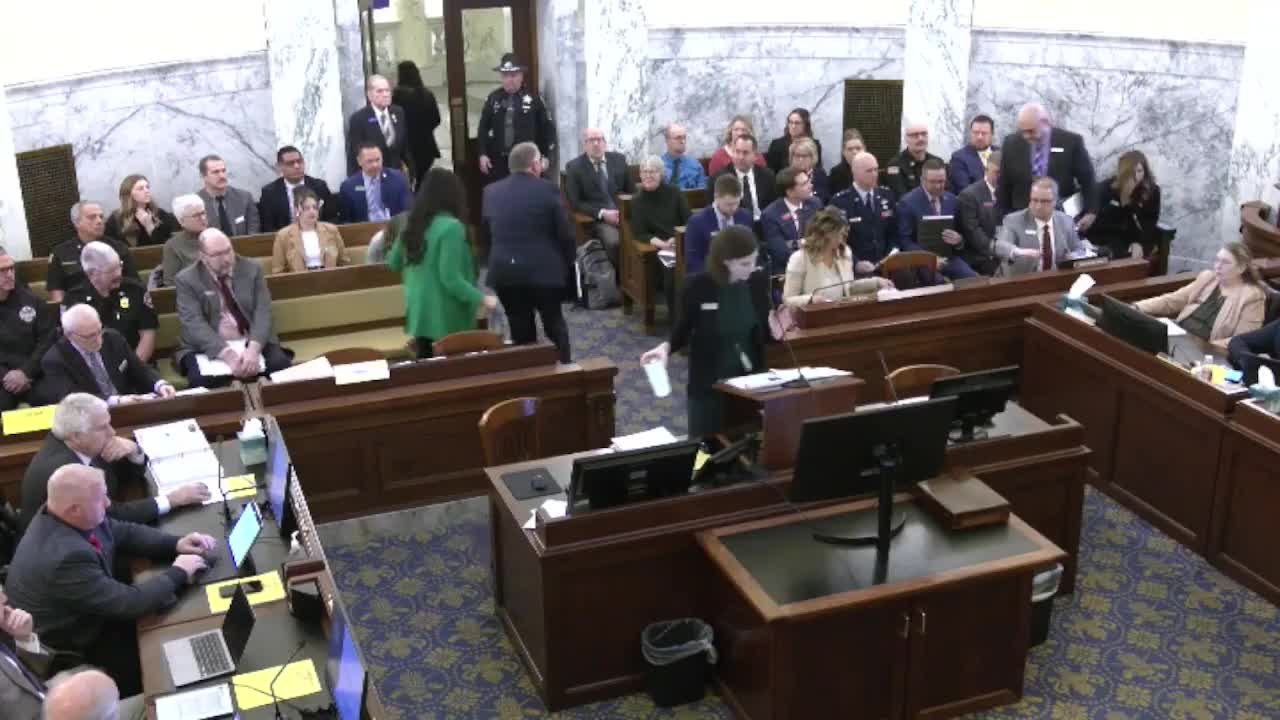
Major General Tim Donnellan, the Adjutant General and commander of the Idaho National Guard, told the Joint Finance-Appropriations Committee the Idaho Military Division needs supplemental and enhancement funding now to address operational backlogs and replace aging equipment.
Analyst Frances Lippitt briefed the committee on the division’s budget profile and noted a FY2025 deficiency warrant request of $34,200 related to hazardous substance incident costs that could not be recouped from incident originators. The governor recommended the division’s requested items and added supplemental funding in the governor’s recommendation.
Why it matters: The supplemental would allow the division and partner agencies to address a vehicle-equipment backlog that has left patrol vehicles unusable without communications installs, modernize IT infrastructure for public-safety communications, and replace regional hazmat equipment that has not been updated since 2005.
Supplemental and enhancements: The governor recommended funding to complete critical communications installations on about 40 Dodge Durango vehicles owned by the Idaho State Police (ISP), estimated contract installation at $240,000 with construction for four additional installation bays at $300,000. A second component would provide $759,200 for IT infrastructure and licensing to create a public-safety communications network independent of the statewide ITS for improved security.
Hazmat regional support: The governor recommended an $8,600,000 appropriation to allow the Office of Emergency Management to distribute funds to regional hazardous materials response teams (seven regional teams) through a cash transfer from the state emergency relief fund. Donnellan said the hazmat equipment had not been updated since about 2005 and that the seven regional teams respond to incidents ranging from vehicle spills to large propane incidents and meth-lab cleanups.
Backlog and facilities: Donnellan explained the vehicle backlog stemmed from a multi-year chip shortage and then a surge of vehicles arriving for communications installs; contractors have been used but DoD and state staff have observed quality-control issues on vehicles returned by private contractors. The supplemental includes funding for four additional installation bays and equipment to prevent future backlogs; Donnellan said the division is ready to execute and believes the work can be completed promptly.
Other details: The governor also recommended supplemental funding to establish the division’s own IT network for public-safety communications (separating microwave/public-safety networks from ITS) and to provide licensing and hardware recommended by the Office of Information Technology Services. Donnellan said that some of the IT work is to modernize servers and hardware to keep the network secure.
Deficiency warrant and execution: Lippitt noted the division requested a FY2025 deficiency warrant of $34,200 for hazardous substance response costs not recouped from originators. Donnellan said the Office of Emergency Management would procure and distribute the hazmat equipment to the seven regional teams.
Committee reaction and follow-ups: Committee members asked about timing (why supplemental now versus FY2026 enhancement), the ability to spend the funds before fiscal year end, and whether private contractors or in-house work would be more cost-effective. Donnellan said contracting to clear the backlog would be more expensive per vehicle and often requires state quality control for returned vehicles, and that expanding bays is intended to increase in-house throughput long term.
Next steps: The committee did not take a final vote during the hearing. The division and the governor’s office positioned the supplemental as urgent to clear backlogs and equip regional first responders.