Get Full Government Meeting Transcripts, Videos, & Alerts Forever!
Get email alerts on the Chronic Wasting Disease topic
No spam. Unsubscribe anytime.
State veterinarian: Idaho has its first two domestic chronic wasting disease cases; rule changes clarify testing and options for affected producers
Summary
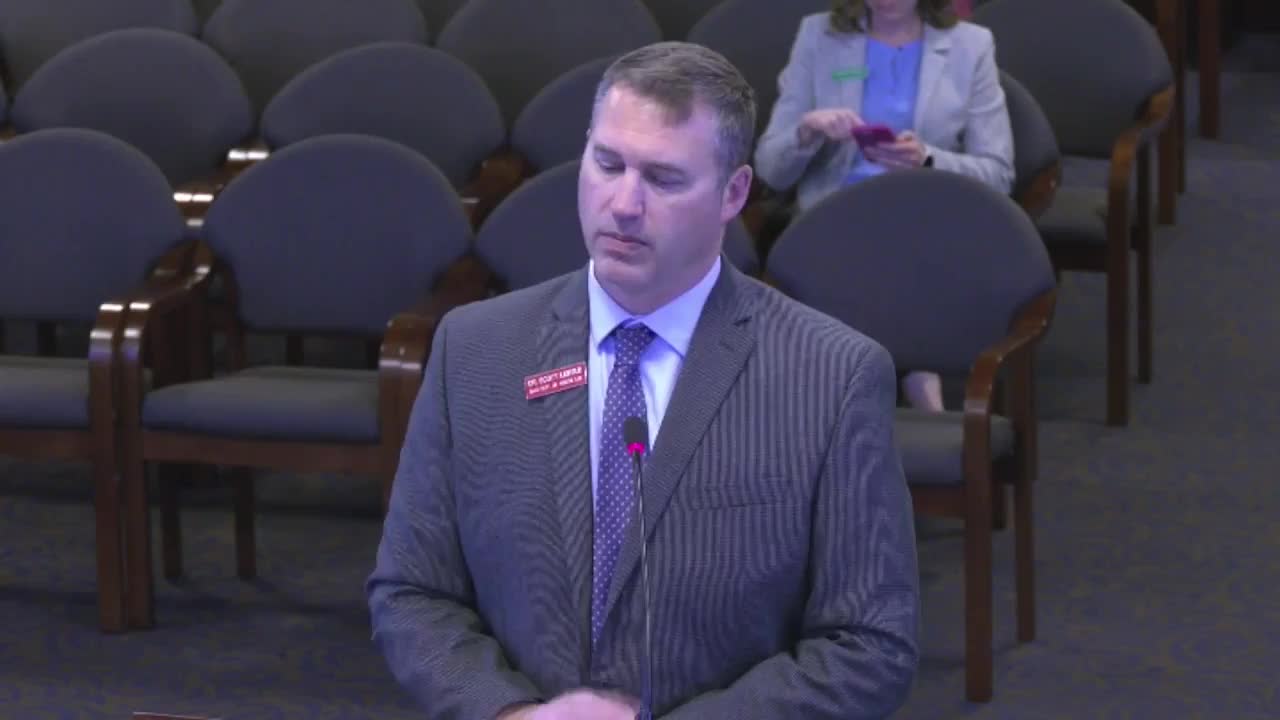
State Veterinarian Scott Lively told the House Agriculture Affairs Committee Idaho has confirmed two chronic wasting disease (CWD) cases in domestic herds in eastern Idaho and that recent rule changes align with House Bill 591 to clarify testing standards and movement options for producers.
The Idaho State Veterinarian told the House Agriculture Affairs Committee that investigators have identified the state's first two chronic wasting disease (CWD) cases in domestic herds in eastern Idaho and that rule revisions now clarify how the state will test and manage affected herds.
“Ultimately, as I'm sure many of you heard, we have identified our very first two cases of chronic wasting disease in domestic herds in Eastern Idaho,” Scott Lively, administrator of the Division of Animal Industries and state veterinarian, told the committee. He said early investigation indicates transmission most likely occurred between domestic ranches rather than from wild populations.
Why it matters: CWD is a prion disease affecting cervids. There is no validated live-animal test, so detection requires postmortem sampling. The committee's approved rule changes align state rules with House Bill 591 (2024) and specify that the “official CWD test” requires both brain stem and lymph node tissue, and that producers with multiple facilities under common ownership may move exposed animals between their locations while under quarantine, subject to herd‑management plans.
What the rule change does - Clarifies definitions added by HB 591 and removes duplicative definitions from rule. - Revises the official tissue-sampling standard for CWD to require both brain stem (obex) and lymph node collection for diagnostic testing. - Clarifies reporting timelines and the process for adding emerging diseases to the state reportable list.
Lively said the statutory changes from HB 591 were designed to give producers options after a confirmed CWD detection so the identification of a positive animal would not necessarily end a business. ‘‘The goal is to not make our domestic producers feel like if they get a positive it's a death sentence for their business,’’ Lively said.
Committee questions and agency responses Committee members asked whether the statute increased testing percentages after a positive. Lively said HB 591 does not set a universal post‑confirmation testing percentage; testing expectations will be established case-by-case in each herd management plan. He told Representative McCann the department will work with individual producers on testing expectations and herd management plans.
Representative Nelson asked about long‑term control and whether the state could ‘get ahead’ of CWD. Lively said Idaho and the Department of Fish and Game will need to continue cooperative surveillance of wild and domestic populations and that other states with decades of experience have not eradicated CWD. He urged producers to be selective when sourcing animals and said strict import protocols already apply to domestic animals brought in from other states or Canada, including a five‑year herd history and testing requirements.
Additional details - Lively told the committee that a confirmed CWD diagnosis requires necropsy testing; there is no approved live test. He described current research and the difficulty of live-animal testing for certain species such as elk. - The department said it will require both brain stem and lymph node tissue for official tests going forward.
Next steps The committee approved the docket aligning the rule text with HB 591; the Department of Agriculture said it will work with affected producers on herd management plans and that negotiated rulemaking or further refinement may follow as the agency implements the statute and responds to new cases.