Get Full Government Meeting Transcripts, Videos, & Alerts Forever!
Get email alerts on the Teacher Workforce topic
No spam. Unsubscribe anytime.
Teachers tell Senate education committee student behavior, burnout and class size are driving departures
Summary
Former and current teachers testified that worsening student behavior, parent disengagement, high noninstructional workload and rising stress are prompting teachers to leave the classroom. One presenter said interviews with 73 teachers across 16 districts showed widespread burnout and concern about retention.
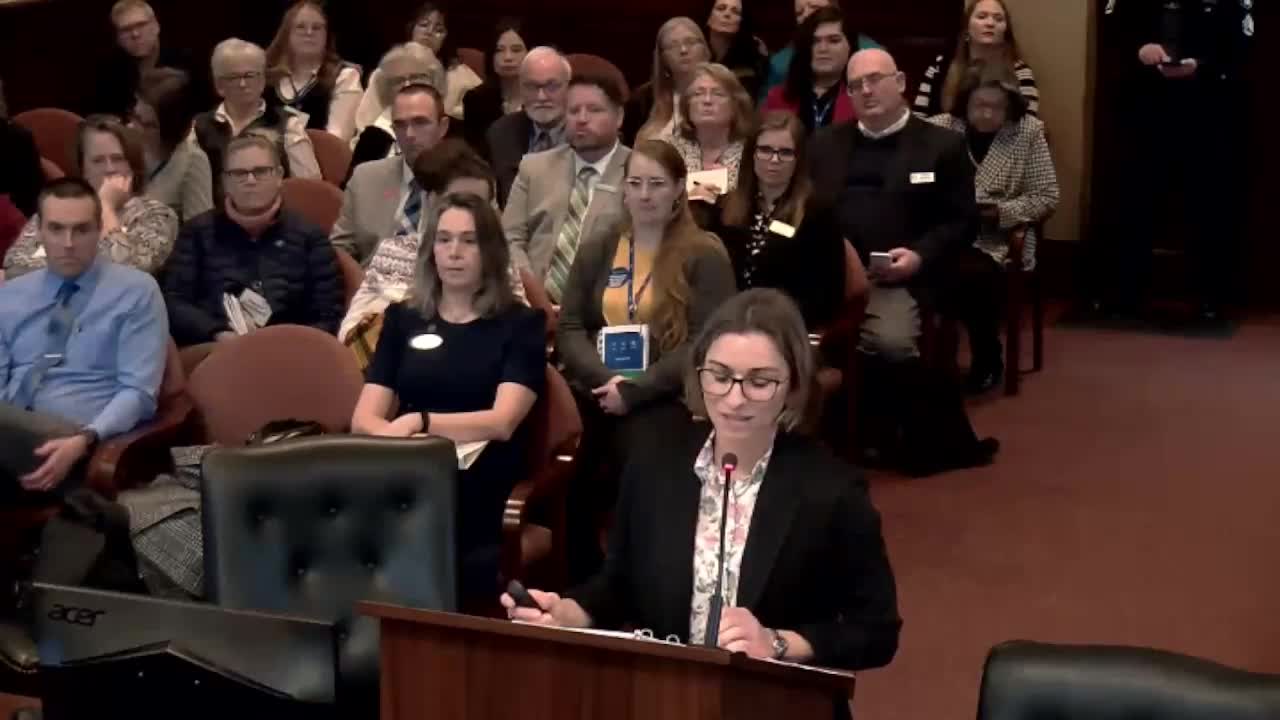
Courtney Linker, a former classroom teacher who said she took a leave after 17 years in the classroom, told the Idaho Senate Education Committee in Boise that worsening student behavior, diminished parental support and heavy noninstructional workloads are driving teachers from the profession.
Linker said she interviewed 73 teachers from 16 school districts over two months to understand whether her experience was isolated. "It was evident that I needed to continue," she told the committee, and she summarized the interviews’ findings for senators: high levels of stress and overwhelm, pervasive classroom behavioral problems, declining parental buy-in and an erosion of teacher morale and retention.
Linker said 99% of the teachers she interviewed were state-certified, and that many reported stress-related health problems and burnout. She presented several concrete findings from her interviews: only 47% of teachers described themselves as happy at work; 60% said they feel stressed or anxious at work; 55% said they feel overwhelmed. When asked whether they expected to teach until retirement, 27% said yes and roughly a third expressed doubt that they would make it to retirement under current conditions.
Linker urged legislative action on funding, staffing and classroom conditions. She recommended smaller class sizes ("No secondary teacher should be responsible for more than 200 kids, and no elementary teacher should be responsible for more than 30 kids," she said in testimony), more counselors and behavior interventionists, and higher pay for paraprofessionals and support staff to fill vacancies. She also criticized what she described as excessive district testing and called for state leaders to consider limits on classroom technology and cellphone use during the school day.
Former Los Angeles Unified School District teacher Lori Belaud, who identified herself as a Meridian resident and a trainer and mentor earlier in her career, told senators that student discipline and what she characterized as parental abdication of responsibility were key drivers of teacher burnout. "Students' refusals to complete their work and the lack of respect for both teachers and peers cannot be tolerated," Belaud said, adding that administrators need to support consistent behavior expectations and that professional development should emphasize classroom management and differentiated small-group instruction.
Committee members asked about Linker’s methods and the scope of her interviews. Linker said she used her existing professional network to recruit interviewees and intentionally included teachers from a variety of schools and districts. Senators also asked about parent volunteering, the individual professional learning plan (IPLP) and whether educators were experiencing trauma or post-traumatic stress; Linker replied that parent volunteer numbers appear lower and that the IPLP is inconsistently implemented and often not perceived as useful.
Senators pressed on the role of technology. Linker and Belaud told the committee they view pervasive cellphone use and social-media exposure as drivers of inattention, anxiety and social disconnection among students; Linker said some districts have reported improved behavior and academic outcomes after removing student cellphones during the school day.
Chairman Senator Lent closed the panel by reminding senators of the legislature’s constitutional duty to "establish and maintain a general, uniform and thorough system of public free common schools" (Idaho Constitution, Article IX, Section 1) and said the testimony should inform upcoming education policy decisions.
Transcript notes: Linker provided numeric results from her interviews (sample size 73 teachers across 16 districts, 35 schools) and several policy recommendations; the committee did not adopt formal motions or votes on those recommendations during the recorded meeting.