Get Full Government Meeting Transcripts, Videos, & Alerts Forever!
Get email alerts on the Licensing Certification Transfer topic
No spam. Unsubscribe anytime.
Licensing and certification seeks exemption to transfer personnel dollars to contracting for surveys
Summary
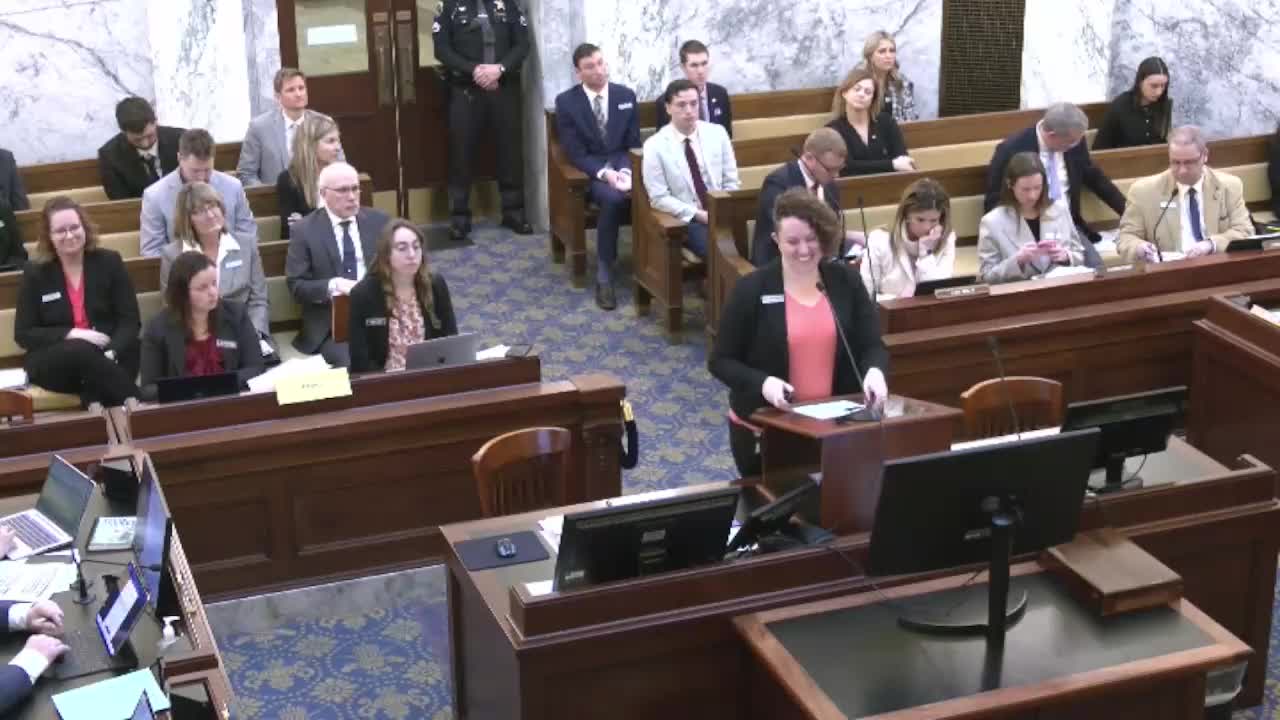
The Idaho Department of Health and Welfare’s licensing and certification division asked JFAC Jan. 13 for an exemption allowing transfers from personnel-cost appropriations to operating expenditures so it can hire contracted nurses to perform facility surveys when in-house staff are insufficient.
Alex Williamson of the Legislative Services Office told the Joint Finance-Appropriations Committee on Jan. 13 that the Division of Licensing and Certification requested a supplemental exemption from transfer restrictions enacted last year so it can move personnel dollars to operating expenditures as needed.
Licensing and certification inspects and certifies federally and state-regulated health-care facilities. The division historically has relied on contract nurses to complete surveys because it does not always have adequate full-time personnel to meet statutory inspection timelines. LSO said the division previously asked for a $400,000 one-time transfer from personnel costs to operating expenditures to hire contract nurses; the department later used approximately $300,000 of that transfer and reverted about $100,000.
Under the 2024 restriction referenced by LSO, personnel-cost funds could not be transferred to other expense classes for the Department of Health and Welfare without explicit committee action. Licensing and certification asked for an exemption to that restriction for the remainder of the current budget cycle and for 2026 so it can transfer personnel dollars to operating as needed to secure contracted surveyors.
Director Alex Adams told the committee contract nurses are more expensive than in-house staff — LHW staffing is paid about $35 an hour while contract nurses have been paid roughly $90–$95 an hour — and that the division still needs contract support to meet inspection frequency requirements. Adams also said the division’s turnover has improved since pandemic highs (turnover fell from the 20% range to lower single digits in recent reporting), but some contract use remains necessary to meet regulatory obligations.
Why it matters: Licensing and certification inspections are tied to oversight of nursing homes, assisted-living and other regulated facilities; inspection frequency and timeliness affect federal compliance and public-health oversight. The requested exemption would make it administratively simpler for the division to use personnel-appropriated funds to pay for contracted inspection services when necessary.
Follow-up: Committee members asked for detail on how much was spent on contract labor versus personnel wages and for information on whether the inability to transfer personnel dollars previously delayed inspections. LSO and the department said they would provide additional financial detail and historical inspection-timing data.