Get Full Government Meeting Transcripts, Videos, & Alerts Forever!
Get email alerts on the Higher Education topic
No spam. Unsubscribe anytime.
Lewis‑Clark State College details budget needs, cites EWA cut and salary gap; LAUNCH increased CTE enrollment
Summary
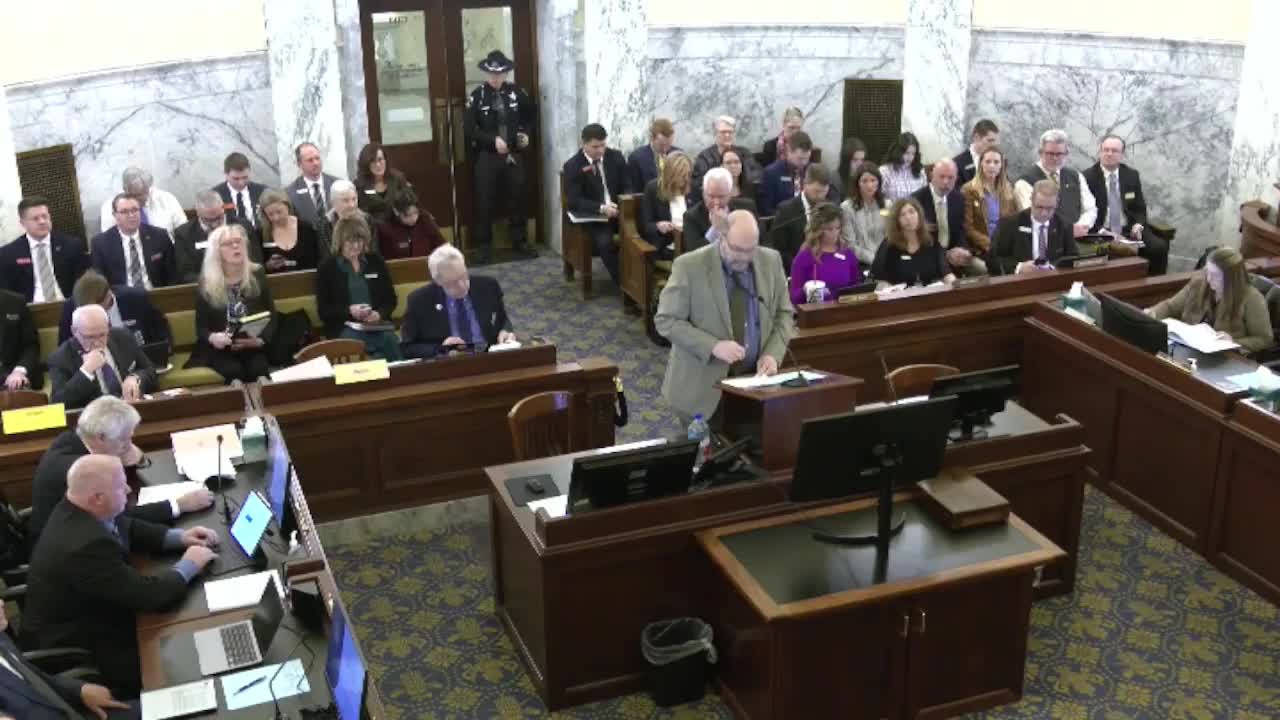
Dr. Cynthia Pemberton, president of Lewis‑Clark State College, told the Joint Finance‑Appropriations Committee on Jan. 27 in Boise that the college faces a modest FY2026 reduction from the enrollment workload adjustment and still seeks operational capacity funding and help closing a multi‑year salary gap.
Dr. Cynthia Pemberton, president of Lewis‑Clark State College, told the Joint Finance‑Appropriations Committee on Jan. 27 in Boise that the college faces a modest FY2026 reduction from the enrollment workload adjustment and still seeks operational capacity funding and help closing a multi‑year salary gap.
Kevin Campbell, a budget and policy analyst with the Legislative Services Office, presented the college’s budget overview and explained how higher education budgets treat tuition and fee revenue. Campbell said reappropriated tuition and fees are part of the institutions’ spending authority and that “reappropriation does not mean unspent or uncommitted or unaccountable.” He reported Lewis‑Clark’s FY2025 base appropriation and noted the college will see a reduction of $102,500 in FY2026 under the enrollment workload adjustment (EWA) formula.
Why it matters: Lewis‑Clark is a small, regionally focused four‑year public college whose budget and staff compensation affect the North Idaho workforce pipeline, particularly in nursing and career‑technical trades.
Pemberton told the committee EWA is a long‑standing weighted credit‑hour formula and described it as “a net 0” process across institutions, while also explaining the formula’s weights favor graduate and certain technical course production. She said Lewis‑Clark’s average credit‑hour weighting (1.85) is lower than peer institutions’ (2.51), which she said has contributed to the college’s relative funding and salary lag.
Enrollment and programs: Pemberton said LC State enrolled 3,881 students and offered more than 130 academic and career‑technical credentials. She credited the state’s LAUNCH program with supporting about 240 individual students in the fall term and said LAUNCH recipients were concentrated in career‑technical programs. Pemberton said career‑technical enrollment at the college rose 19% in fall and another 10% in spring. She cited nursing and apprenticeship completion as examples of LAUNCH’s effect: “...36 of 54 individuals in the fourth year of electrical apprenticeship who completed their program with the support of LAUNCH funds this fall,” she said.
Budget specifics and requests: Campbell and Pemberton reviewed recent enhancement lines. Lewis‑Clark received operational capacity enhancements (OCE) in prior years — including $440,200 for FY2025 — and has requested $287,000 in OCE for FY2026, with a portion to be used for compensation equity (CEC). Pemberton told the committee the college used prior enhancements to pay occupancy costs for the Schweitzer Career Technical and Engineering Building, invest in marketing and IT, and finish custodial support for the new facility.
Salaries and compensation: Pemberton said Lewis‑Clark is behind K‑12 pay and peer institutions. Citing internal data, she said LC State instructors earn on average about $9,000 less per year than the K‑12 average and assistant professors about $3,777 less. She said the college needs roughly $1.2 million to meaningfully close the gap and that the requested $287,000 would be a partial step.
Other items: Pemberton described Lewis‑Clark as “North Idaho’s health care education leader,” listing nursing degrees, allied health programs, and a newly approved set of graduate programs in nursing and cyber accounting. She also said LC State completed full approval to deliver prison education at Orofino and other sites, serving nearly 200 incarcerated students after transition from an experimental Pell program.
What the committee asked: Members pressed on EWA mechanics, enrollment trends and retention strategies. Pemberton said LC State has adopted wraparound student supports (advising centers, tutoring, a co‑located food pantry and peer mentoring) and reported improvement in retention and outcomes metrics such as NCLEX pass rates.
Ending: Pemberton closed by restating the college’s regional, workforce and student‑support mission and urged continued legislative support for operational needs and compensation funding.