Get Full Government Meeting Transcripts, Videos, & Alerts Forever!
Get email alerts on the Appellate Public Defender topic
No spam. Unsubscribe anytime.
Appellate Public Defender asks for deputy position to reduce contracting costs
Summary
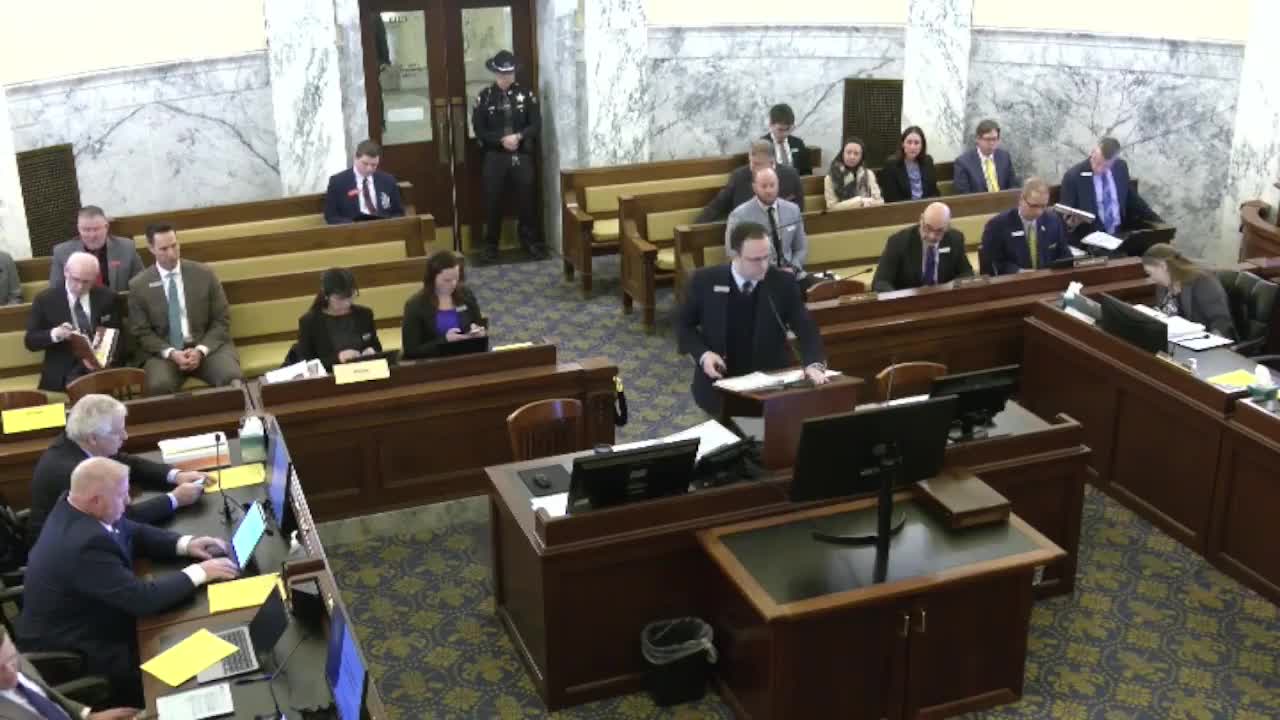
The State Appellate Public Defender office told the Joint Finance-Appropriations Committee it is nearly fully staffed but requested one additional deputy appellate position and re-appropriation authority for unspent one-time funds to reduce costly contracting for overflow cases.
Christopher Lahoset, budget and policy analyst with the Legislative Services Office, told the Joint Finance-Appropriations Committee that the Office of the State Appellate Public Defender is charged under Idaho Code §19-5905 to represent indigent appellants in appeals and post‑judgment proceedings and that it comprises two programs: in‑house appellate representation and a capital/conflict representation program.
The office told lawmakers it currently has authorization for 26 full-time positions and reported no vacancies as of mid‑December; the budget analyst said the office’s five-year average authorized FTE is about 25 and that personnel costs are the major portion of its budget.
Director Eric Leighton described operational needs and a staffing proposal Leighton, who identified himself as director of the Appellate Public Defender office, said the agency currently has 13 attorneys in the appellate unit and that the agency seeks funding for a thirteenth attorney specifically tasked with handling non‑capital felony, misdemeanor and juvenile district and post‑conviction appeals. He said in-house handling would be less expensive than continuing to contract overflow cases and offered the office’s comparison: contracted attorney costs for overflow cases were estimated at about $254,000 per year, while hiring a state attorney at an approximate $140,000 salary would yield savings.
Leighton and committee members discussed contracting and case distribution The director said contracting is unavoidable for conflicts of interest and that funds for conflict appointments are earmarked; however, he said counties and the office have contracted out overflow cases in recent years and that contracting is typically more expensive and can cross fiscal years, complicating budgeting. He told lawmakers the office had sent roughly 14 cases out to contracted firms in the last 18 months and that the contracted approach is “an imperfect solution.”
Re-appropriation and one‑time funds Lahoset told the committee that the legislature previously approved a supplemental in 2023 of about $1,309,400 to anticipate costs from a surge of cases; several of those cases were moved into later years and the legislature approved re-appropriation for the funds. He said about $1,259,000 remained available but cautioned this could decline as the fiscal year continues.
Ending Lawmakers asked for no additional immediate action beyond the requested staffing and re-appropriation authority but sought clarity on case counts and contracting costs. Leighton said caseloads are large (he cited roughly 650 cases in the current fiscal year) and that case assignments are distributed based on attorney experience to both manage client needs and provide on-the-job training for less experienced staff.