Get Full Government Meeting Transcripts, Videos, & Alerts Forever!
Get email alerts on the Isu Financial Accountability Forensic Lab topic
No spam. Unsubscribe anytime.
Idaho State University to return forensic pathology funds; president pledges stronger controls
Summary
ISU President Rob Wagner and legislative analysts told the Joint Finance-Appropriations Committee that university leadership has traced a now-paused Eastern Idaho forensic pathology lab appropriation, will return remaining funds to the state, and will institute clearer accountability procedures.
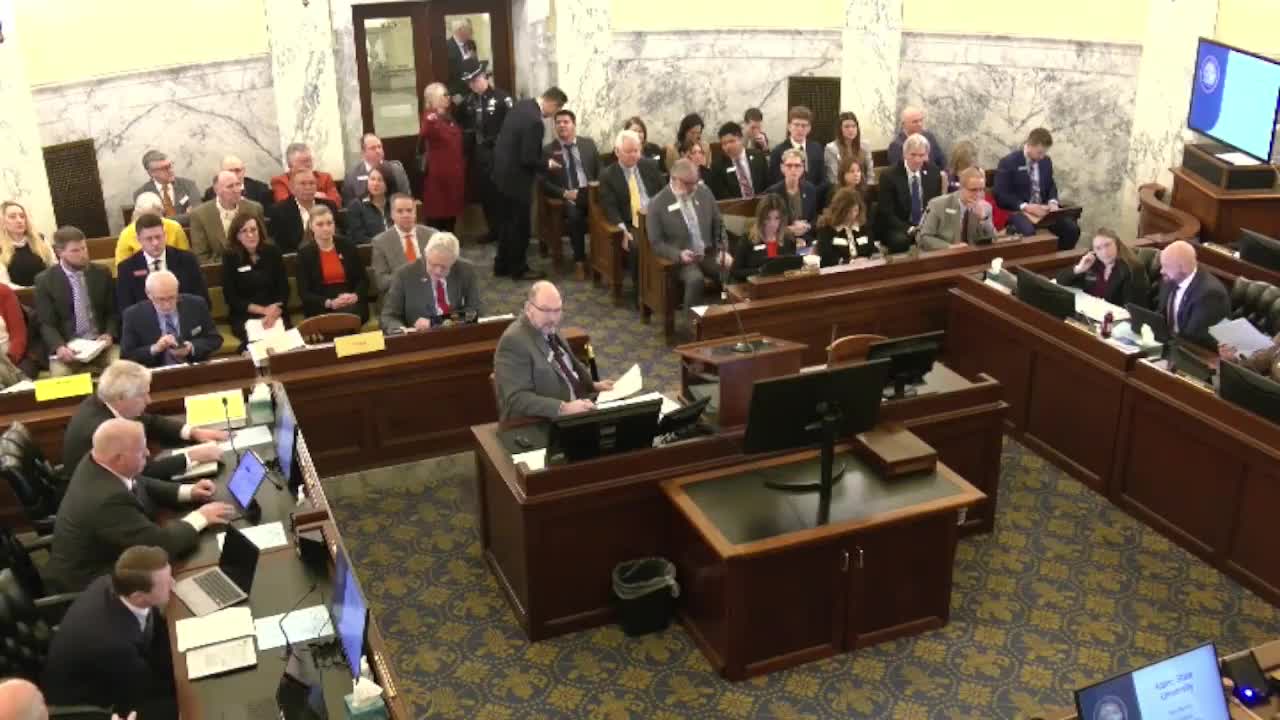
Idaho State University President Rob Wagner told the Joint Finance-Appropriations Committee on Jan. 29 that ISU will return remaining funds tied to a planned Eastern Idaho forensic pathology laboratory and will strengthen the university’s tracking of legislative appropriations.
The announcement followed a staff-prepared report and a requested audit that Legislative Services Office analyst Kevin Campbell said is now in process. “When we learned of this, Dr. Campbell was asked to prepare a report to try and gather the facts,” the committee co‑chair said as the meeting opened; Campbell presented the ISU budget and the report to the committee.
Why it matters: The appropriation in question was intended to create a forensic pathology facility to serve Eastern Idaho. Committee members said the episode raises statutory and fiscal-accountability concerns because appropriations are treated as law and must be used consistently with legislative intent.
Wagner described how the project unfolded and what ISU will change. He said ISU initially expended a small amount of the appropriation on a consultant to study campus options in Pocatello and that, after county partners decided a campus facility was no longer desirable, an MOU transferred the remaining funds to the county. Wagner said that, in retrospect, ISU “should have kept those funds” and “there should have been an invoice procedure put in place.” He added, “We should have been responsible for those funds…this body and the Idaho State Legislature can trust us as an institution to follow your intent.”
Campbell and committee leaders confirmed a formal audit has been requested; Campbell said his office has posted a fact‑gathering report online and that an audit is “just now in process” to determine whether any lines were crossed. Representative Manwaring and other members thanked Wagner for directing the funds’ return and for committing to improved transparency.
What the committee heard about process and fixes: Wagner said ISU will take three steps immediately: (1) clarify ownership of legislative funds within the university’s internal controls, (2) establish invoice and documentation procedures when funds are passed to external partners, and (3) designate a clear accountability line so the university can trace appropriation intent from receipt to final disposition.
Where the record ends: Committee members and the university emphasized continuing review. Representative Manwaring closed the forensic portion of the exchange by thanking Wagner for returning the funds and for the administration’s willingness to adopt stricter controls.
Ending: The committee directed staff to make the report publicly available and to continue the audit process; committee members said they expect to review audit findings and any follow‑up actions in future sessions.