Get Full Government Meeting Transcripts, Videos, & Alerts Forever!
Get email alerts on the Broadband Commerce topic
No spam. Unsubscribe anytime.
Commerce outlines broadband deployments, says $580M BEAD timeline moving to funding applications
Summary
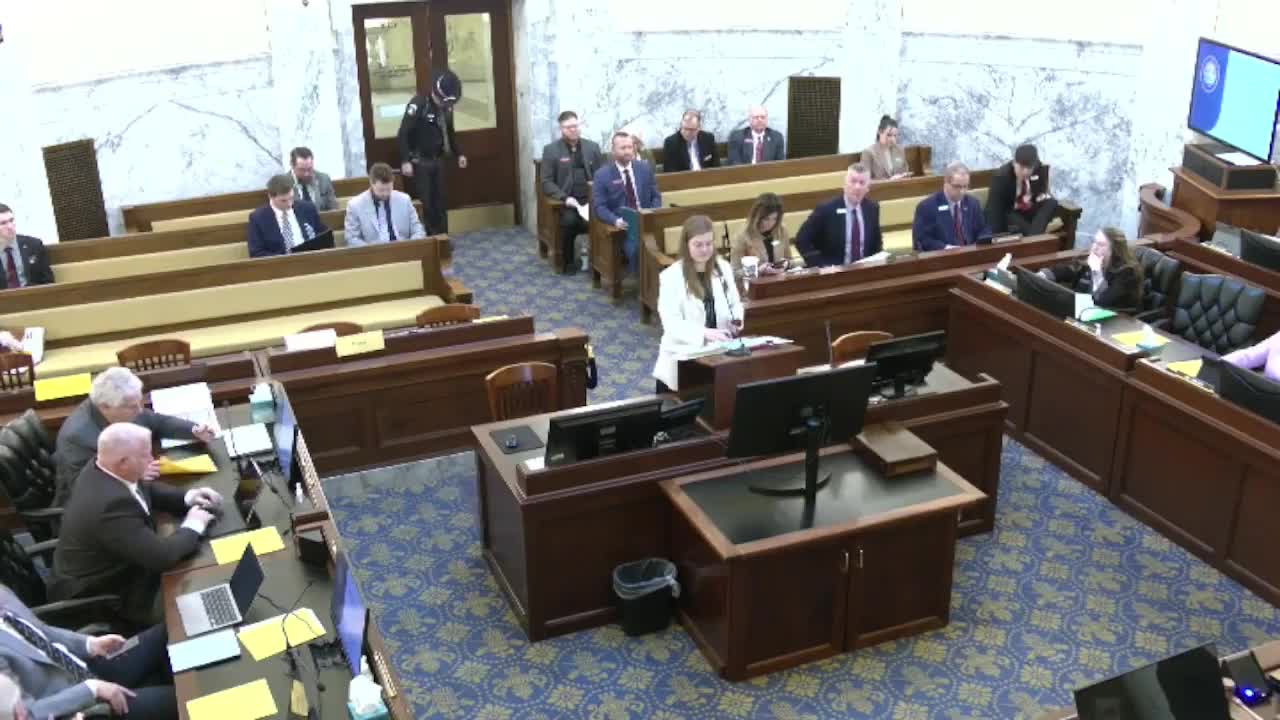
The Idaho Department of Commerce briefed JFAC on broadband funding streams (state and federal), the new broadband office and implementation timeline for the BEAD program. Commerce said most state and ARPA funds are already obligated and that the federal BEAD program is entering a funding-application phase in 2025.
Brooke Dupree, a budget and policy analyst with the Legislative Services Office, told the Joint Finance-Appropriations Committee the Department of Commerce’s budget includes 48 FTP across the commerce program and a newly formed broadband office. Dupree said the department’s broadband activity is primarily funded through a mix of state general fund transfers, ARPA capital projects funding and federal infrastructure money.
Tom Keeley, director of the Idaho Department of Commerce, and members of his leadership team described the department’s emphasis on broadband deployment, workforce and industry attraction. Keeley introduced his leadership team, and commerce staff highlighted that broadband oversight has been placed in a distinct broadband office to increase transparency.
Ramon Sanchez (identified in the record as head of the Idaho Office of Broadband at Commerce) provided detail on three major funding streams supporting broadband expansion: the Idaho Broadband Fund (a $35 million state general fund transfer), a $120 million capital projects fund (ARPA) allocation and the federal BEAD program (a $580 million national program under IIJA). Sanchez told the committee, “26 and a half million of that is already obligated, so there's about 8.5 remaining,” referring to the state $35 million Idaho Broadband Fund.
Sanchez described the capital projects fund as fully obligated across 18 projects that aim to connect about 35,000 homes and businesses. He said the BEAD program timeline calls for a pre-qualification phase in quarter 1 of the calendar year, a funding-application phase opening in quarter 2, and evaluation through the summer with federal submission of final award packages in the fall; “monies for the BEAD program could potentially be moving a year from now,” Sanchez said.
Director Keeley and staff emphasized collaboration with private-sector ISPs, regional planning and local jurisdictions. Sanchez said Idaho has about 90 ISPs operating in the state and noted that Commerce used a portion of planning funds to provide grants to 15 local communities to prepare BEAD proposals — a state-first approach intended to improve local planning and private–public coordination.
Committee members asked about technology choices and resiliency. Senators discussed whether satellite low-Earth orbit (LEO) services such as Starlink are a viable option for unserved locations versus fiber. Sanchez said the BEAD program prioritizes fiber and licensed fixed wireless where feasible but allows alternative technologies, including LEO satellites, where those options are cost-prohibitive or impractical. “Most people would say the most reliable form of Internet is still gonna be fiber,” Sanchez said, but he added that LEO satellites will likely be part of the portfolio for hard-to-reach locations.
Keeley and Sanchez also described Commerce’s work on workforce development, housing, childcare and energy industry outreach as part of a broader economic development strategy. Keeley said commerce works closely with statewide partners on housing and workforce programs and highlighted collaboration with the Idaho Advanced Energy Commission, INL and the federal Tech Hub effort for nuclear energy supply-chain work.
Ending: Commerce asked JFAC to continue support for the department’s broadband and commerce staffing in the FY2026 budget; the presentation concluded with the broadband office’s timeline for BEAD participation and no formal committee votes recorded in the hearing transcript.