Get Full Government Meeting Transcripts, Videos, & Alerts Forever!
Get email alerts on the Pension System Persi topic
No spam. Unsubscribe anytime.
PERSI reports $22 billion in assets, 87% funded ratio and requests for software upgrade funding
Summary
The Public Employee Retirement System of Idaho (PERSI) presented its FY2026 budget request to JFAC, reporting a funded ratio near 87 percent, about $22 billion in assets, ongoing administration costs and a multi-year pension software upgrade with a FY2026 funding request.
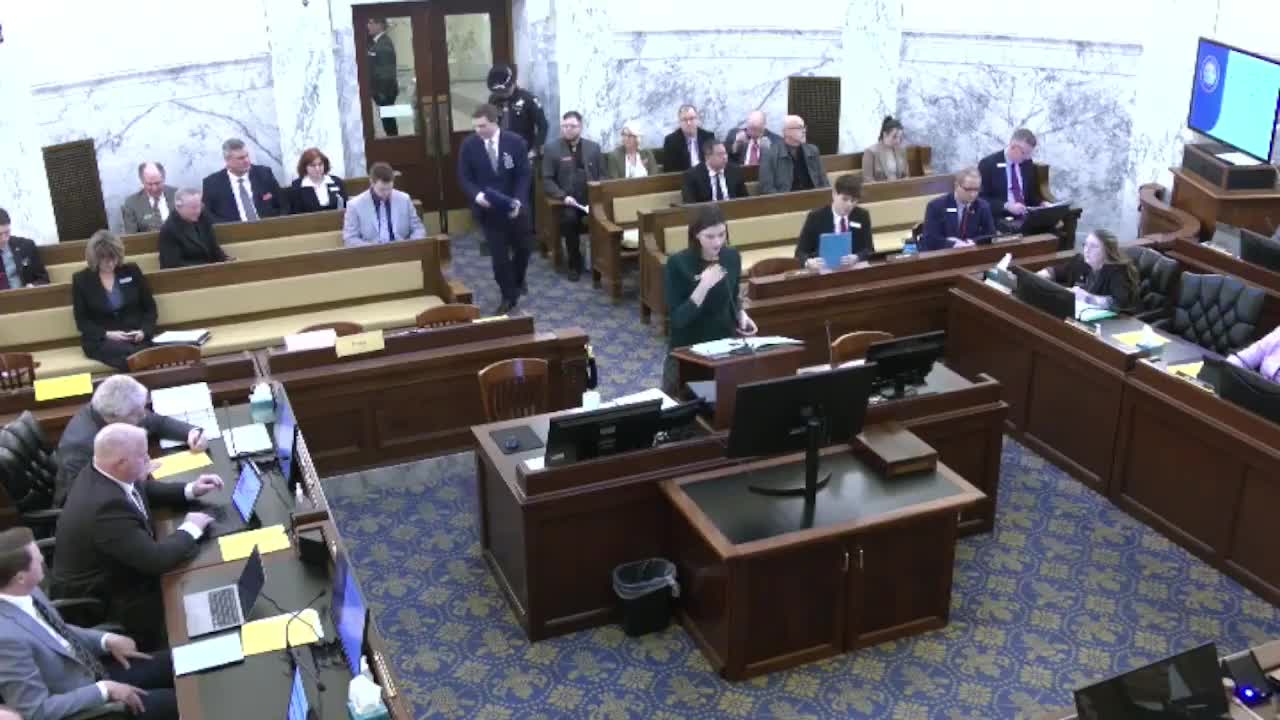
Frances Lippitt, a budget and policy analyst with the Legislative Services Office, told the Joint Finance-Appropriations Committee that the Public Employee Retirement System of Idaho (PERSI) is funded by contributions and investment earnings and administers both defined-benefit and defined-contribution plans. "PERSI is directed by a five-member retirement board whose members are appointed by the governor for five-year terms," Lippitt said during her allotted remarks.
Lippitt said PERSI has 81 authorized full-time positions, averaged about 73.8 filled FTP over five years and typically has a historic fill rate near 89 percent. The agency expended $11.4 million from appropriated funds in FY2024; personnel accounted for about 56.6 percent of that total while operating expenditures (including the multi-year pension software upgrade) made up much of the remainder. Continuously appropriated pension payments totaled roughly $245.9 million in FY2024.
PERSI Director Mike Hampton told the committee the fund returned about 9 percent in the most recent year and finished the fiscal year with assets a little over $22 billion. "At the end of last fiscal year we were about 87% funded," Hampton said, explaining the funded ratio as the percentage of assets on hand compared with the fund’s actuarial liabilities.
Hampton described the board’s approach to post-retirement adjustments (the statutory cost-of-living process) and said the board considers sustainability and the fund’s funded status when recommending adjustments. He told the committee the board recommended a 1.3 percent post-retirement adjustment this year (1 percent automatic plus a 0.3 percent retroactive adjustment back to 2020), and emphasized that Board recommendations are weighed against the long-term funded status and potential impact on contribution rates.
On staffing and operating requests, Lippitt said PERSI requested two ongoing enhancements totaling $277,100 (including $25,000 to provide a dedicated travel budget for board members to attend conferences and a 5 percent request for general inflation that was not recommended by the governor). On the one-time side, the agency requested $3 million for year four of a multi-year pension software upgrade, $7,000 for furniture and $628,500 for IT hardware recommended by OITS. The governor recommended the enhancements except for the inflationary increase and office furniture.
Committee members asked for clarification on which costs are included in the administrative appropriation versus continuously appropriated investment management fees. Director Hampton said investment management fees are paid from continuously appropriated funds and do not run through the annual appropriation. He also described PERSI’s amortization period as about 10.7 years and the board’s statutory authority to adjust contribution rates if required; he noted that benefit changes are set by the plan sponsor (the legislature) and cannot be made unilaterally by PERSI.
Hampton also summarized PERSI’s recent operational workload: the agency handled more than 66,000 phone calls, delivered education to over 14,000 members, completed more than 44,000 workflows (retirements, benefit estimates, beneficiary changes) and registered over 37,000 users in a new member portal launched in January.
Ending: The committee received the PERSI presentation, asked follow-up questions on administration and the pension software project, and did not take immediate legislative action in the hearing transcript.