Get Full Government Meeting Transcripts, Videos, & Alerts Forever!
Get email alerts on the Budget Corrections topic
No spam. Unsubscribe anytime.
Legislative staff outlines technical corrections to FY2025 budgets ahead of vote
Summary
Legislative analysts presented three technical corrections affecting the Department of Commerce, Department of Environmental Quality and Department of Health and Welfare; committee members were briefed and the package was scheduled for a vote the following day.
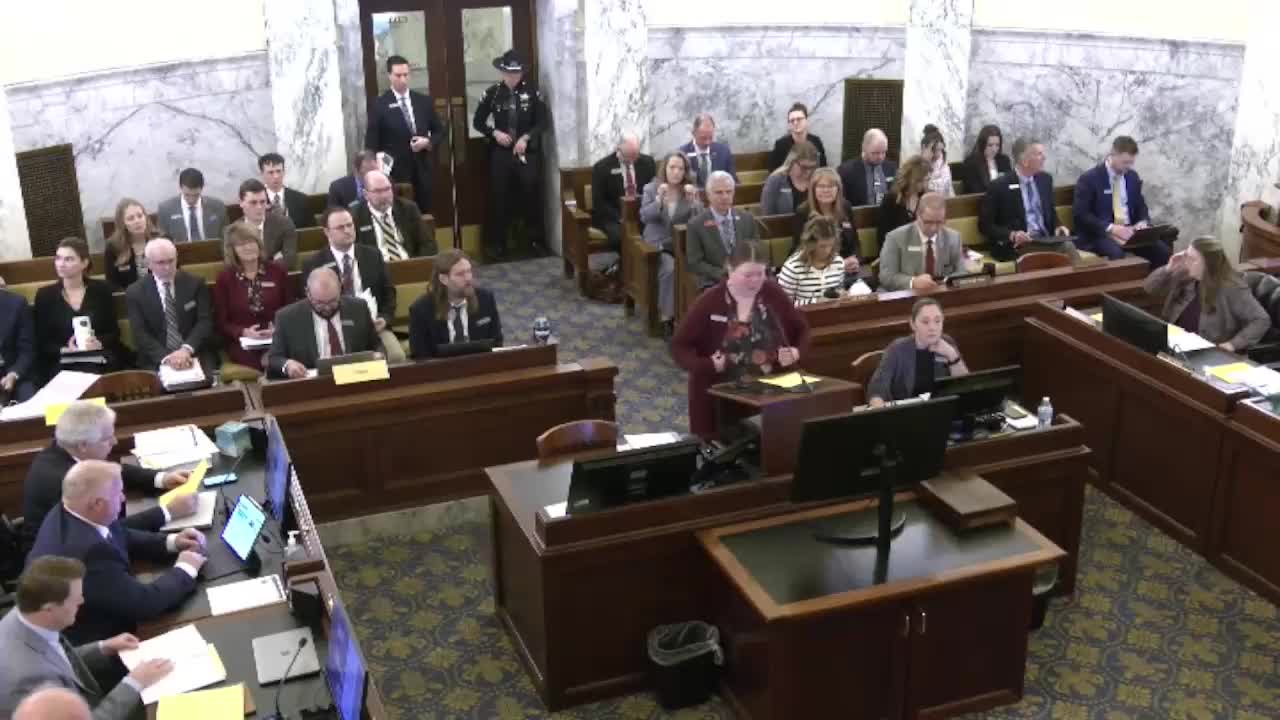
Janet Jessup, a budget and policy analyst with Legislative Services, briefed the Joint Finance and Appropriations Committee on a set of technical corrections to fiscal year 2025 appropriations that legislative staff compiled and hand-delivered in a yellow packet.
Jessup said the packet contains three corrections that net to zero across the overall state budget but reclassify or restore funds so they appear in the proper agency programs or expenditure categories. “The Department of Commerce was provided reappropriation authority and then subsequent to that the broadband program was created … The monies when in fiscal year 2025 were reappropriated into the commerce program, not the broadband program,” Jessup said, explaining that staff are moving the $ amounts between Commerce program lines so broadband spending can be tracked in the newly created broadband program.
Jessup also described a drafting error affecting the Department of Environmental Quality’s CAFO (confined animal feeding operation) improvement fund. She said language in a bill inadvertently directed the transfer from the DEQ general fund line rather than the broad general fund and that, as a result, other DEQ general-fund dollars were moved to CAFO. The change in the yellow packet would “make the agency whole and replace those DEQ general fund monies that were transferred to the CAFO fund,” Jessup said.
A third correction affects two programs within the Idaho Department of Health and Welfare. Jessup told the committee that some dollars appropriated to trustee and benefit payments—typically the category for payments to third parties—should instead be classified as operating expenditures because the payments were to third parties under contract. Because Health and Welfare’s bill included language restricting transfers out of trustee and benefit payments, the agency cannot reclassify that money on its own and the committee must approve the reclassification.
Chairman Groh thanked staff for the work and confirmed the committee would vote on the technical corrections the following day. No formal vote on the packet occurred during the briefing.
The packet and Jessup’s explanations drew no substantive policy debate; committee members asked clarifying questions and staff offered to take follow-up inquiries.
Looking ahead, staff advised members that the corrections are technical and net to zero; committee members were advised to consult analysts before the next-day vote if they had additional questions.
Ending: The committee did not take formal action on the corrections during the session; staff indicated the package would be on the committee’s ballot the following day for formal consideration.