Get Full Government Meeting Transcripts, Videos, & Alerts Forever!
Get email alerts on the State Liquor Division topic
No spam. Unsubscribe anytime.
Idaho Liquor Division outlines FY2026 budget requests, highlights staffing and IT upgrades
Summary
The Idaho State Liquor Division presented its FY2026 budget request to the Joint Finance-Appropriations Committee, detailing distribution formulas, staffing challenges, pay increases for temporary retail clerks, store capital upgrades and IT/network modernization needs.
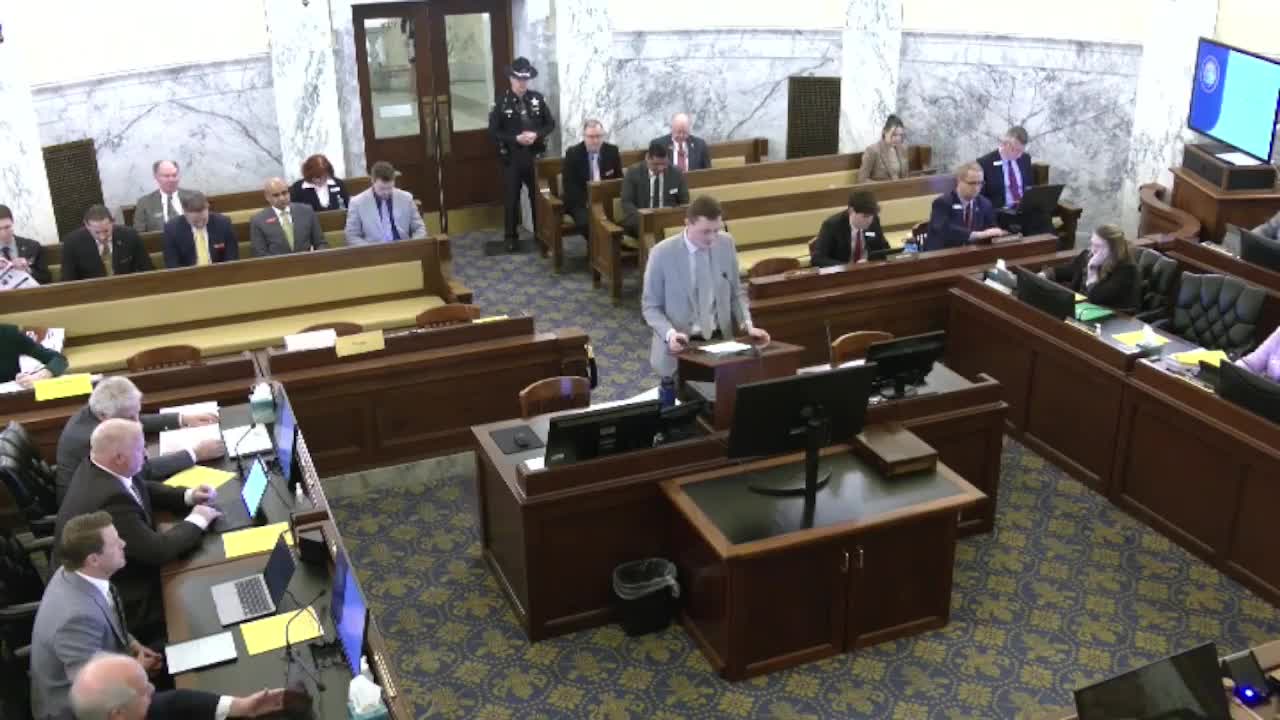
The Idaho State Liquor Division told the Joint Finance-Appropriations Committee on Wednesday that it distributed roughly $118.3 million in FY2024 under statutory formulas and is seeking targeted ongoing and one-time appropriations for FY2026 to address staffing turnover, store improvements and IT modernization.
Kellen McGurkin, a budget and policy analyst with the Legislative Services Office, opened the presentation and said the division’s statutory authority is in Title 23 of the Idaho Code and that FY2024 distributions totaled $118,300,000. McGurkin outlined the statutory flow of funds: a 2% surcharge on liquor sales that goes to the court services fund (about $6.7 million in FY2024), and the remainder distributed after the division accounts for operating costs and fund balances. He said roughly half of the available funds go to cities, counties and magistrate courts (about $56.3 million in FY2024) and the remainder is split after fixed distributions and statutory transfers.
The nut of the presentation focused on operating pressures and discrete budget requests. Andrew Arulanandam, director of the Idaho State Liquor Division, described persistent turnover among temporary store clerks and a five-year staffing picture that left the agency with an authorized FTP cap of 257.25 but a filled FTP near 93 percent for budgeted positions. “We are a revenue generating agency. We have a lot of forward facing engagement with the citizens of Idaho,” Arulanandam told the committee. He said the division’s five-year free fund balance declined from about $38 million in FY2022 to $14 million in FY2024, in part because higher-margin direct-to-consumer sales during COVID were expended as business normalized.
On personnel, the division noted a history of moving part-time clerk hours into full-time positions to address turnover. For FY2025 the legislature approved an increase that raised temp retail staff hourly pay from $13.50 to $15.00. For FY2026 the division requested $57,400 in ongoing dedicated funds to raise the temp clerk rate from $15.00 to $15.45 per hour; the division reported annual turnover in those positions of about 84 percent after prior increases lowered it from roughly 140 percent.
Tony Grama (identified in the record as chief deputy and CFO of the division) told the committee that temporary clerks are state employees (not hired through private temp firms) and are not eligible for automatic CEC adjustments; the only way to provide pay increases for those positions is through line-item appropriations.
The Liquor Division also requested one-time and ongoing IT and capital investments. Requests included $200,000 for 70 network security firewalls and 70 network switches to complete a move from DSL/T1 to cellular-based connections at stores, building on a FY2024 purchase of Cradlepoint routers. The division told the committee that the proposed hardware setup would save about $100,000 in upfront hardware costs and roughly $10,000 per month compared with a hardwired alternative, and that the Office of Information Technology Services (OITS) recommended the security and switch purchases.
Other one-time requests included $100,000 to upgrade the division website to meet web content accessibility guidelines (the director said the site is not currently in compliance with ADA-related standards), $980,300 for retail store replacement items (about $775,000 for in-store improvements and $205,000 for motorized equipment and vehicles), and $235,000 for IT and security replacement items (server replacements, battery backups, and security systems at stores). The division also requested funding for an enterprise document management system recommended by OITS.
Committee members asked about the scope and cost of the website upgrade, the sufficiency of incremental pay increases for temp clerks, and how the division decides where to place state-run liquor stores versus contract stores. Senator Cook asked whether a $100,000 website upgrade was needed to address what appeared to be a single keyboard-navigation issue; Arulanandam replied, “there are indeed other items. I don't have the exact list. We did consult with an expert and he gave us a list of items that we would need to upgrade to be in full compliance.”
On store placement in rural areas, Arulanandam said the division uses market and population guidelines and that contract stores handle their own labor costs under contract with the division.
The division provided the committee with a personnel and expenditure breakdown: in FY2024 the agency reported $28.1 million in total appropriated expenditures, with roughly 66 percent in personnel costs, 20.5 percent in capital outlay (largely lease-related), and 12.9 percent in operating expenses. The division said it consistently expends more than 90 percent of its appropriation and that about half of recent budget increases have come through statewide program maintenance adjustments and half through enhancements approved by the legislature.
The director said he would stand for questions and thanked the committee for its attention.
Ending: The committee did not take votes on the Liquor Division requests during the hearing; the presentation concluded with questions and no formal action recorded on the transcript.