Get Full Government Meeting Transcripts, Videos, & Alerts Forever!
Get email alerts on the State Budget topic
No spam. Unsubscribe anytime.
JFAC approves technical corrections and dozens of program-maintenance budgets, sending bills with due‑pass recommendations
Summary
The Joint Finance and Appropriations Committee on Jan. 17 approved a set of technical corrections and adopted program‑maintenance budgets across state government, moving reappropriations for broadband into the new Broadband Office and setting baseline budgets for agencies including the judiciary, public safety, education and health and human services.
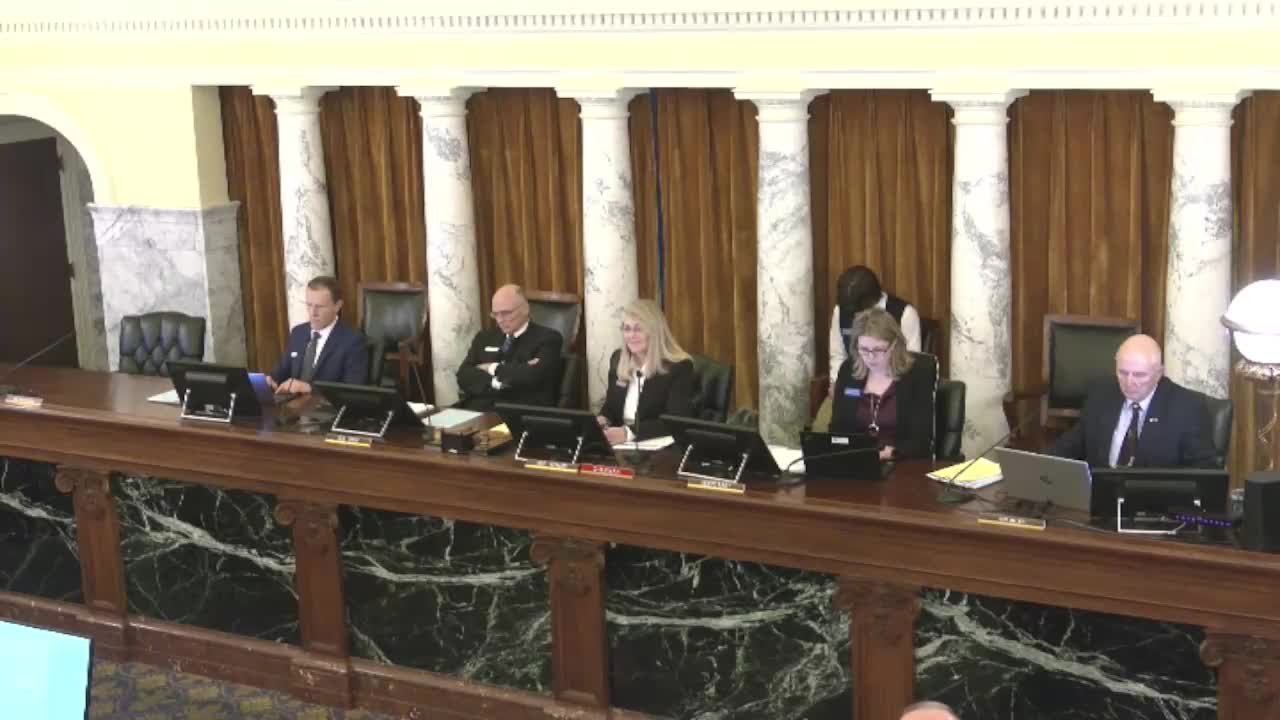
The Joint Finance and Appropriations Committee unanimously approved a package of technical corrections and then set program‑maintenance budgets across most state government functions during its Jan. 17 meeting in Boise.
Budget staff told the committee the day’s technical corrections were mainly bookkeeping to place previously appropriated dollars in the proper fund or program for transparency and tracking. After those fixes, the committee voted through program maintenance appropriation motions for agencies ranging from the Legislative Branch and Judiciary to Public Schools and Health and Human Services. Most motions passed unanimously by roll call; a handful of items drew a single dissenting vote.
Why it matters: These votes set the baseline ongoing appropriations the legislature will use to build the 2026 budget. The motions primarily confirmed the prior session’s funding levels (minus one‑time items) plus small statewide adjustments (contract inflation and statewide cost allocation) and incorporated organizational realignments the Department of Health and Welfare requested.
Janet Jessup, a budget and policy analyst with Legislative Services Office, explained the first technical corrections. She told the committee that a reappropriation intended for the state broadband office was recorded under the Department of Commerce’s program last year, and the committee needed to move $291,737,000 in reappropriated funds out of the Commerce program and into the Broadband Office for transparency and tracking. The committee approved two motions to remove and then re‑add the same amount into the broadband fund; both motions passed on roll call with 20 ayes, 0 nays.
Other technical corrections approved early in the hearing included a $2,000,000 transfer from the general fund into the Department of Environmental Quality’s general fund appropriation to correct an earlier entry, and two expenditure‑category corrections inside the Department of Health and Welfare (moves between trustee/benefit payments and operating expenditures for two programs totaling $400,000). Those motions also carried unanimously.
After the corrections, analysts and agency staff walked the committee through program‑maintenance packages (the ongoing base plus statewide adjustments) for major state functions. Highlights: - Legislative Branch: The committee approved a program maintenance total of $12,546,100 (includes Legislative Services Office and Office of Performance Evaluations) and added standard language preserving reappropriation authority and limited transfer exemptions. Motion passed 20–0. - Judicial Branch: Program maintenance totaling about $96.6 million was approved, including reappropriation authority for ARPA/state fiscal recovery funds not to exceed $16,222,000 for court technology efforts. Motion passed 20–0. - Constitutional Officers: Program maintenance for six statewide elected offices (governor, lieutenant governor, attorney general, controller, secretary of state, treasurer) was approved; the package included reappropriation authority for certain controller data projects and bank service fee limits. Motion passed 20–0. - Public Safety: Budgets for Idaho Department of Correction, Idaho State Police, Department of Juvenile Corrections and others were approved; the package included standard transfer limitations with specified exceptions for county/out‑of‑state placement and medical services. Motion passed 20–0. - General Government and Economic Development: A range of agencies under Administration, the governor’s office and several commerce and development agencies were approved with routine reappropriation and accountability language. Motions passed 20–0. - Natural Resources: The committee approved budgets and several pieces of program language including reporting on the Bunker Hill site and transfers into remediation funds as previously directed. Motion passed 20–0. - State Board of Education and Higher Education: Program maintenance totaling about $1.10 billion across K‑12 higher education, colleges and related programs was approved. The motion set FTP caps for many programs while leaving several higher‑education entities exempt from caps. Motion passed 20–0. - Public Schools Support: The committee set the public‑school support maintenance appropriation (statutory distributions and program language) at roughly $3.17 billion total funds; committee members were reminded several statutory allocations (for example, teacher compensation mechanisms and discretionary dollars) remain governed by code and will be addressed in subsequent work. Motion passed 20–0. - Health and Human Services: The committee approved the department’s realignment of appropriation units (a base realignment to match the department’s new organization) and its program‑maintenance totals. That motion passed with mixed House/Senate tallies (Senate 10–1, House 8–1–1 absent/excused; combined 18 ayes, 1 nay, 1 absent/excused) and will carry a due‑pass recommendation. The package included multiple sections of language governing Medicaid reporting, limits on transfers between certain Medicaid programs, distribution and allowable uses of a number of dedicated funds (for example, home visiting, smoking cessation, Project Filter), and continuing appropriation authority where agencies historically need carryover.
Votes at a glance (select motions recorded in the transcript): - Remove reappropriated funds from Department of Commerce (broadband correction): Motion by Rep. Handy; second Sen. Cook. Vote: 20 ayes, 0 nays — outcome: passed (due‑pass). - Add reappropriated funds into Broadband Office (same $291,737,000): Motion by Rep. Handy; second Sen. Cook. Vote: 20 ayes, 0 nays — outcome: passed (due‑pass). - Transfer $2,000,000 from general fund to DEQ general fund (correction): Motion by Sen. Woodward; second Rep. Manwaring. Vote: 20 ayes, 0 nays — outcome: passed (due‑pass). - Health & Welfare expenditure category corrections (substance abuse treatment & prevention: $160,000; physical health services: $240,000): Motions by Rep. Price; second Sen. Bierke. Vote(s): 20 ayes, 0 nays — outcomes: both passed (due‑pass). - Legislative Branch program maintenance ($12,546,100): Motion by Rep. Miller; second Sen. Ward Engelking. Vote: 20–0 — passed (due‑pass). - Judicial Branch program maintenance (~$96.7M) and clear language including ARPA reappropriation authority ($16,222,000): Motion by Sen. Carlson; second Rep. Mitchell. Vote: 20–0 — passed (due‑pass). - Constitutional officers program maintenance (~$73.63M): Motion by Rep. Tanner; second Sen. Bierke. Vote: 20–0 — passed (due‑pass). - Public Safety program maintenance (~$528.07M): Motion by Sen. Wintrow; second Rep. Handy. Vote: 20–0 — passed (due‑pass). - General Government program maintenance (~$479.69M): Motion by Rep. Miller; second Sen. Galloway. Vote: 20–0 — passed (due‑pass). - Economic Development program maintenance (~$1.38B): Motion by Sen. Woodward; second Rep. Furness. Vote: 20–0 — passed (due‑pass). - Natural Resources program maintenance (~$513.86M) and language (Bunker Hill reporting, Ag BMP, parks reappropriations, etc.): Motion by Rep. Manwaring; second Sen. Ziderfeld. Vote: 20–0 — passed (due‑pass). - State Board of Education and related higher education budgets (~$1.10B) and language (tuition/fee reappropriations, FTP clarifications): Motion by Sen. Ward Engelking; second Rep. Petzke. Vote: 20–0 — passed (due‑pass). A technical correction to Idaho Public Television language was later moved and approved by roll call (19–0 with one absent/excused according to the transcript roll call sequence for that correction). - Public School Support program maintenance (~$3.17B total funds) and detailed program language (professional development, discretionary funds, health insurance, digital content, assessments, advanced opportunities, definitions and reporting): Motion by Rep. Miller; second Sen. Woodward. Vote: 20–0 — passed (due‑pass). - Health & Human Services realignment and program maintenance (~$5.26B total funds across general/dedicated/federal): Motion by Sen. Cook (second noted as Rep. Tanner when motion recorded); final combined tally reported as 18 ayes, 1 nay, 1 absent/excused — outcome: passed (due‑pass).
What’s next: Committee staff said draft bills reflecting the motions will be prepared and returned to JFAC for a short review before introduction. The committee postponed action on statewide employee CEC and health benefit insurance decisions (no consensus reached Jan. 16) and indicated those items will be taken up separately once the committee reaches agreement.
Meeting context and notable process points: The hearing covered dozens of largely noncontroversial maintenance motions with extensive roll‑call voting. Analysts repeatedly noted that many appropriations include reappropriation authority for ARPA/state fiscal recovery and other one‑time federal funds that carry forward into future fiscal years. Several sections of program language require agencies to file reports with Legislative Services Office documenting program use and outcomes. The Health and Human Services realignment motion was the only item in the transcript that recorded a recorded negative vote and an absence; members said that item involved substantial internal reorganization and large dollar and FTP realignments that some members wanted more time to review. The committee recessed to allow staff to draft bills reflecting today’s actions and scheduled a short review before introduction.