Get Full Government Meeting Transcripts, Videos, & Alerts Forever!
Get email alerts on the Infrastructure Housing topic
No spam. Unsubscribe anytime.
Committee hears technical-fix request to free infrastructure funds for Madras housing project
Summary
A public hearing on House Bill 2018 focused on a technical change intended to allow Business Oregon funds to pay for public road, utility and sewer/water work in Madras and other cities so housing projects can proceed; no committee vote was recorded.
State Representative Lucetta Elmer opened the House Committee on Economic Development, Small Business and Trade public hearing on House Bill 2018 on Feb. 12. The bill would expand allowable uses of money appropriated to the Oregon Business Development Department (Business Oregon) for distribution to the city of Madras to include public road improvements, utility connections, and sewer and water improvements, and declares an emergency effective on passage.
Representative Lucetta Elmer, who represents House District 24, said the measure is a “technical fix” intended to get the City of Madras’ infrastructure project under contract after language changes during the 2024 session moved the project between bills. “I brought forward House Bill 41‑34 to encourage public‑private partnerships and fast‑track shovel‑ready infrastructure,” Elmer said. She told the committee that the Madras project had been vetted under her prior bill but was delayed when its appropriation was shifted into a different measure with different language.
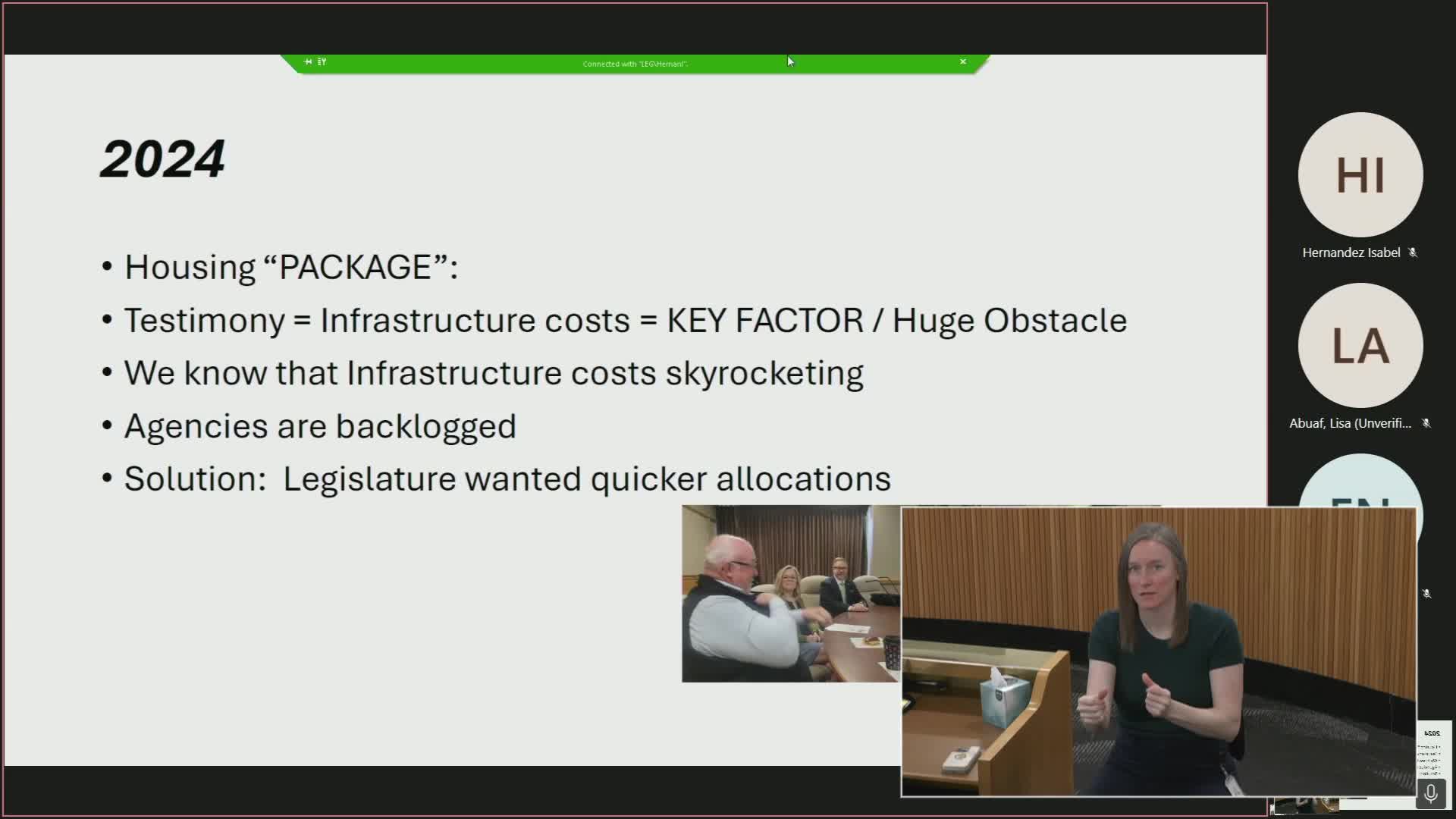
Doug Riggs, testifying for the Central Oregon Cities Organization, described a broader problem beyond Madras. Riggs said the Legislature had identified infrastructure as a barrier to housing and that project delays and rising construction costs mean allocations can become insufficient. “If you wait 18 to 24 months to go through the typical process, you increase the cost probably beyond what you allocated in the bill,” Riggs said, citing Culver as an example where estimates rose after delay.
Riggs said multiple projects across the state—he referenced Culver, Eugene and others—are in the same position and that the aim is to place evaluation earlier in the process so projects can be fast‑tracked. He described the move of some projects from House Bill 41‑34 into Senate Bill 15‑30 late in session and said the legislative intent, in his view, was to fund the listed projects.
Committee members asked whether other cities intended to seek the same fix and whether there was any known opposition. Riggs said he expected multiple cities to seek clarification or amendments and that opposition would likely come from agencies asserting the language does not match legislative intent, not from visible community opponents. The hearing record shows no committee motion or vote on HB 2018 during this session.
The hearing was presented as fact‑finding; witnesses, including Representative Elmer and Riggs, asked the committee to consider an expedited correction so allocated funds can be used to begin work before further cost escalation.
Ending
No formal action or vote on House Bill 2018 was recorded in the hearing. The hearing record indicates proponents asked the committee for a time‑sensitive remedy to allow projects to move forward; staff or agency responses and any follow‑up were not included in the hearing transcript.