Get Full Government Meeting Transcripts, Videos, & Alerts Forever!
Get email alerts on the Hb 2692 Rulemaking Reform topic
No spam. Unsubscribe anytime.
Bill to tighten rulemaking transparency and advisory committees draws support from business and agriculture
Summary
House Bill 2692 would revise Oregon's Administrative Procedures Act to require more detailed statements of need, expanded advisory committees for costly rules, improved fiscal/small business analysis and a 30‑day delay after filing; supporters from business, home building and agriculture testified in favor at a House Rules Committee hearing.
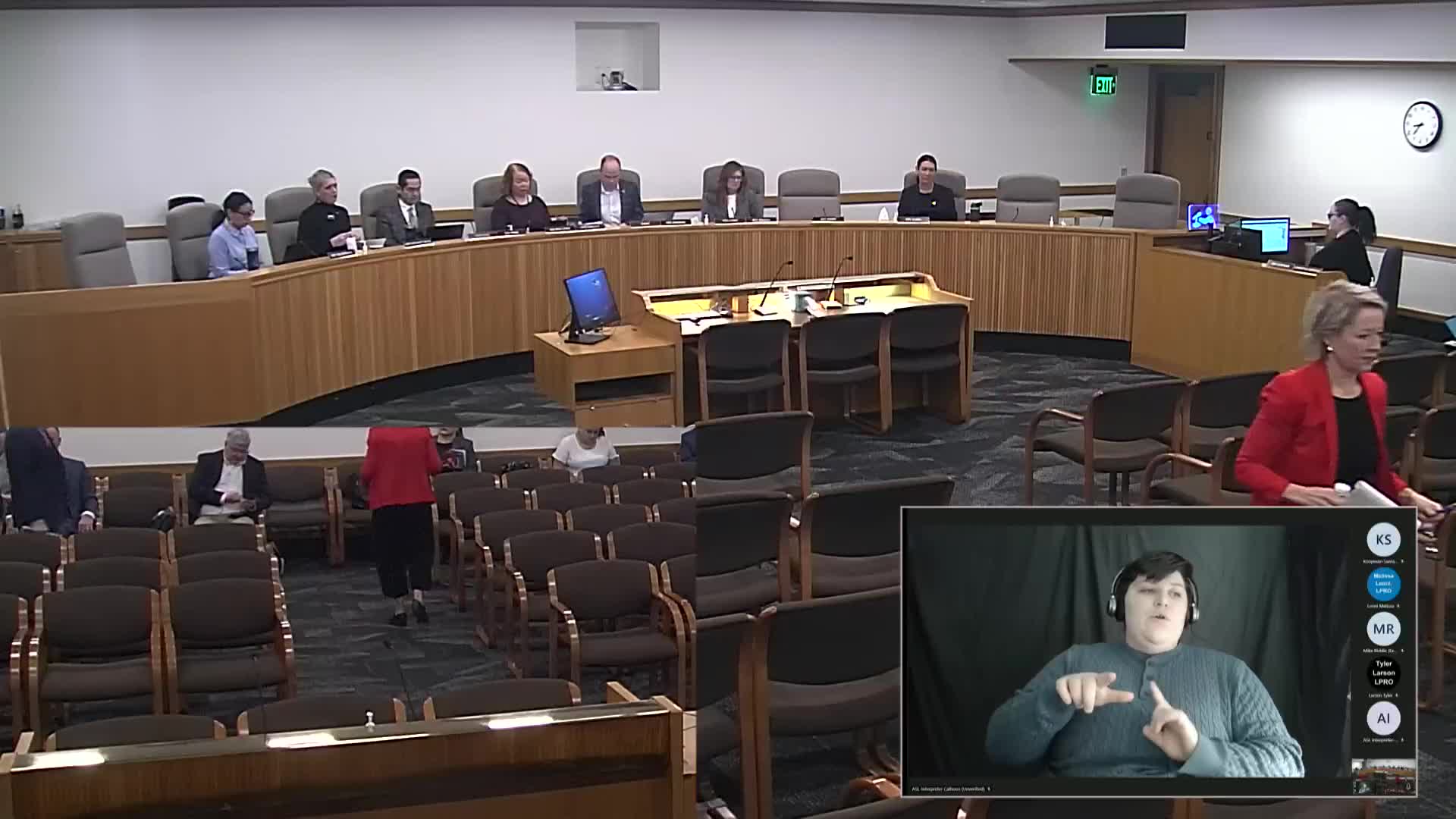
The House Rules Committee opened a public hearing Feb. 12 on House Bill 2692, legislation that would change Oregon’s Administrative Procedures Act to require clearer problem statements for proposed rules, broader use of rules advisory committees (RACs), enhanced fiscal and small‑business impact analyses and a prescribed delay before many rules take effect.
Representative Anna Scharf, the bill sponsor, told the committee the measure grew from constituent experience and a legislative counsel opinion that found a recent Oregon OSHA rule exceeded statutory authority. Scharf said the bill aims to “make government more transparent” and to ensure laws passed by the Legislature are “accurately translated into rule.”
Business groups urged the committee to act. Will Rasmussen, chair of the Portland Metro Chamber board, said regulatory legitimacy depends on public engagement: “At its core, to me, it's legitimacy,” he told the committee, arguing predictable, transparent processes produce better rules and reduce the risk that agency action will “squish Oregonians.” Paloma Sparks of Oregon Business and Industry described small businesses’ experience: a 2023 survey found 74% of small firms said regulations changed so frequently it was hard to keep up; she said agencies vary widely in how they publish and explain rule proposals.
Industry witnesses asked for several specific changes in the bill. Testimony from Mike Riddle, president of the Oregon Home Builders Association, cited frequent and extensive rulemaking by some agencies and urged RAC participation and clearer statements of how a rule solves a stated problem. Jenny Dressler of the Oregon Farm Bureau described a recent OSHA farm‑labor housing rulemaking and said growers repeatedly asked agencies to define the specific problems being addressed and whether changes would apply prospectively; Dressler supported the bill’s requirement for enhanced small‑business economic analysis including opportunity costs.
Advocates also pushed for requirements that agencies post summaries of public comment and explain how comments affected final rules. Proponents proposed that rules with substantial fiscal impact (witnesses suggested thresholds discussed in testimony were $250,000 for an individual or $5,000,000 for the public) trigger a report to the Legislature’s Ways and Means Committee. The bill’s draft also aligns state judicial‑review standards with federal standards for evaluating whether agency action is supported by a rational basis of facts.
Committee members from both parties probed tradeoffs. Some members raised concerns that additional procedural requirements could slow agency action or impose costs on agencies; witnesses acknowledged additional agency burden but said improved transparency and predictability for regulated parties justified those costs. Several lawmakers asked for clearer definitions and for follow‑up data on the history and volume of rulemakings.
The committee received personal testimony from a provider of services to people with intellectual and developmental disabilities who said an administrative rule removed services for several clients and urged stronger legislative oversight when rules contradict statutory rights.
No final action or vote was taken; the committee closed the public hearing and requested additional materials and follow‑up.