Get Full Government Meeting Transcripts, Videos, & Alerts Forever!
Get email alerts on the Criminal Justice Staffing topic
No spam. Unsubscribe anytime.
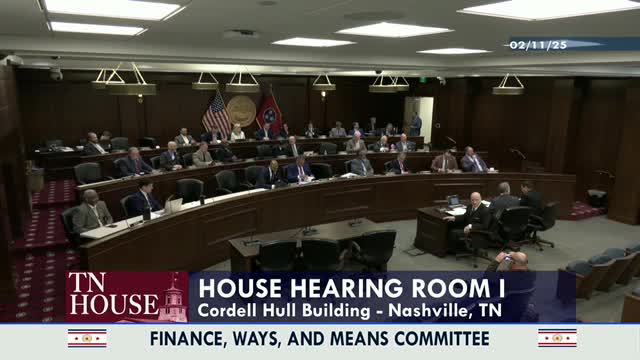
Prosecutors, public defenders press for more staff, pay and victim‑services funding in budget hearings
Summary
The Tennessee District Attorneys General Conference and the District Public Defenders Conference told the Finance committee they need recurring funds for investigators, victim‑witness coordinators, assistant prosecutors and public defenders; both groups described workforce strain and asked for additional positions and pay adjustments.
Two justice‑system groups told the committee that staffing and pay remain key constraints to carrying out criminal prosecutions, victim services and indigent defense.
Steven Crump, executive director of the Tennessee District Attorneys General Conference, said his organization compiled district requests for staffing and asked the administration and legislature to address persistent shortfalls. "In reality... our position ask this last year, we asked for a total, of about 117 positions," Crump said, summarizing the combined needs submitted by the 32 elected district attorneys.
Crump described recent appropriations the conference received and identified priorities the conference continues to press: statutory service and experience credits (step raises) for assistant district attorneys and investigators, funding to stabilize child‑support office pay, and permanent pay adjustments for investigator positions that now lag other state law enforcement pay scales.
Crump and DA conference staff said some grant‑funded victim‑services positions remain vulnerable; they noted that federal VOCA funding has declined and that state VCIF funds were increased in the budget to help offset federal declines but that county and local impacts remain uneven.
Patrick Froge, executive director of the Tennessee District Public Defenders Conference, told the committee that public defenders also face workforce shortages and that pay equity with prosecutors matters to retention. Froge said the conference’s analysis — assembled from district surveys and comparisons to weighted‑caseload studies in other states — suggests Tennessee is well short of the number of lawyers needed to meet statutory obligations and local workloads. "The average of the studies say that we're about a hundred lawyers short," he told the committee.
Froge asked for a combination of additional assistant public defenders, investigators, secretaries and social workers, and described a continuing expansion of social‑work positions in defender offices to reduce recidivism and address client needs outside courtrooms.
Both groups told members they have used existing salary equity mechanisms and state appropriations to hire dozens of new positions in recent years, and both emphasized that many positions are now funded locally or by grants (which can be volatile) rather than by stable state recurring appropriations.
Committee members asked about vacancy counts and the composition of the requests; DA staff said the conference’s most recent survey found roughly 32 unfilled positions systemwide (down from higher levels earlier in the decade) and that roughly $7.5 million was the current ask for new recurring positions in the DA conference package. Public defenders said they are continuing to gather weighted‑caseload data using state case management improvements and that a fuller study will inform future requests.
Both presenters asked the committee to consider stable, recurring funding for prosecutor, defender and victim‑services staffing as the FY‑26 budget is finalized.