Get Full Government Meeting Transcripts, Videos, & Alerts Forever!
Get email alerts on the Indigent Defense topic
No spam. Unsubscribe anytime.
Tennessee courts seek $17 million to stand up Office of Indigent Conflict and Civil Counsel to ensure appointed lawyers are available
Summary
The Administrative Office of the Courts proposed a new Office of Indigent Conflict and Civil Counsel that would employ attorneys, contract for representation, and manage appointments to reduce delays in criminal, juvenile and family cases.
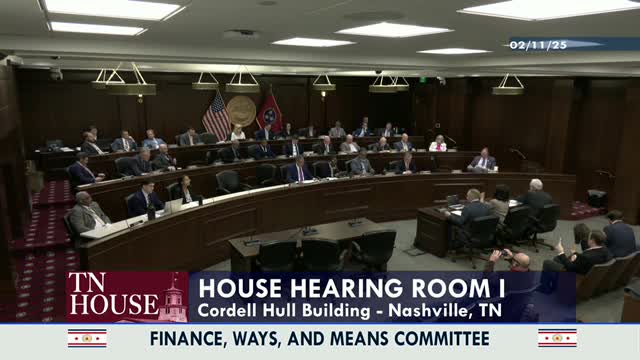
Director Rebecca Long, representing the Administrative Office of the Courts on behalf of the Tennessee Supreme Court, asked the Finance, Ways and Means Committee to fund a new Office of Indigent Conflict and Civil Counsel and to provide other targeted resources for court operations.
"The burden of finding an attorney to appoint will no longer be on the judge," Long said, describing the central aim of the proposal. Under current practice judges must locate private attorneys when the public defender has a conflict; the AOC would instead employ and contract for counsel to ensure timelier appointments and to standardize compensation and oversight.
Nut graf: The AOC said recruiting attorneys to accept court‑appointed work has become difficult even after the legislature raised the hourly rate from $50 to $60. The proposed office would combine on‑staff conflict counsel by grand division with a contracting strategy that mixes retainer, flat‑fee and hourly agreements tailored to case complexity and local market conditions.
Key elements of the courts’ plan:
- Organizational design: three regional directors (one per grand division) and additional attorneys (the AOC requested 14 new positions overall to staff and manage the program). The office would be accountable for appointments, training, data collection and quality controls.
- Contracting flexibility: the office would use retainer and flat‑fee contracts for routine matters and higher rates or hourly arrangements for complex juvenile, dependency/neglect or capital cases.
- Oversight and standards: a commission appointed by the Tennessee Supreme Court would provide policy oversight, set verification standards for indigency and conflicts, and evaluate program effectiveness.
- Funding request: $17 million to stand up the office plus several smaller items in the AOC’s FY‑26 request including two judicial assistant positions for Shelby County (restoration after prior reallocations), one staff attorney for the Board of Judicial Conduct, and $30,000 for the Tennessee Justice Bus operating costs.
Long told the committee that the proposed reorganization would reduce delays that now occur when judges must contact private lawyers individually. She said delays in appointment and representation create downstream costs and harms: prosecuted cases can be delayed, placements for children are postponed, and the court system and child services face added expense.
Committee members asked logistics and cost questions, including whether the AOC could use retired or mentoring attorneys under contract. Long said the office would pursue a mix of practitioners, including senior lawyers, mentors and local counsel under flexible contracting arrangements.
The AOC also noted related legislative proposals: a bill to clarify and broaden criminal penalties for threats to judges (cited as House Bill 1353 in the hearing) and House Bill 1038 on juvenile case management support. Long invited members to follow up with staff for a district‑level briefing on how the plan would operate in particular counties.
Pending decisions: the AOC’s proposal requires legislative approval and appropriation; the committee asked the office to return with implementation details and district‑level cost estimates if lawmakers choose to pursue the plan.