Get Full Government Meeting Transcripts, Videos, & Alerts Forever!
Get email alerts on the Environment Deq Rules topic
No spam. Unsubscribe anytime.
Senate committee approves DEQ air and hazardous‑waste rule updates; holds PFAS drinking‑water rule for additional review
Summary
The Senate Health and Welfare Committee approved rule dockets incorporating recent federal changes into state air quality and hazardous waste rules and held a pending drinking-water docket on PFAS sampling and standards for further review.
The Senate Health and Welfare Committee approved two rule dockets from the Idaho Department of Environmental Quality and held a third for further review.
Air quality: Tiffany Floyd, Air Quality Division administrator for DEQ, presented docket 5801012401, DEQ’s annual incorporation by reference of federal air regulations through July 1, 2024. Floyd highlighted several federal actions DEQ is adopting by reference, including EPA’s approval of Idaho’s removal of the vehicle inspection and maintenance program from the Northern Ada County carbon‑monoxide nonattainment plan and the federal removal of Title V’s emergency defense provision for emissions violations.
Floyd also noted EPA lowered the annual National Ambient Air Quality Standard for fine particulate matter (PM2.5) from 12 micrograms per cubic meter to 9, effective May 6, 2024, and said DEQ currently expects statewide levels to meet that new standard while identifying communities near the threshold — Pinehurst, St. Mary’s and Salmon — where outreach continues. The committee approved the air docket on a voice vote after brief discussion.
Hazardous waste: Michael McCurdy, Waste Management and Remediation Division administrator, presented docket 5801052401, the annual incorporation by reference of federal hazardous‑waste regulations through July 1, 2024. McCurdy said the docket adopts Federal changes including updates to EPA Method 23 (an analytical method), technical corrections tied to the hazardous‑waste generator improvement rule, the hazardous‑waste pharmaceutical rule, and revisions to the definition of solid waste. The committee approved the hazardous‑waste docket on a voice vote.
Drinking water / PFAS: The committee heard a presentation on docket 5801082401 from Jeri Henry, DEQ’s division administrator for Drinking Water Protection and Finance, and Tyler Fortunati, Drinking Water Bureau chief. DEQ said the docket updates Idaho’s public‑drinking‑water rules to incorporate federal PFAS requirements (40 CFR part 141 through 07/01/2024, including subpart Z for PFOS), establishes enforceable PFOS requirements consistent with federal action, and adopts federal monitoring, analytical, reporting and recordkeeping requirements.
Fortunati said the changes will require regulatory sampling for most of Idaho’s roughly 1,000 public water systems that serve about 1.5 million people. He said average analytical costs per sample are around $325, depending on the method used, and that a small number of systems have previously sampled voluntarily. DEQ asked the committee to approve the docket; several senators asked for more information and the committee voted to hold the drinking‑water docket until the call of the chair to allow additional presentation at a subsequent meeting.
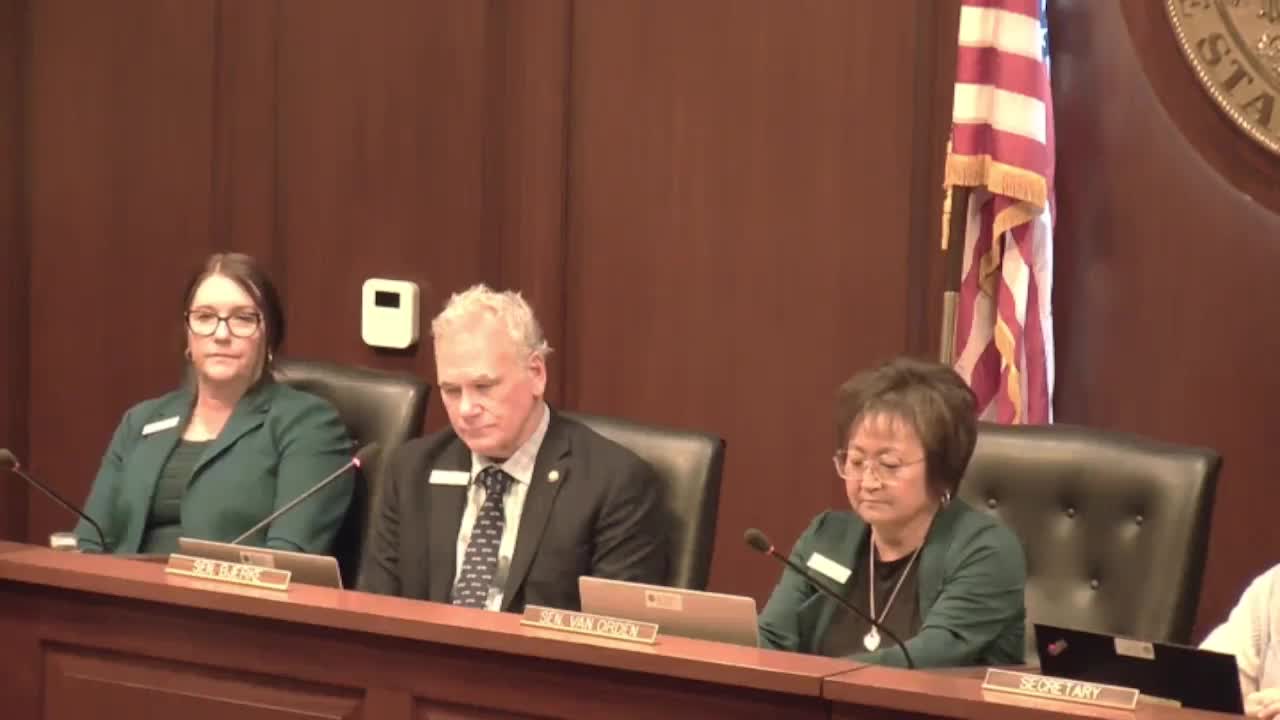
Committee procedure: Senator Van Orden moved to approve the air docket (seconded by Senator Harris) and the committee approved it on a voice vote. Senator Harris moved to approve the hazardous waste docket (seconded by Senator Blaylock); it was approved on a voice vote. Senator Harris moved and Senator Wintrow seconded a motion to hold the drinking‑water PFAS docket until the call of the chair; that motion carried.
What’s next: DEQ will present additional information on PFAS sampling, costs and implementation at a future meeting; the two approved dockets will proceed under state rule review.