Get Full Government Meeting Transcripts, Videos, & Alerts Forever!
Get email alerts on the Foster Care topic
No spam. Unsubscribe anytime.
Senate bill seeks fixed reviews for children in unlicensed congregate care; committee sends bill to the floor
Summary
Senate Bill 1035, sponsored by Senator Cindy Wintrow, would require the director of the Department of Health and Welfare to review placements of foster children in unlicensed congregate care every 14 days and assess safety, treatment needs and discharge planning. The committee voted to send the bill to the floor with a due-pass recommendation.
Senator Cindy Wintrow presented Senate Bill 1035, a measure that would build on reforms enacted in 2024 to tighten oversight of foster children placed in unlicensed congregate care settings.
"This bill builds on the reforms that we passed last year, to help ensure that licensed facilities are able to meet the needs of foster children," Senator Wintrow said. She described the 2024 legislation (Senate Bill 1379) as having ended many placements of children in short-term rentals and other unregulated settings and said this bill clarifies the director's role in reviewing and approving congregate placements.
Under the bill as described to the committee, any child placed in an unlicensed group care setting would be subject to a director's review at least every 14 days. The review must assess the child's safety, treatment needs, facility services, the treatment plan and progress toward discharge, including the discharge plan. If the director determines the placement meets the child's needs the placement may continue; if not, the director must find an appropriate placement.
Senator Wintrow said providers and the Department of Health and Welfare supported the revised language; testimony during the hearing described collaborative drafting between providers and the department to reduce reporting burdens and avoid diverting staff time from direct treatment.
Craig Anderson, owner and operator of Hinge Point Youth Homes, testified remotely and said he helped draft the revised language and that providers and the department had unanimously agreed to the text presented. "The burden of being able to meet these requirements was just overwhelming that really took away from the resources and the time to meet the treatment needs of the kiddos that we are serving," Anderson said, adding that collaborative work with the department had produced the current language.
Bridal Shipley, who identified herself as a Haley, Idaho resident, testified in support and urged the committee to pass the bill, calling timely assessments and community-based supports critical to aiding youth who have experienced trauma.
Senators questioned whether the 14-day review requirement would increase workload for the department and whether it could draw staff away from direct treatment. Senator Zieterfeld asked about staffing strain; Wintrow and other witnesses said the department had accomplished similar oversight during implementation of the 2024 reforms and that the revised language seeks to avoid pulling treatment staff away from care. Senator Wintrow said the bill had support from licensed children's facilities, the Department of Health and Welfare, and child advocates including Idaho Voices for Children.
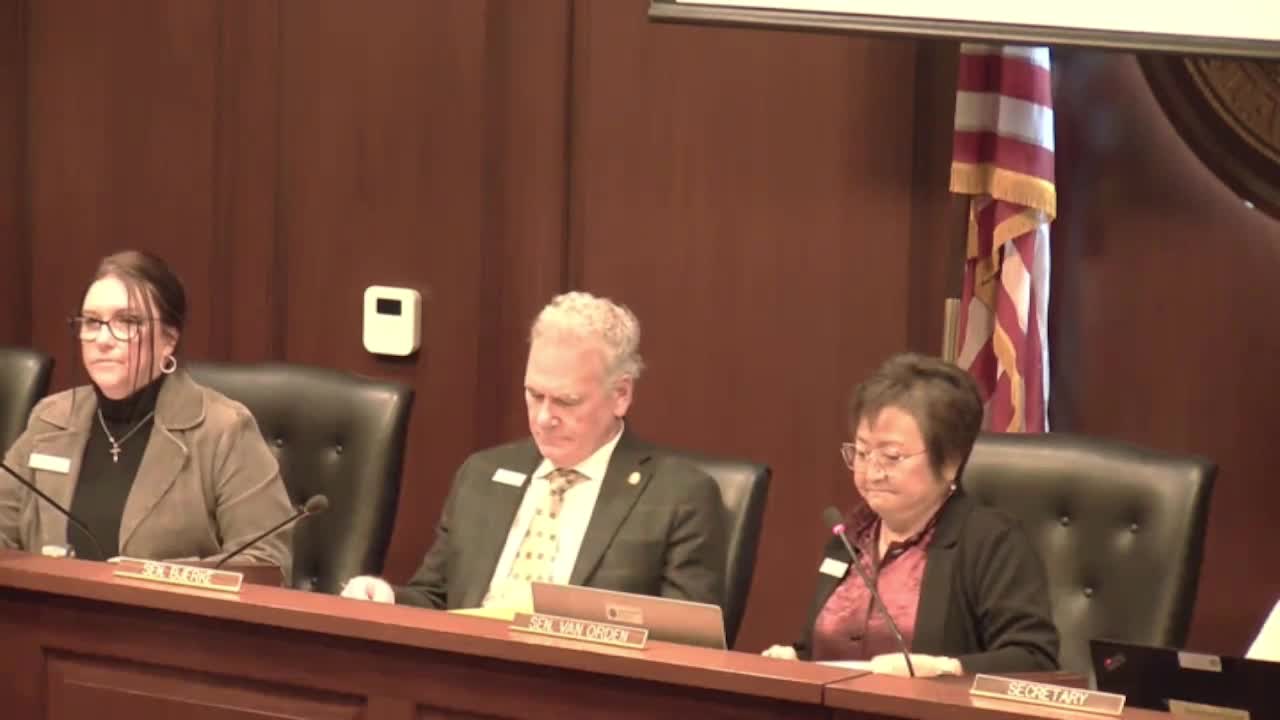
Senator Blaylock moved to send SB 1035 to the floor with a due-pass recommendation; Senator Burkey seconded. The motion passed by voice vote.
The bill will next be considered on the Senate floor where further debate and final action may occur.