Get Full Government Meeting Transcripts, Videos, & Alerts Forever!
Get email alerts on the State Budget topic
No spam. Unsubscribe anytime.
JFAC approves technical corrections and program-maintenance budgets across state government
Summary
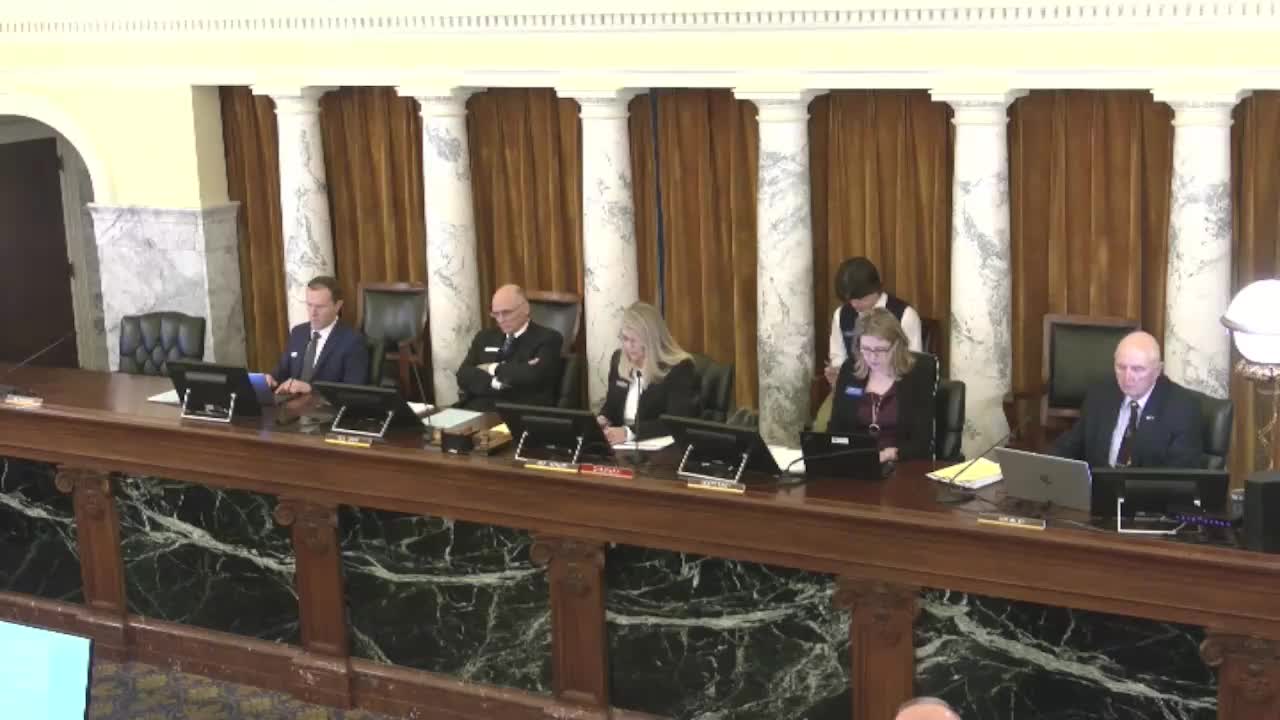
The Joint Finance and Appropriations Committee on Jan. 17 approved technical corrections and program-maintenance budgets across most state agencies, carrying appropriations forward and authorizing limited transfer and reappropriation language that staff said will improve transparency.
The Joint Finance and Appropriations Committee on Friday approved a series of technical corrections, reappropriations and program-maintenance budgets that update agency appropriations and carry certain one-time monies forward.
Staff presented corrections to current fiscal-year appropriations and then the committee set program-maintenance budgets for nearly every functional area of state government, including the legislative and judicial branches, constitutional officers, public safety, general government, economic development, natural resources, education and health and human services. Committee members repeatedly described the package as largely “net zero” adjustments that align appropriations with recent organizational changes and previously approved one-time awards.
Why it matters: These votes set the baseline appropriations the Legislature will use in the 2026 budget-setting process. Several items reassign or reappropriate funds so those dollars are tracked or spent from the account that best matches legal or programmatic intent. The approvals also authorize language that allows limited rollovers and program transfers that agencies asked for during budget hearings.
The committee began the meeting with technical corrections presented by Janet Jessup, budget and policy analyst with the Legislative Services Office. Jessup described a broadband reappropriation adjustment that moved $291,737,000 out of a Department of Commerce program account and into the newly created Broadband Office so those dollars can be tracked separately: “This action would remove the monies that were reappropriated to the commerce, commerce program, and then also add them back into the broadband office so they can be tracked for transparency moving forward.”
After the technical fixes the committee moved through program-maintenance packages by functional area. Mr. Jeff Bybee (legislative services staff) and agency analysts walked the committee through each comparative summary, explaining that the maintenance budgets start from the FY2026 base (the ongoing appropriations authorized previously) and add contract inflation and statewide cost-allocation adjustments to produce the program-maintenance totals. “What is a base budget? So a base budget is really your ongoing operations for the entire state government, right?” Bybee said as he asked members to focus on decision units rather than the entire base.
Most motions carried on voice or roll-call votes without debate and many were unanimous. Committee members approved budget totals and related statutory or appropriation language that will be included in the draft maintenance appropriations bills.
Quotes and dissent: Representative Petzke told the committee he would vote against one procedural item concerning Health and Welfare’s reorganization because he wanted more detail before approving large transfers of positions and dollars, saying, “I have to vote no on this one just because I don't quite feel like I know enough about it yet.” Ultimately that reorganization motion passed with one or a small number of dissenting votes; the larger set of Health and Welfare maintenance appropriations later drew two nays in final tallies.
Ending note: Committee staff and members said there will be a follow-up review once the appropriation bills are drafted next week to correct technical wording or section numbers before bills are filed for floor consideration.
Votes at a glance
- Commerce / Broadband reappropriation (FY2025): Remove $291,737,000 from Department of Commerce commerce program (mover: Rep. Handy; second: Sen. Cook). Vote: Senate unanimous; House unanimous (20–0). Outcome: Passed; due-pass recommendation.
- Commerce / Broadband reappropriation (FY2025): Add $291,737,000 to Broadband Office reappropriation (mover: Rep. Handy; second: Sen. Cook). Vote: Senate unanimous; House unanimous (20–0). Outcome: Passed; due-pass recommendation.
- Department of Environmental Quality correction (FY2025): Transfer/one-time appropriation of $2,000,000 from the general fund to DEQ general fund (mover: Sen. Woodward; second: Rep. Manwaring). Vote: Senate unanimous; House unanimous (20–0). Outcome: Passed; due-pass recommendation.
- Health & Welfare corrections (substance abuse program): Move $160,000 from trustee & benefit payments to operating expenditures (mover: Rep. Price; second: Sen. Bierke). Vote: Senate unanimous; House unanimous (20–0). Outcome: Passed; due-pass recommendation.
- Health & Welfare corrections (physical health services): Move $240,000 from the central tumor registry fund to operating expenditures (mover: Rep. Price; second: Sen. Bierke). Vote: Senate unanimous; House unanimous (20–0). Outcome: Passed; due-pass recommendation.
- Legislative Branch program maintenance: Program maintenance set to $12,546,100 with $41,700 for statewide cost allocation (mover: Rep. Miller; second: Sen. Ward Engelking). Vote: Senate unanimous; House unanimous (20–0). Outcome: Passed; due-pass recommendation. Language authorizing reappropriation authority and expense-class exemptions was approved separately (roll-call unanimous).
- Judicial Branch program maintenance and associated language (mover: Sen. Carlson; second: Rep. Mitchell). Vote: Senate unanimous; House unanimous (20–0). Outcome: Passed; due-pass recommendation.
- Constitutional officers, public safety, general government, economic development, natural resources, State Board of Education, public schools: Program-maintenance totals and usual statutory/clear-language sections (reappropriation authority, allowable transfers, continuous appropriations, reporting requirements) were approved with motions by the appropriate members; most votes were unanimous (20–0) and each carried due-pass recommendations.
- Health and Human Services reorganization: Motion to accept departmental realignment and to add a new appropriation unit for the Idaho childcare program (mover: Sen. Cook; second: Rep. Tanner). Vote: Senate 10–0; House 8–1–1 (total 18–1–1). Outcome: Passed; due-pass recommendation. Representative Petzke spoke publicly that he would vote no because he wanted more information before approving large transfers of FTPs and dollars.
- Health and Human Services program-maintenance totals: Committee set the Department of Health and Welfare program-maintenance appropriation at a multi-billion-dollar total (mover: Rep. Tanner; second: Sen. Cook). Final roll-call recorded the Senate changing one aye to a nay; final combined total was 17 ayes, 2 nays, 1 absent excused. Outcome: Passed; due-pass recommendation.
What the committee authorized in language
Across multiple appropriation packages the committee authorized reappropriation authority for ARPA and other one-time funds, continuous appropriation authority where agencies administer revolving funds (lottery payouts, local bridge inspection, certain federal grant pass-throughs), exemptions from expense-class or program transfer limits for limited uses (legislative staffing flexibility, judicial expense-class transfers, university tuition handling), and required accountability reports for reappropriated or ARPA-funded programs.
Speakers quoted in this report are those who presented or moved/seconded motions during the recorded proceeding and are identified below in the speaker list. This article is based on the committee transcript and roll calls provided during the Jan. 17 JFAC meeting.