Get Full Government Meeting Transcripts, Videos, & Alerts Forever!
Get email alerts on the Food Labeling topic
No spam. Unsubscribe anytime.
House Agriculture Committee introduces bill to require labeling of lab-grown and insect proteins
Summary
Representative Heather Scott introduced RS31941 to add a chapter to Title 37 requiring plain-language labeling for alternative animal proteins (cultivated meat and insect proteins), assign oversight to the Idaho Department of Agriculture, and set per-item penalties; the committee voted to introduce the proposal.
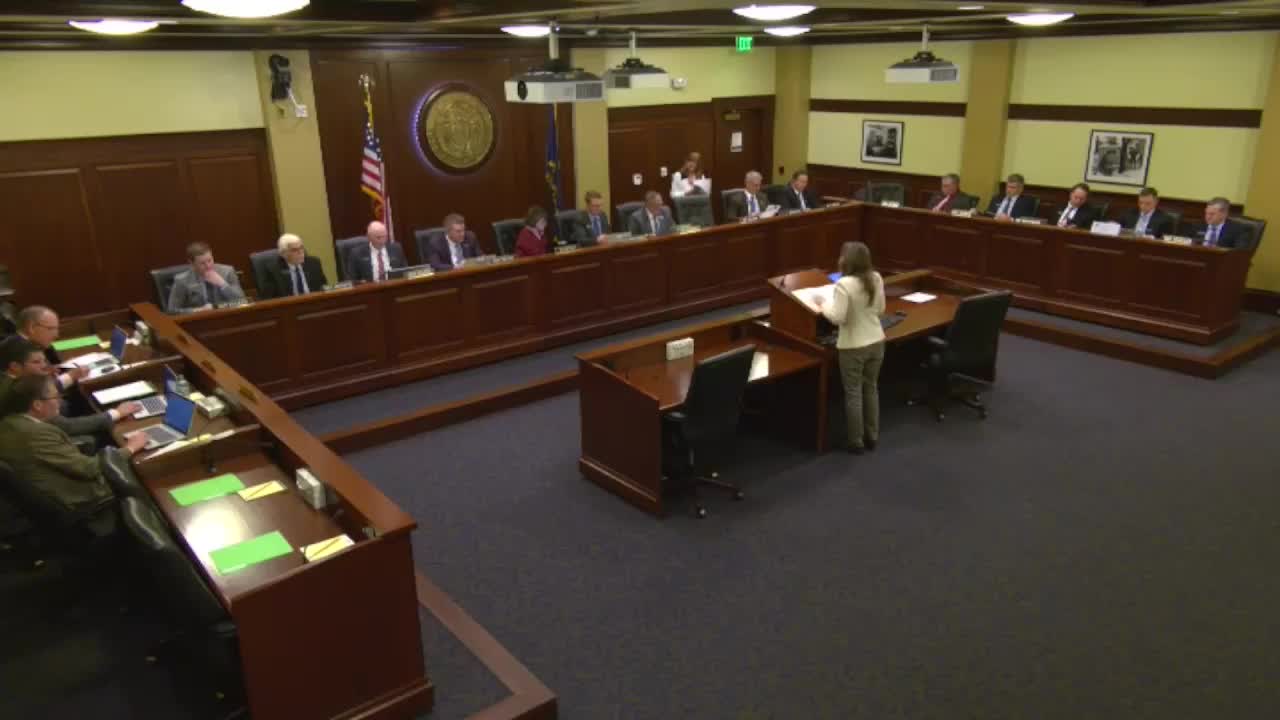
Representative Heather Scott, R-District 2, told the House Agriculture Committee that she is sponsoring RS31941, a bill to add a new chapter to Title 37 requiring clear labeling for alternative animal proteins, including lab-grown (cultivated) meat and insect-based proteins.
Scott said the bill would require a common name (and where used a scientific name) on front-of-package labeling, give the Idaho Department of Agriculture authority to enforce the rule, and establish civil penalties. "I think Idahoans have the right to know what's in the food they eat," Scott said.
The bill, as described by Scott, would not ban products but would require that items derived from cultured animal cells or from insects be labeled so consumers can distinguish them from traditional livestock products. Scott gave examples of insect-protein products she cited in research: XO, Chapul, Biddy Food, Seek, and Bagito. She said a fiscal note from Legislative Services shows the Idaho Department of Agriculture can implement oversight with existing staff.
Committee members asked how the labeling would apply to institutional purchasers and menus. Representative Levitt asked whether the labeling requirement would extend to public schools and the Department of Corrections; Scott said the draft focuses on packaging and restaurant disclosures but agreed to verify language before a hearing. Representative Nelson asked about seafood and menu labeling; Scott said the bill intends common names such as "shrimp" to be sufficient on menus and that scientific names would be required primarily on ingredient lists or where the common name would not make the contents clear.
Members also pressed enforcement and penalty issues. Representative Raymond asked whether producer groups had been consulted; Scott said she had contacted the Farm Bureau and planned additional outreach. Representative Raymond and others questioned whether the draft $500-per-item penalty would be an effective deterrent for companies; Scott said the penalty is written per mislabeled item and could multiply by packaging units, calling it "a start" while the committee establishes a statutory framework.
Scott and others discussed federal roles: Scott said the Food and Drug Administration oversees insects as food under the Federal Food, Drug, and Cosmetic Act and that USDA and FDA share oversight of cultivated meat (FDA for cell collection and culturing; USDA for harvesting, processing and labeling). She emphasized the committee could set Idaho-specific labeling requirements regardless of federal oversight.
Representative Garner moved that the committee introduce RS31941, saying, "I move that we introduce RS31941." Chairman Andrews conducted a voice vote, asking "All those in favor say aye." After no recorded opposition, the chairman said, "Motion passes."
Next steps: the committee voted to introduce RS31941; the bill will return for a formal hearing where the sponsor expects to present amended language and additional stakeholder input.