Get Full Government Meeting Transcripts, Videos, & Alerts Forever!
Get email alerts on the Disaster Recovery Transportation topic
No spam. Unsubscribe anytime.
Tennessee DOT officials describe rapid response and recovery after Hurricane Helene
Summary
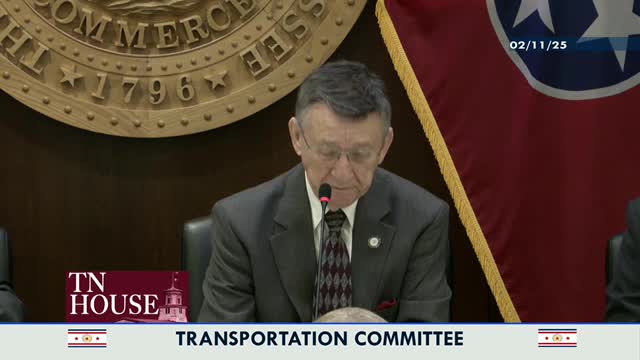
Tennessee Department of Transportation officials told the House Transportation Committee on Feb. 11 that emergency contracting, regional strike teams and preauthorized funds under the Transportation Modernization Act allowed rapid repairs after Hurricane Helene closed routes and washed out bridges across East Tennessee.
Tennessee Department of Transportation officials told the House Transportation Committee on Feb. 11 that crews, regional response teams and a new contracting authority enabled a fast statewide response to Hurricane Helene, which closed dozens of routes and washed away several bridges in late September 2024.
The update focused on immediate life-safety work, debris removal and expedited contracting enabled by the Transportation Modernization Act. "Our people reacted with Hurricane Helene in a way that was unbelievable," Tennessee Department of Transportation Commissioner Healy said, describing crews who entered flooded areas to rescue motorists and restore connectivity.
Committee members were shown video of the response and heard regional directors explain how Tennessee coordinated inspections, heavy equipment crews and temporary repairs. "It was an historic event and it required a historic response," said Steve Bridal, the TDOT Region 1 director, describing high river flows, large debris fields and roads that were ``completely gone.'' Bridal told the committee the department recorded 49 route closures in the immediate aftermath; he and other TDOT officials said about 42 of those routes were reopened within days and that seven routes were destroyed and required full reconstruction.
TDOT Chief Engineer Will Reed and regional directors described how the department used internal "strike force" crews and a specialized Scribe Force — teams of equipment operators and supervisors — to clear debris, inspect bridges and reestablish emergency access. "We mobilized bridge inspection crews," Jason Baker, Region 4 director, said; Baker told the panel TDOT inspected 278 bridges on interstates and state routes in the first week after the storm to confirm which structures could safely carry traffic.
Region 3 director Jay Norris and Region 2 director Danny Oliver described the equipment and personnel mobilization. Norris said about 48 TDOT personnel from multiple regions logged roughly 4,000 man-hours and moved about 250 loads of material during early operations. Oliver said TDOT used aerial surveying with airplanes and drones to map damage and support design work and that mapping products were shared with local governments and other agencies.
Commissioner Healy and regional directors described use of alternative contracting tools created by the Transportation Modernization Act. Danny Oliver said the first use of a progressive design–build contract after the storm allowed TDOT to have a contract in place for a washed-out Greene County bridge within 72 hours. He told members the department also had cash on hand from state budgeting measures that reduced the need to wait for federal reimbursement before contracting immediate repairs.
The department reported federal emergency relief funding progress. "We have received to date $102,000,000 out of the [emergency relief] we have requested," Oliver told the committee; he and others said additional federal reimbursements are expected but that some state outlays were required up front. TDOT officials said they expect larger repairs — including major work on I‑40 — to continue into the summer, and that some high-cost projects could reach the tens or low hundreds of millions of dollars.
Committee members praised TDOT's rapid response and interagency coordination. Representative Hawk thanked crews for closing unsafe roads and aiding evacuations, and Representative Glenn likened TDOT's rapid mobilization to a military quick-reaction force. Several members singled out the emotional toll on TDOT staff who live in affected communities and credited the Transportation Modernization Act with allowing immediate action without a special legislative session.
No formal committee action or vote occurred during the presentation. Committee leaders said TDOT will return for a follow-up briefing with budget questions and additional details planned for a future meeting.
TDOT officials concluded by thanking the legislature for the authority and funding that allowed rapid contracting and by saying recovery work would continue. "We still got work to do and that's what we're going about doing," Commissioner Healy said.
Ending: The committee did not take votes; members said TDOT will be invited back for a more detailed briefing on budget impacts and ongoing repair schedules.